
EPISODE · Mar 30, 2021 · 39 MIN
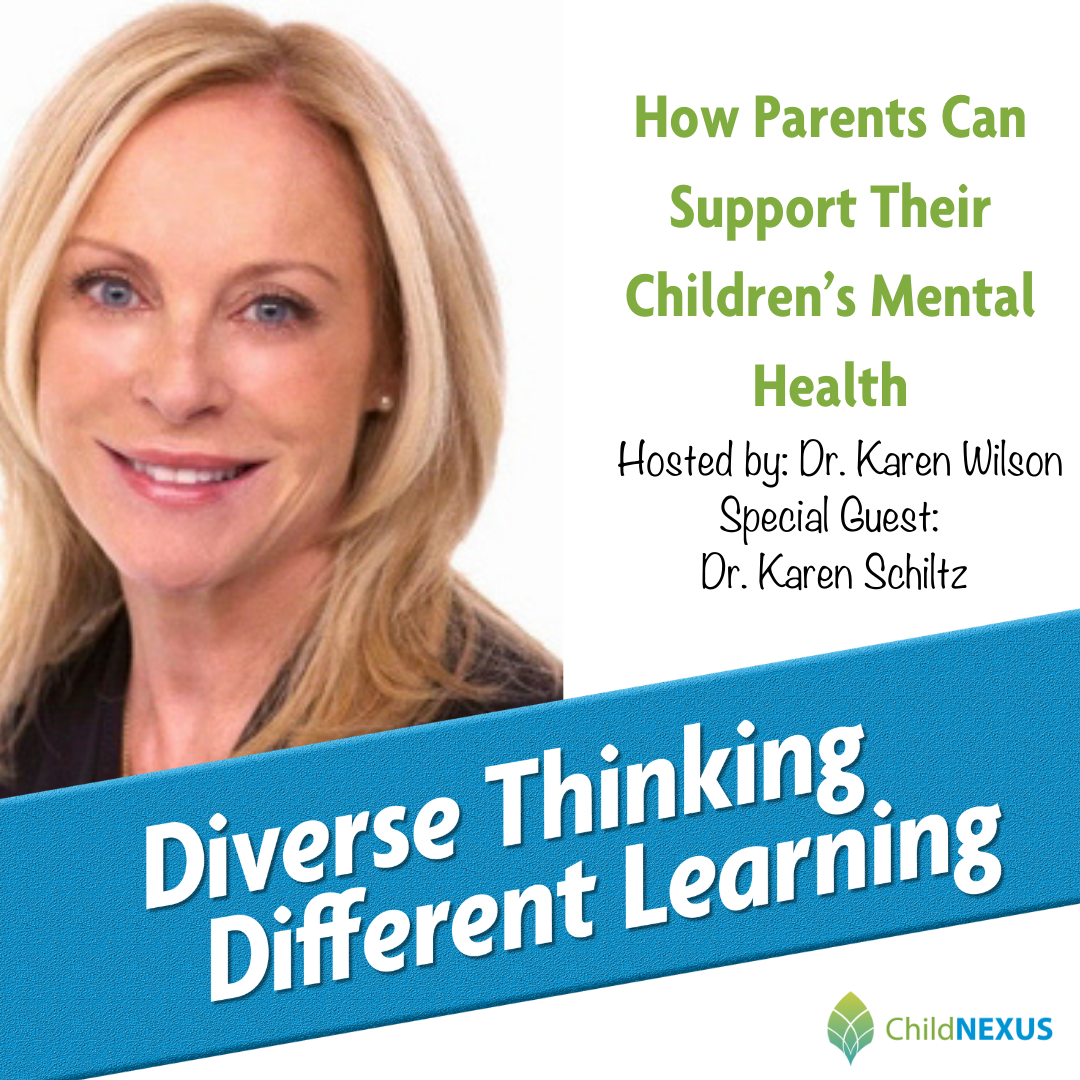
Ep. 23: How Parents Can Support Their Children's Mental Health with Dr. Karen Schiltz
from Diverse Thinking Different Learning · host Dr. Karen Wilson - ChildNEXUS
With today's guest, we initially had planned on talking about one thing and it went in a completely different direction. Has that ever happened to you? In this case, it is okay because the conversation I have with her is exactly the conversation you need to hear. Today, I'm thrilled to have Dr. Karen Schiltz on the Diverse Thinking Different Learning Podcast. Dr. Schiltz is the author of Beyond the Label: A Guide to Unlocking a Child's Educational Potential and a licensed clinical pediatric psychologist. In today's discussion, Dr. Schiltz brings our attention to the need for routine, structure, and connection in building resilience in children and teens during stressful times. Through proper sleep, nutrition, exercise, and a parent's active listening, the mental health of our children can be supported during their critical brain growth and development. Every parent can learn how to better support their child and you may be surprised that by modeling the structure our children need, you are also impacting your own mental health in a positive way. Show Notes: [3:00] - During this time with the global pandemic, there are so many layers to mental health and higher risk of anxiety and depression. [3:42] - Key things to look at closely are a child's sleep, nutrition, and exercise. [4:34] - Dr. Schiltz explains that teenagers are spending a lot more time on social media and the social craving they have. [5:25] - Kids have been so impacted by not having the opportunity to truly connect with their friends. The research shows that the virus isn't as stressful for kids as their lack of in-person social interaction. [6:40] - Physical touch actually has a neurochemical reaction inside us that relieves stress. The lack of physical contact with others is directly connected to the increase in anxiety and depression in kids and teens. [7:41] - All of the changes in socializing, exercise, and sleep due to the virus has culminated into an unhealthy environment for such a long time. [8:18] - Children rely on consistency and feel the stress of the adults in their lives. Dr. Schiltz shares a story of a child she's worked with as a pediatric neuropsychologist and something profound he said to her. [10:37] - During remote learning, children have become very stressed due to issues with internet connectivity. [11:37] - Research has indicated that children's a primary worry, through a child's eyes, is problems with the internet. [12:08] - Dr. Schiltz shares a story about an experience she herself had in September of 2020 with an injury and her daughter. [14:11] - Dr. Schiltz compares her injury and healing to the growth of a child's brain during the pandemic. What is the level of impact of this global event? [15:13] - The brain can change in response to stress and growth stimulation. How is this pandemic affecting that in children? [16:27] - Dr. Wilson and Dr. Schiltz define and explain brain plasticity. There are many synonyms, but ultimately it means the brain's growth and changes in brain wiring. [17:37] - In addition to trauma, abuse, living through adverse events, and cyberbullying can impact children as well. [18:10] - The pandemic has shown us that some kids and teens are resilient through this adverse life event. We need to ask ourselves how we can help our children be more resilient. [19:10] - As parents, we have to create healthy habits and order. The virus is unpredictable, but what we can do is have our homes be structured. Parents need to be models of this. [20:40] - Parents need to be more vigilant than ever before in practicing and modeling coping strategies as children pick up on their feelings. [22:01] - Routine needs to be established. This can be very hard for the parents who are working from home and those who have lost their job. Dr. Schiltz lists the ways this can be difficult but emphasizes the importance of it. [23:23] - We think we are listening to our kids, but we need to be more active in our listening. Be there in the moment with your child. [24:42] - If you are emotionally deregulated, you can't access your thinking. [25:08] - In regards to sleep and exercise, parents need to model the behavior as well. [26:10] - Another layer of the pandemic in the winter was because of the earlier onset of darkness after the school day. [27:33] - Exercising with your children is an opportunity to connect when they may feel lonely and isolated. [28:15] - There is passive and active listening. We have to practice active listening and that can be very hard to do. Dr. Schiltz explains the importance of this. [29:38] - As a mom, Dr. Schiltz shares that it is the time that you don't expect your child to want to talk about something that they will tell you their feelings. If you are not listening actively, you will miss it. [32:19] - We won't be able to support our children if we don't listen to how they feel. [32:25] - Dr. Schiltz also notes that children and teens see and hear the news and other various things on social media and we need to give them the skills for interpreting and understanding. [33:52] - It is important to take the time to notice how children and teens are understanding the information through social media and the internet. They have access to things that we did not when we were growing up. [35:07] - All that Dr. Schiltz has outlined supports brain health, which is connected to both physical and mental health. [36:27] - If you feel like something isn't right with your child, seek out the help of a professional. About Our Guest: Karen L. Schiltz, Ph.D. is a California licensed clinical psychologist with a private group practice in clinical and forensic pediatric/young adult neuropsychology at Golden State Neuropsychology (GSN). She supports a team approach in the assessment and remediation of children who struggle with cognitive, learning, behavioral, emotional, and communication skills. Dr. Schiltz also holds a volunteer position as Clinical Professor at the Department of Psychiatry and Biobehavioral Sciences at the David Geffen School of Medicine at UCLA. She wrote the book, Beyond the Label: A Guide to Unlocking a Child's Educational Potential (Oxford University Press), along with co-authors, Amy Schonfeld, Ph.D. and Tara Niendam, Ph.D., which encourages parents to ignore stigmatizing labels and focus on their child's specific strengths and differences, first by reaching out for an assessment and intervention(s) if needed- the earlier, the better. Connect with Dr. Karen Schiltz: Golden State Neuropsychology Phone: (818) 518-1057; (805) 379-4939 ChildNEXUS Provider Profile: Golden State Neuropsychology Links and Related Resources: ChildNEXUS Home Page ChildNEXUS Instagram Parenting During Stressful Times (AKA COVID-19 Pandemic) ALPS Kids at Home (During a Pandemic): Keep the Learning Alive! Join our email list so that you can receive information about upcoming webinars - ChildNEXUS.com
NOW PLAYING
Ep. 23: How Parents Can Support Their Children's Mental Health with Dr. Karen Schiltz
No transcript for this episode yet
Similar Episodes
Apr 21, 2026 ·13m
Apr 19, 2026 ·16m
Apr 17, 2026 ·13m
Apr 13, 2026 ·11m
Apr 11, 2026 ·16m