
EPISODE · Mar 19, 2025 · 1H
EP 31: The Fast and the Curious: How Fast is too Fast?
from Rabbit Hole of Research · host Jotham Austin, II PhD, Nick Elizalde, and Georgia Geis
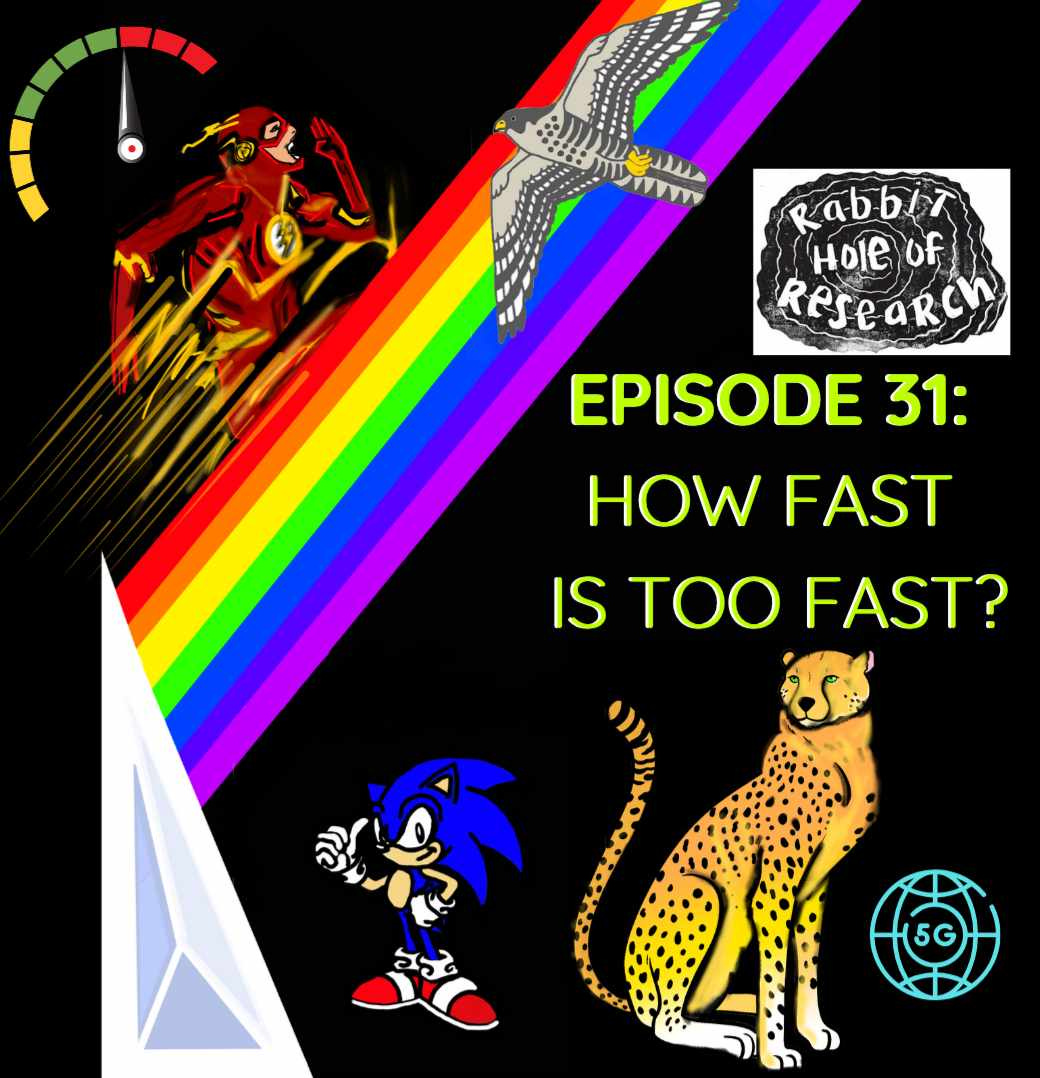
Joe, Nick, and Georgia dig into a discussion about the nature of speed, starting with the basics of how speed is measured and moving into the fantastical with speedsters from comics and movies like The Flash, Sonic the Hedgehog, and Quicksilver. They explore the scientific concepts behind the speed of sound and light, touching on historical attempts to measure these velocities. The conversation also includes playful banter about fictional portrayals of speed, such as those in the Sonic movies and Superman, while considering the biological and physical implications of moving at extreme speeds.Want to support the show? Tell your friends. Follow us on social media, Discord, share the podcast, and let us know what topics you are excited about.Stay curious, stay speculative, stay safe, and we’ll catch you in the next rabbit hole. Love Y'all!Episode Cover Art by Laina Joy see more at https://lainajoyart.comShow Notes & ReferencesSpeed Measurement: Distance traveled per unit of time (e.g., mph, km/h, m/s).Speed of Sound: ~767 mph (1,235 km/h, Mach 1) in air at sea level.Speed of Light: 299,792 km/s (~186,282 miles/s), fastest possible speed in the universe.Mach Number: Speed relative to sound (e.g., Mach 2 = twice the speed of sound).Speedsters in Fiction & RealityFASTEST REAL-LIFE CREATURES:Peregrine Falcon (dive speed of ~240 mph)Cheetah (~75 mph sprint)Usain Bolt (~28 mph top sprint speed)FICTIONAL SPEEDSTERS MENTIONED:Sonic the Hedgehog (~Mach 1 in games, faster in comics/movies)The Flash (faster-than-light with Speed Force mechanics)Quicksilver (Marvel; superhuman, but slower than Flash)Superman (variable speeds, sometimes FTL in comics)Roadrunner & Speedy Gonzales (cartoon physics apply!)The Science of Extreme SpeedFriction & Heat: Moving too fast generates heat, which could burn a speedster without protective gear.Energy Needs: High-speed movement requires enormous caloric intake (e.g., The Flash’s obsession with food).Reaction Time & Perception: The human brain processes around 60-75 fps, but speedsters would need far beyond that to react properly.G-Forces & Acceleration: Sudden starts and stops would cause internal damage unless counteracted.Breathing would be difficult when running at super fast speeds.Energy Cost of Speedsters (Estimated in Big Macs):Human Sprint (~10 m/s) = ~0.09 Big MacsSubsonic Speed (~100 m/s) = ~1.8 Big MacsSupersonic Speed (~500 m/s) = ~18 Big MacsNear-Light Speed (~0.1c) = ~1,818 Big MacsWe want to Hear From You (leave a comment):If you could have super speed for a day, what would be the first thing you’d do?If Sonic the Hedgehog and The Flash raced around the Earth, who would win—and how would they deal with things like ocean crossings and mountains?What’s the weirdest or most creative way you could “break” the laws of physics to achieve faster-than-light travel in real life?ShareLeave a commentShareDon’t forget to give us 5 stars or a like! Get full access to The Rabbit Hole of Research at jothamaustin.substack.com/subscribe
Embed this episode
Ready to play
EP 31: The Fast and the Curious: How Fast is too Fast?
No transcript for this episode yet
Similar Episodes
No similar episodes found.
Similar Podcasts
No similar podcasts found.