
EPISODE · Mar 27, 2026 · 20 MIN
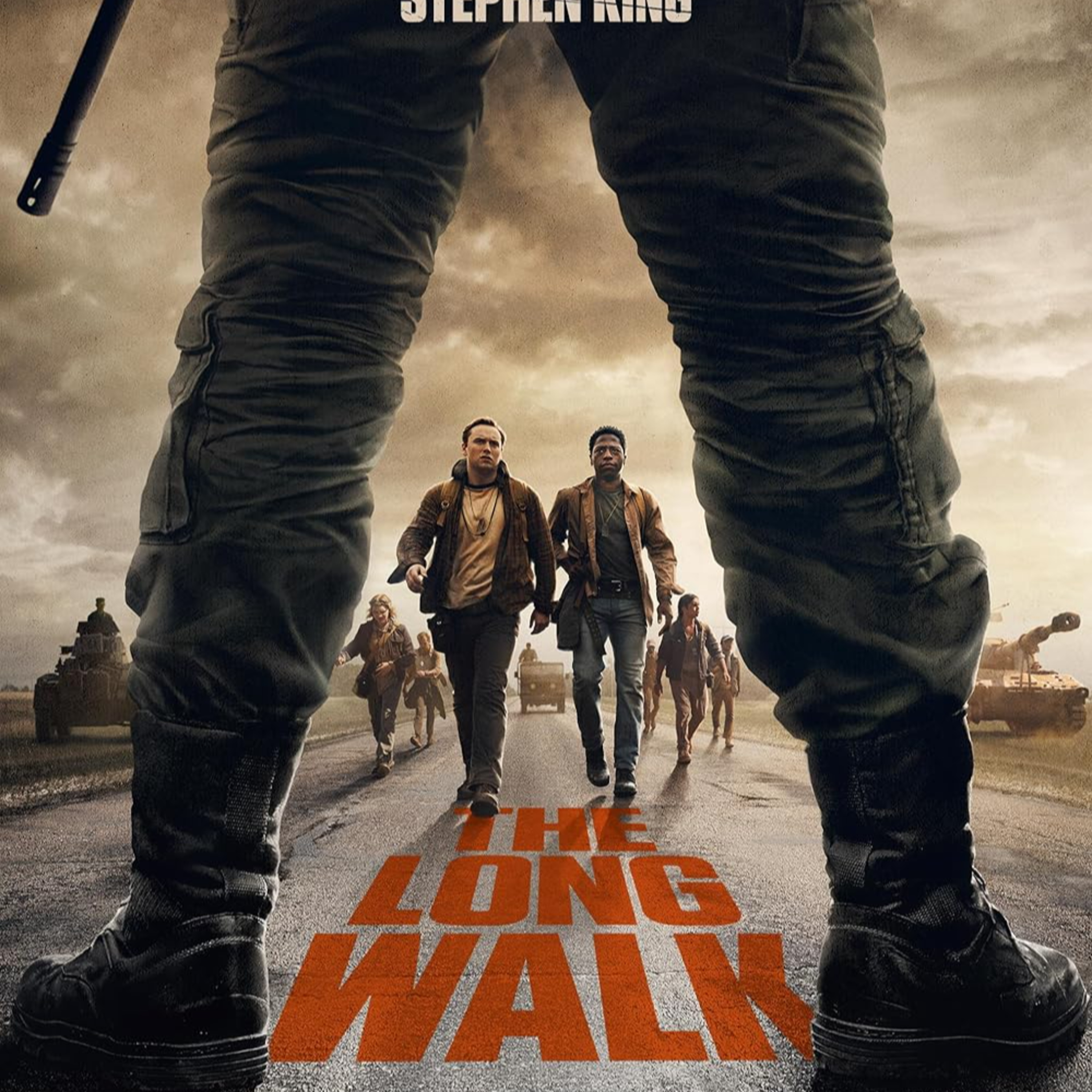
Ep. 4 | The Long Walk — Stephen King's Darkest Idea Finally Gets the Film It Deserved
from 4th Wall Inward · host 4th Wall Inward
Fifty boys. One rule. Keep walking or die.That is the entire premise of The Long Walk — and it is one of the most brutal, psychologically devastating ideas Stephen King ever put on a page. He wrote it as a nineteen-year-old college freshman in 1966. It took nearly sixty years to reach the screen. Francis Lawrence, the director who gave us the best Hunger Games films, was the one who finally got there. And the result is one of the most powerful King adaptations in years.This week on The Fourth Wall Inward we talk about what makes The Long Walk work — and more importantly, why a film about boys walking in a straight line for two hours is one of the most tense, emotionally suffocating experiences of 2025.The world is a dystopian alternate America — a totalitarian military regime following a civil war, in the grip of a severe economic depression. Every year fifty boys, one from each state, are chosen to walk. They must maintain three miles per hour without stopping. Three warnings and you are shot. The last one walking wins a cash prize and one wish of his choosing. The sign-up is technically voluntary. Nearly every eligible young man does it anyway because their families have nothing left.What the film understands — and what lesser adaptations of King's work consistently miss — is that the horror here is not the contest. It is the logic that makes the contest possible. A system so total, so suffocating, that fifty boys march voluntarily into a death walk and call it hope. Mark Hamill's Major is not a villain in any conventional sense. He is something more disturbing: a man who genuinely believes in what he is overseeing. That specific quality — the cheerful bureaucratic sadism of someone who has never questioned the machinery they serve — is where the film finds its most unsettling register.Cooper Hoffman carries the film with a quiet, internal intensity that never announces itself. His Garraty is not a hero. He is a boy who keeps walking because stopping means dying and because somewhere behind him his mother is watching on television. David Jonsson is the genuine revelation — his performance is the emotional engine of everything that happens in the second and third act, and the scenes between them are where the film stops being a genre exercise and becomes something closer to a meditation on what it means to be alive and afraid simultaneously.The film has been criticized in some quarters for what it leaves unexplained — the world-building is deliberately sparse, the rules of the society never fully articulated. We think this is a misreading. The gaps are the point. You are not meant to understand how this system works. You are meant to feel it — the same way the boys feel it, without context, without recourse, with only the road ahead and the knowledge that it ends when you stop.Francis Lawrence has made the lean, mean King adaptation that the novel always deserved. It asks one question and spends 108 minutes making you feel the full weight of it.How far could you go?Follow us on:YouTube: https://www.youtube.com/@4thwallinwardLetterboxd: https://boxd.it/4TjKfSubstack: https://substack.com/@thefourthwallinwardX: https://x.com/4thwallinward
NOW PLAYING
Ep. 4 | The Long Walk — Stephen King's Darkest Idea Finally Gets the Film It Deserved
No transcript for this episode yet
Similar Episodes
May 14, 2026 ·110m
May 13, 2026 ·68m
May 12, 2026 ·141m
May 11, 2026 ·89m
May 8, 2026 ·113m
May 7, 2026 ·115m