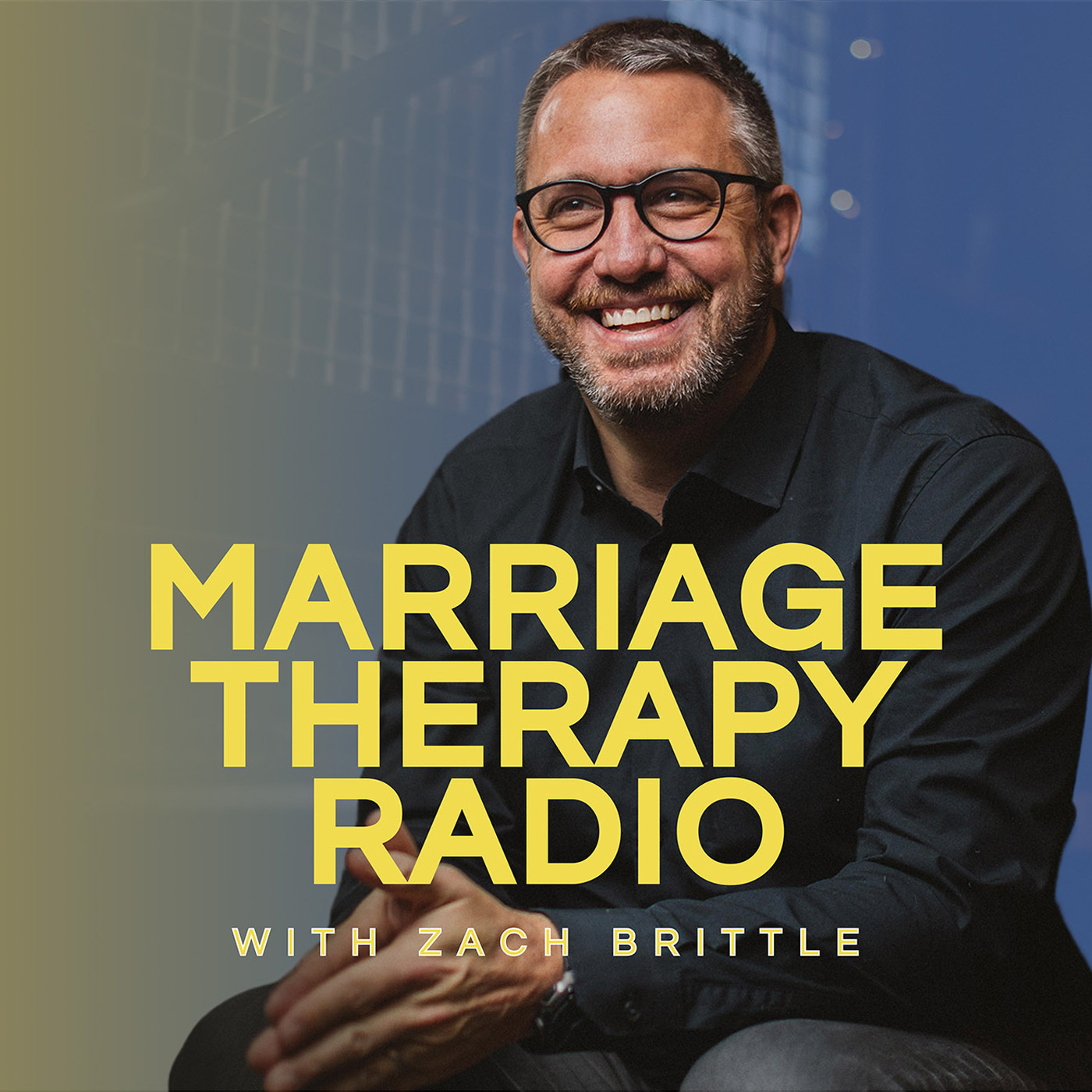
Ep 429 The Therapist and Her Partner: What It Actually Looks Like to Live the Work w/Anna & John episode artwork

EPISODE · Jun 16, 2026 · 51 MIN

Ep 429 The Therapist and Her Partner: What It Actually Looks Like to Live the Work w/Anna & John

from Marriage Therapy Radio

Zach sits down with Anna, a faculty member at the Relational Life Institute and one of his mentors, and her husband John, a self-described practitioner of life rather than therapy. Together, the three of them get into something that rarely happens on relationship podcasts: a real, textured, honest look at what it means to actually live relational principles inside a marriage, not just teach them.The episode turns on a fascinating contrast. Anna has been steeped in Relational Life Therapy for years, knows the language and the tools inside and out, and still finds herself slipping into covert control. John has no clinical training, no internet footprint, and no interest in marketing the work, but walks into every conversation with an intuitive grasp of what healthy relating requires. Zach presses both of them on this. What does doing the work actually mean when one partner has the vocabulary and the other just seems to live it? The answers are more interesting than either of them might have predicted.The centerpiece story is a moment from a joint retreat in Costa Rica, where Anna had to manage a minor household crisis back home without telling John what was happening. She kept things managed, kept things calm, and kept him in the dark, and then eventually had to reckon with the fact that her "helpfulness" had crossed over into exactly the pattern she spends her professional life helping couples dismantle. When she finally told him, his response was one of the most reparative moments she had experienced in their relationship. That single story opens into a much bigger conversation about the difference between protecting your partner and controlling the room, about what it costs to never let yourself be surprised by someone else's goodness.What sticks is this: the goal is not to never get off balance. It is to catch it sooner. Anna says it plainly and Zach echoes it with his now-running story about screaming at strangers in the Costco gas line. Nobody has figured this out. Nobody is immune. But some people are getting better at noticing, and this episode is 45 minutes of what that actually looks and sounds like in a real marriage.Key TakeawaysIntimacy requires level ground. You cannot have real closeness from a one-up or one-down position, whether that means superiority, caretaking, or control.Covert control often starts as kindness. What begins as "protecting" your partner can quietly become a way of managing your own anxiety about their reaction.Predicting a bad response can cost you a good one. When Anna stopped waiting for John to disappoint her and told him what was going on, she got one of the most reparative moments in their relationship.The work is not a destination you arrive at. It is the repeated, unglamorous act of noticing when you have drifted, and coming back.Doing the work is not the same as talking about the work. John's ability to intuit the relational principles without the clinical vocabulary challenges the assumption that people who read the books and say the right things are necessarily further along.How you show up solicits how your partner shows up. Bringing your grounded, adult self to an interaction invites the same from the person across from you. It is not a guarantee, but it raises the odds significantly."On a good day" is not the benchmark. The real growth shows up in what you do when it is a bad day and the old patterns are calling your name loudest.Repair is available more often than we let ourselves believe. The barrier is usually not the other person. It is the story we are already telling about how they are going to respond.Guest InfoAnna is a therapist, teacher, and faculty member at the Relational Life Institute. She is a practitioner and trainer in Relational Life Therapy, an approach developed by Terry Real. She references her use of RLT both in her clinical practice and in her own marriage. She is also Zach's mentor, a relationship he acknowledges directly during the episode.John is Anna's husband. He is not a clinician. He came to the relational principles through personal experience, yoga, mindfulness practice, and what he describes as a forced epiphany roughly a decade before this recording. His perspective as the non-therapist partner in a therapist-led framework is one of the central tensions the episode is built around.See Privacy Policy at https://art19.com/privacy and California Privacy Notice at https://art19.com/privacy#do-not-sell-my-info.

Zach sits down with Anna, a faculty member at the Relational Life Institute and one of his mentors, and her husband John, a self-described practitioner of life rather than therapy. Together, the three of them get into something that rarely happens on relationship podcasts: a real, textured, honest look at what it means to actually live relational principles inside a marriage, not just teach them.The episode turns on a fascinating contrast. Anna has been steeped in Relational Life Therapy for years, knows the language and the tools inside and out, and still finds herself slipping into covert control. John has no clinical training, no internet footprint, and no interest in marketing the work, but walks into every conversation with an intuitive grasp of what healthy relating requires. Zach presses both of them on this. What does doing the work actually mean when one partner has the vocabulary and the other just seems to live it? The answers are more interesting than either of them might have predicted.The centerpiece story is a moment from a joint retreat in Costa Rica, where Anna had to manage a minor household crisis back home without telling John what was happening. She kept things managed, kept things calm, and kept him in the dark, and then eventually had to reckon with the fact that her "helpfulness" had crossed over into exactly the pattern she spends her professional life helping couples dismantle. When she finally told him, his response was one of the most reparative moments she had experienced in their relationship. That single story opens into a much bigger conversation about the difference between protecting your partner and controlling the room, about what it costs to never let yourself be surprised by someone else's goodness.What sticks is this: the goal is not to never get off balance. It is to catch it sooner. Anna says it plainly and Zach echoes it with his now-running story about screaming at strangers in the Costco gas line. Nobody has figured this out. Nobody is immune. But some people are getting better at noticing, and this episode is 45 minutes of what that actually looks and sounds like in a real marriage.Key TakeawaysIntimacy requires level ground. You cannot have real closeness from a one-up or one-down position, whether that means superiority, caretaking, or control.Covert control often starts as kindness. What begins as "protecting" your partner can quietly become a way of managing your own anxiety about their reaction.Predicting a bad response can cost you a good one. When Anna stopped waiting for John to disappoint her and told him what was going on, she got one of the most reparative moments in their relationship.The work is not a destination you arrive at. It is the repeated, unglamorous act of noticing when you have drifted, and coming back.Doing the work is not the same as talking about the work. John's ability to intuit the relational principles without the clinical vocabulary challenges the assumption that people who read the books and say the right things are necessarily further along.How you show up solicits how your partner shows up. Bringing your grounded, adult self to an interaction invites the same from the person across from you. It is not a guarantee, but it raises the odds significantly."On a good day" is not the benchmark. The real growth shows up in what you do when it is a bad day and the old patterns are calling your name loudest.Repair is available more often than we let ourselves believe. The barrier is usually not the other person. It is the story we are already telling about how they are going to respond.Guest InfoAnna is a therapist, teacher, and faculty member at the Relational Life Institute. She is a practitioner and trainer in Relational Life Therapy, an approach developed by Terry Real. She references her use of RLT both in her clinical practice and in her own marriage. She is also Zach's mentor, a relationship he acknowledges directly during the episode.John is Anna's husband. He is not a clinician. He came to the relational principles through personal experience, yoga, mindfulness practice, and what he describes as a forced epiphany roughly a decade before this recording. His perspective as the non-therapist partner in a therapist-led framework is one of the central tensions the episode is built around. See Privacy Policy at https://art19.com/privacy and California Privacy Notice at https://art19.com/privacy#do-not-sell-my-info.

NOW PLAYING

Ep 429 The Therapist and Her Partner: What It Actually Looks Like to Live the Work w/Anna & John

0:00 51:06

No transcript for this episode yet

We transcribe on demand. Request one and we'll notify you when it's ready — usually under 10 minutes.

No similar episodes found.

La Corrobra Canal Extremadura El espacio de la radio pública que pone en valor las lenguas autóctonas de Extremadura: el estremeñu, la fala y el portugués rayano.Con Juan Pedro Sánchez. Radio Maria Kenya Radio Maria Kenya A Christian voice in Kenya and in the World The Brackenfield Records Anvil Audio Productions An off-beat homage to classic radio detectives of the 1940s and '50s, The Brackenfield Records offers comforting genre fare, sitting somewhere between cosy and hard-boiled crime fiction.Whether it's dealing with unfaithful spouses, off-the-rails celebrities, crooked businesspeople, or gun-toting no-gooders, Brackenfield never falters! Chosn Conversations: Beyond the Journal Chosn AI Journal Welcome to Chosn Conversations: Beyond the Journal, where your AI hosts explore the transformative power of conversational journaling and emotional intelligence. Each episode takes you beyond traditional journaling methods, diving deep into voice journaling techniques, mental wellness strategies, and the science behind AI-supported emotional health. We share inspiring user stories, analyze the latest research in digital mental wellness, and provide practical guidance for incorporating journaling into your self-care routine. Whether you're curious about AI therapy alternatives, looking for mental health support tools, or wanting to optimize your journaling practice, our conversations extend beyond the written page into meaningful audio experiences that offer evidence-based insights in an accessible, compassionate format. Join us as we navigate the intersection of technology and mental well-being, helping you track your emotional journey and build lasting resilience through the power of

Frequently Asked Questions

How long is this episode of Marriage Therapy Radio?

This episode is 51 minutes long.

When was this Marriage Therapy Radio episode published?

This episode was published on June 16, 2026.

What is this episode about?

Zach sits down with Anna, a faculty member at the Relational Life Institute and one of his mentors, and her husband John, a self-described practitioner of life rather than therapy. Together, the three of them get into something that rarely happens...

Can I download this Marriage Therapy Radio episode?

Yes, you can download this episode by clicking the download button on the episode player, or subscribe to the podcast in your preferred podcast app for automatic downloads.
URL copied to clipboard!