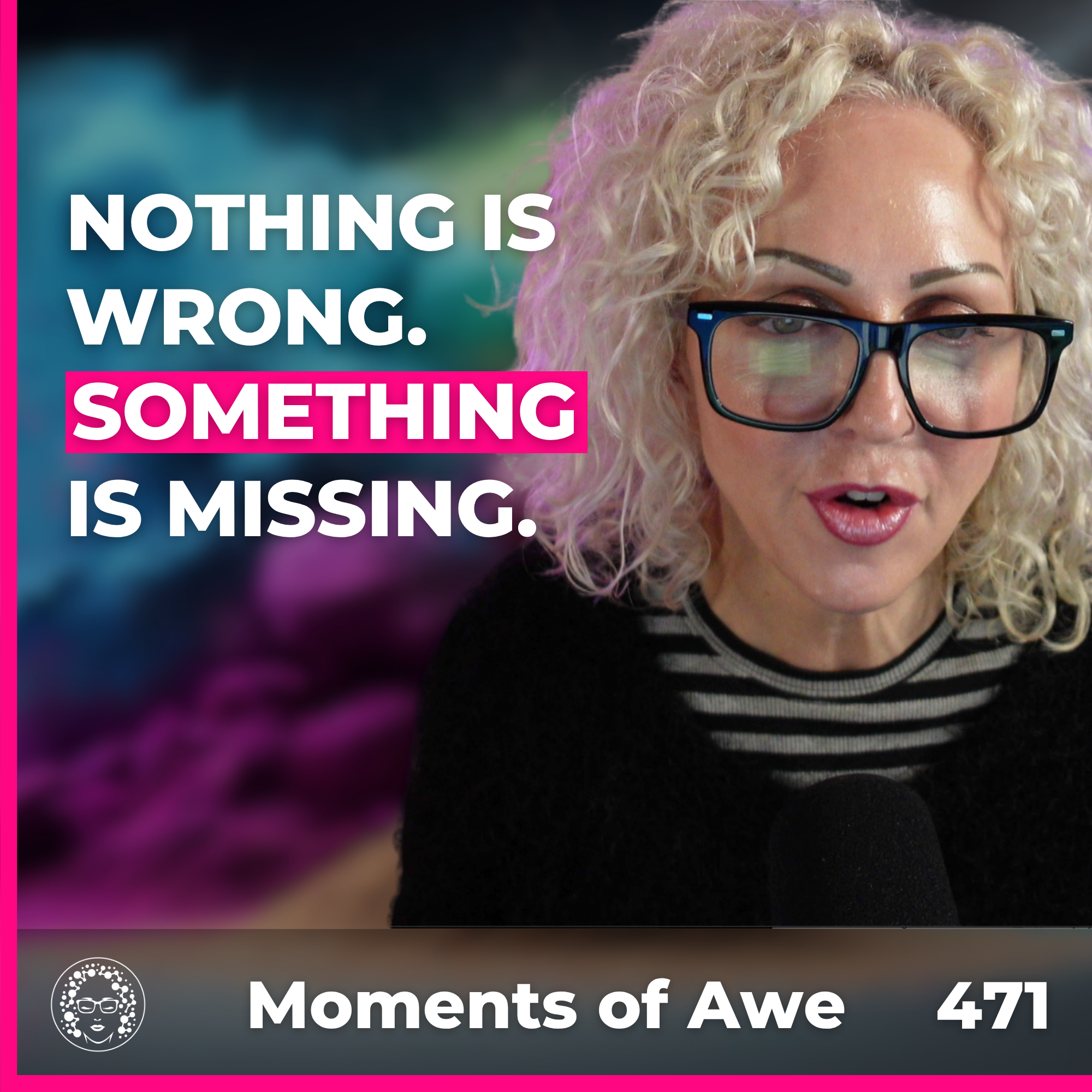
EP 471: The Identity Gap: The Quiet Anxiety of Not Being Who You Really Are episode artwork

EPISODE · Jul 7, 2026

EP 471: The Identity Gap: The Quiet Anxiety of Not Being Who You Really Are

from The Catherine Plano Podcast · host Catherine Plano

Have you ever felt a quiet unease you couldn’t quite name? Your life looks fine, maybe even good. Nothing is technically wrong. And yet something follows you, a sense that the person you present to the world and the person you actually are, are not quite the same. That distance has a name. I call it the identity gap. And it is one of the most common, least talked about sources of suffering I see in the work that I do. In this Moment of Awe, we explore where this gap comes from, why it was never a character flaw, and three practical ways to begin closing it. The Space Between Two Selves Most of us were shaped by other people’s ideas of who we should be. Our parents, our culture, religion, school, the version of success handed to us before we were old enough to choose our own. For a long time, we live inside that shape. We perform it so well that we forget it is a performance. Until we don’t. Until something shifts, and the quiet anxiety becomes impossible to ignore. The identity gap is the distance between who you were conditioned to be and who you actually are. It is the space between the self you show the world and the self that surfaces when you are completely alone. Psychologist Carl Rogers called this the gap between the real self and the ideal self, and when that gap is wide, anxiety lives right in between. Not loud, dramatic anxiety. Quiet anxiety. The kind that shows up as a low hum of dissatisfaction. Decisions that look good on paper but feel wrong in the body. Relationships where you feel unseen, not because the other person is failing, but because you have never shown them who you actually are. A career that made sense at 25 and feels like a cage at 40. It Was Never a Flaw. It Was Survival. Here is what is important to understand. The gap is not a character flaw. It is the result of adaptation. You became who you needed to become in order to survive in your environment, to be loved, to belong. That was intelligent. That was necessary. But you are no longer that child, and the shape you adapted into may no longer fit the person you are growing into. When you can see the gap this way, something softens. You stop blaming yourself for the distance and start getting curious about crossing it. Three Ways to Begin Closing the Gap Closing the identity gap is not a single dramatic act. It happens in small, honest moments. Here is where to begin: Get curious about where you feel most like yourself. Not where you perform best, not where you are most productive or most admired. Where do you feel most at ease in your own skin? That feeling is data. Follow it. Notice the moments of resentment. Resentment is almost always a signal that something you are doing is out of alignment with who you actually are. It is not a flaw, it is a compass. Ask yourself: what am I doing that does not feel like mine? Practise small acts of authentic expression. You do not close the identity gap in a single conversation. You close it in tiny daily choices. Sharing a real opinion. Saying no to something that is not yours. Letting someone see you, even slightly, as you actually are. A Signal, Not a Problem So here is the invitation. What if the anxiety you have been trying to manage is not a problem to solve, but a signal to follow? What if the version of you that feels most real, most alive, most like home is not something you have to build from scratch, but something you have to return to? The gap is not the truth of who you are. It is simply the distance between where you are and where you belong. And every step towards your truth closes it a little more. Because the more human we are with each other, the more we all rise. You can watch the video of this episode on YouTube. Newsletter: https://catherineplano.com for transformation. Instagram: @catherineplano for inspiration.

Have you ever felt a quiet unease you couldn’t quite name? Your life looks fine, maybe even good. Nothing is technically wrong. And yet something follows you, a sense that the person you present to the world and the person you actually are, are not quite the same. That distance has a name. I call it the identity gap. And it is one of the most common, least talked about sources of suffering I see in the work that I do. In this Moment of Awe, we explore where this gap comes from, why it was never a character flaw, and three practical ways to begin closing it. The Space Between Two Selves Most of us were shaped by other people’s ideas of who we should be. Our parents, our culture, religion, school, the version of success handed to us before we were old enough to choose our own. For a long time, we live inside that shape. We perform it so well that we forget it is a performance. Until we don’t. Until something shifts, and the quiet anxiety becomes impossible to ignore. The identity gap is the distance between who you were conditioned to be and who you actually are. It is the space between the self you show the world and the self that surfaces when you are completely alone. Psychologist Carl Rogers called this the gap between the real self and the ideal self, and when that gap is wide, anxiety lives right in between. Not loud, dramatic anxiety. Quiet anxiety. The kind that shows up as a low hum of dissatisfaction. Decisions that look good on paper but feel wrong in the body. Relationships where you feel unseen, not because the other person is failing, but because you have never shown them who you actually are. A career that made sense at 25 and feels like a cage at 40. It Was Never a Flaw. It Was Survival. Here is what is important to understand. The gap is not a character flaw. It is the result of adaptation. You became who you needed to become in order to survive in your environment, to be loved, to belong. That was intelligent. That was necessary. But you are no longer that child, and the shape you adapted into may no longer fit the person you are growing into. When you can see the gap this way, something softens. You stop blaming yourself for the distance and start getting curious about crossing it. Three Ways to Begin Closing the Gap Closing the identity gap is not a single dramatic act. It happens in small, honest moments. Here is where to begin: Get curious about where you feel most like yourself. Not where you perform best, not where you are most productive or most admired. Where do you feel most at ease in your own skin? That feeling is data. Follow it. Notice the moments of resentment. Resentment is almost always a signal that something you are doing is out of alignment with who you actually are. It is not a flaw, it is a compass. Ask yourself: what am I doing that does not feel like mine? Practise small acts of authentic expression. You do not close the identity gap in a single conversation. You close it in tiny daily choices. Sharing a real opinion. Saying no to something that is not yours. Letting someone see you, even slightly, as you actually are. A Signal, Not a Problem So here is the invitation. What if the anxiety you have been trying to manage is not a problem to solve, but a signal to follow? What if the version of you that feels most real, most alive, most like home is not something you have to build from scratch, but something you have to return to? The gap is not the truth of who you are. It is simply the distance between where you are and where you belong. And every step towards your truth closes it a little more. Because the more human we are with each other, the more we all rise. You can watch the video of this episode on YouTube. Newsletter: https://catherineplano.com for transformation. Instagram: @catherineplano for inspiration.

NOW PLAYING

EP 471: The Identity Gap: The Quiet Anxiety of Not Being Who You Really Are

0:00 0:00

No transcript for this episode yet

We transcribe on demand. Request one and we'll notify you when it's ready — usually under 10 minutes.

Frequently Asked Questions

How long is this episode of The Catherine Plano Podcast?

Episode duration information is not available.

When was this The Catherine Plano Podcast episode published?

This episode was published on July 7, 2026.

What is this episode about?

Have you ever felt a quiet unease you couldn’t quite name? Your life looks fine, maybe even good. Nothing is technically wrong. And yet something follows you, a sense that the person you present to the world and the person you actually are, are not...

Can I download this The Catherine Plano Podcast episode?

Yes, you can download this episode by clicking the download button on the episode player, or subscribe to the podcast in your preferred podcast app for automatic downloads.
URL copied to clipboard!