
EPISODE · Mar 12, 2026 · 45 MIN
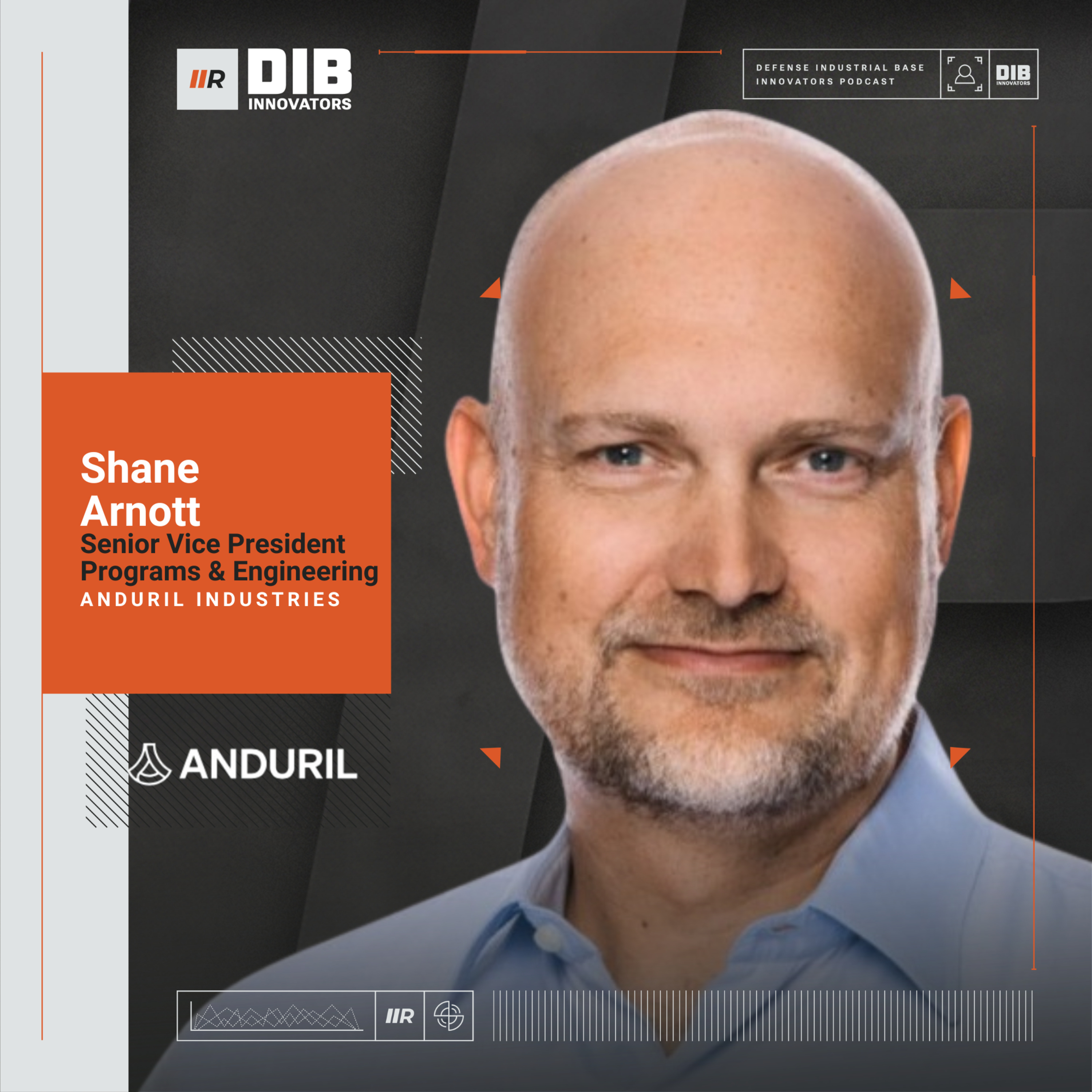
EP 89 — Anduril's Shane Arnott on Eliminating Design Review Theater through Equal Financial Risk
from DIB Innovators · host RADICL
Australia and Anduril each put $50 million into Ghost Shark. That 50/50 split eliminated the customer-contractor power imbalance and got the vehicle in the water in 12 months, whereas the US Navy's ORCA program took nearly a decade to reach the same milestone. When Anduril couldn't solve biofouling on control surfaces, they walked into a design review and said it. The Australian government's science organization brought research from facilities across the Asia-Pacific to fix it. No grading. No theater. Shared risk created actual partnership.Shane Arnott, SVP of Programs & Engineering, details how the $100 million development program transitioned to a $1.7 billion program of record in under three years, making the Royal Australian Navy the world's largest subsea robot operator. Pick technologies that scale to automotive production volumes, design for "evergreening" with 12-18 month hardware refresh cycles, and structure partnerships where both sides have enough skin in the game to solve problems together instead of pointing fingers. Topics discussed:Structuring 50/50 cost-sharing partnerships that eliminate customer-contractor power dynamicsCompressing Ghost Shark timeline from decade-long ORCA equivalent to 12 months in water through equal financial risk allocationApplying automotive production methodologies to achieve orders of magnitude scale increases beyond aerospace normsImplementing "evergreening" programs that refresh submarine hardware every 12-18 months instead of decade-long cycles Navigating subsea autonomy requirements where communications denial and positioning uncertainty force true autonomous operation Rejecting innovation theater driven by venture capital video culture in favor of replicable manufacturing processes for field deployment
What this episode covers
Australia and Anduril each put $50 million into Ghost Shark. That 50/50 split eliminated the customer-contractor power imbalance and got the vehicle in the water in 12 months, whereas the US Navy's ORCA program took nearly a decade to reach the same milestone. When Anduril couldn't solve biofouling on control surfaces, they walked into a design review and said it. The Australian government's science organization brought research from facilities across the Asia-Pacific to fix it. No grading. No theater. Shared risk created actual partnership.Shane Arnott, SVP of Programs & Engineering, details how the $100 million development program transitioned to a $1.7 billion program of record in under three years, making the Royal Australian Navy the world's largest subsea robot operator. Pick technologies that scale to automotive production volumes, design for "evergreening" with 12-18 month hardware refresh cycles, and structure partnerships where both sides have enough skin in the game to solve problems together instead of pointing fingers. Topics discussed:Structuring 50/50 cost-sharing partnerships that eliminate customer-contractor power dynamicsCompressing Ghost Shark timeline from decade-long ORCA equivalent to 12 months in water through equal financial risk allocationApplying automotive production methodologies to achieve orders of magnitude scale increases beyond aerospace normsImplementing "evergreening" programs that refresh submarine hardware every 12-18 months instead of decade-long cycles Navigating subsea autonomy requirements where communications denial and positioning uncertainty force true autonomous operation Rejecting innovation theater driven by venture capital video culture in favor of replicable manufacturing processes for field deployment
NOW PLAYING
EP 89 — Anduril's Shane Arnott on Eliminating Design Review Theater through Equal Financial Risk
No transcript for this episode yet
Similar Episodes
Mar 2, 2026 ·27m
Mar 2, 2026 ·8m
Feb 25, 2026 ·14m
Jan 14, 2026 ·32m
Dec 16, 2025 ·43m