
EPISODE · May 28, 2026 · 35 MIN
Episode #08 | Engine Failure: Why Automotive Supply Chains Need Orchestration
from Supply Chain Superintelligence · host Prewave
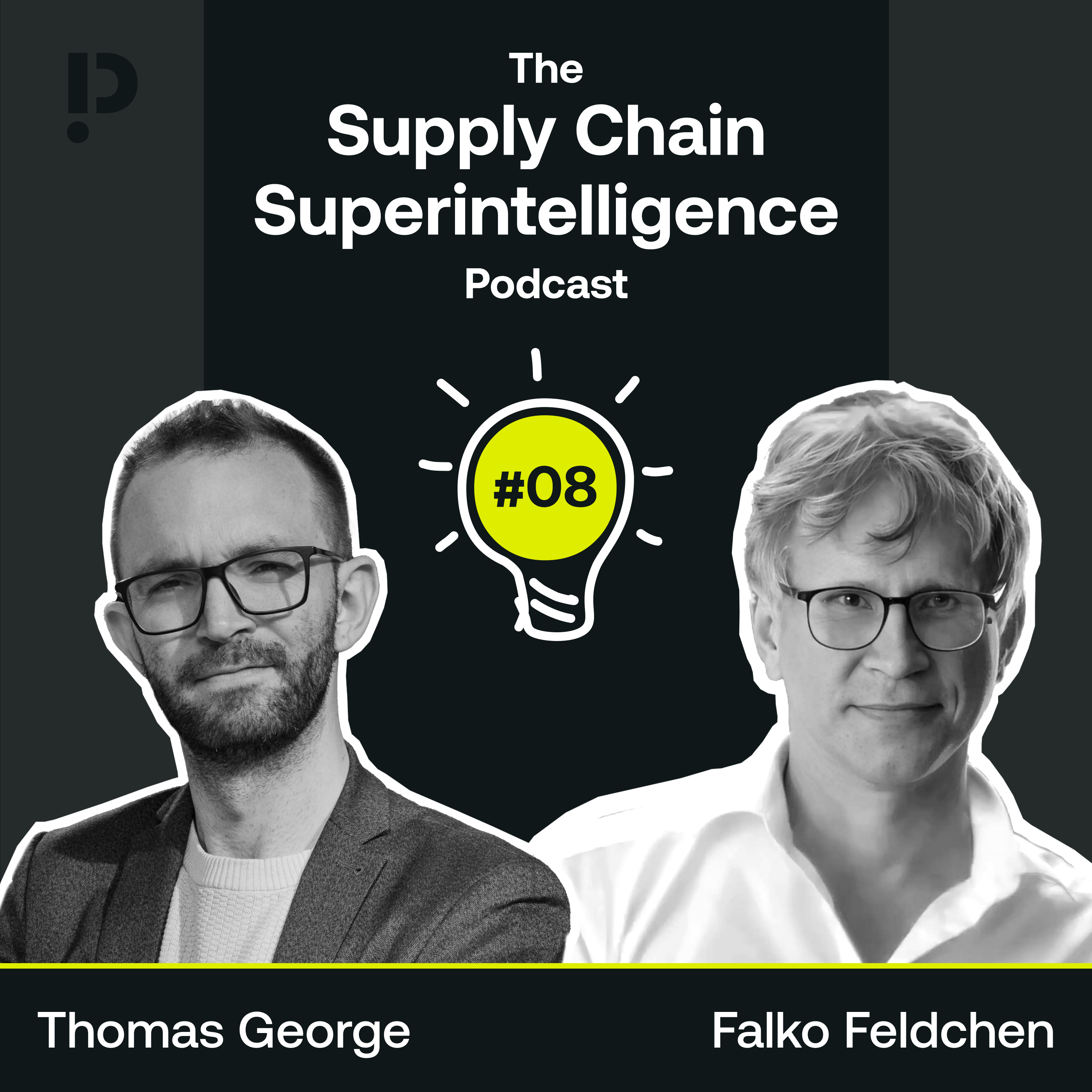
"If you don't get the wheels of a car, there's no point getting the engine in."With the Strait of Hormuz under pressure, an industry-wide insolvency crisis brewing in Europe, and the EV transition rewriting decades-old supplier networks, how do automotive supply chains stay coordinated when every part of the system is moving at once?In this episode of Supply Chain Superintelligence, host Thomas George speaks with Falko Feldchen, Vice President of Procurement Solutions at o9 Solutions, about why orchestration, not just visibility or collaboration, has become the defining capability for modern automotive supply chains.Drawing on 25 years across the automotive and enterprise software industries, Falko explains how o9's "digital brain" connects demand planning, manufacturing, and procurement into a single decision-making layer, and why combining this with external risk data from partners like Prewave allows planners to contextualise thousands of risk signals into prioritised action. The conversation moves from the Strait of Hormuz and its ripple effects on aluminium, plastics, and helium, to the deeper structural shifts reshaping the industry: tariffs driving localisation, EVs reconfiguring supplier bases, and the rise of Catena-X as a mandatory data exchange standard for European OEMs.Key insights:Orchestration goes beyond visibility and collaboration by aligning every category and stakeholder around a single end-to-end decision.Contextualising external risk data against inventory, demand, and capacity is what turns risk signals into prioritised action.The shift to EVs, localisation driven by tariffs, and the rise of Catena-X are simultaneously reshaping how automotive supply chains operate.Resilience requires a mix of inventory, alternative suppliers, reserved capacity, and structured cross-tier collaboration, no single lever is enough.About Falko FeldchenFalko Feldchen is Vice President of Procurement Solutions at o9, bringing 25 years of experience across the automotive industry and enterprise software companies. He advises global OEMs and suppliers on multi-tier collaboration, risk-aware planning, and the practical application of AI in procurement.About Thomas GeorgeThomas George, host of the Supply Chain Superintelligence Podcast, is Prewave's Lead Risk Editor. As co-author of The Taiwan Complex and many more, his focus on the intersection of geopolitics, supply chains, and strategic risk brings niche supply chain topics to the public eye.Resources & LinksLearn more about o9 Solutions: https://o9solutions.com/Visit Prewave: https://www.prewave.com/Don't Miss OutFollow the Supply Chain Superintelligence Podcast for more expert conversations on geopolitics, resilience, and the forces shaping the future of global supply chains.
What this episode covers
"If you don't get the wheels of a car, there's no point getting the engine in."With the Strait of Hormuz under pressure, an industry-wide insolvency crisis brewing in Europe, and the EV transition rewriting decades-old supplier networks, how do automotive supply chains stay coordinated when every part of the system is moving at once?In this episode of Supply Chain Superintelligence, host Thomas George speaks with Falko Feldchen, Vice President of Procurement Solutions at o9 Solutions, about why orchestration, not just visibility or collaboration, has become the defining capability for modern automotive supply chains.Drawing on 25 years across the automotive and enterprise software industries, Falko explains how o9's "digital brain" connects demand planning, manufacturing, and procurement into a single decision-making layer, and why combining this with external risk data from partners like Prewave allows planners to contextualise thousands of risk signals into prioritised action. The conversation moves from the Strait of Hormuz and its ripple effects on aluminium, plastics, and helium, to the deeper structural shifts reshaping the industry: tariffs driving localisation, EVs reconfiguring supplier bases, and the rise of Catena-X as a mandatory data exchange standard for European OEMs.Key insights:Orchestration goes beyond visibility and collaboration by aligning every category and stakeholder around a single end-to-end decision.Contextualising external risk data against inventory, demand, and capacity is what turns risk signals into prioritised action.The shift to EVs, localisation driven by tariffs, and the rise of Catena-X are simultaneously reshaping how automotive supply chains operate.Resilience requires a mix of inventory, alternative suppliers, reserved capacity, and structured cross-tier collaboration, no single lever is enough.About Falko FeldchenFalko Feldchen is Vice President of Procurement Solutions at o9, bringing 25 years of experience across the automotive industry and enterprise software companies. He advises global OEMs and suppliers on multi-tier collaboration, risk-aware planning, and the practical application of AI in procurement.About Thomas GeorgeThomas George, host of the Supply Chain Superintelligence Podcast, is Prewave's Lead Risk Editor. As co-author of The Taiwan Complex and many more, his focus on the intersection of geopolitics, supply chains, and strategic risk brings niche supply chain topics to the public eye.Resources & LinksLearn more about o9 Solutions: https://o9solutions.com/Visit Prewave: https://www.prewave.com/Don't Miss OutFollow the Supply Chain Superintelligence Podcast for more expert conversations on geopolitics, resilience, and the forces shaping the future of global supply chains.
NOW PLAYING
Episode #08 | Engine Failure: Why Automotive Supply Chains Need Orchestration
No transcript for this episode yet
Similar Episodes
Jun 6, 2026 ·2m
Feb 18, 2026 ·3m
Jan 2, 2026 ·3m