
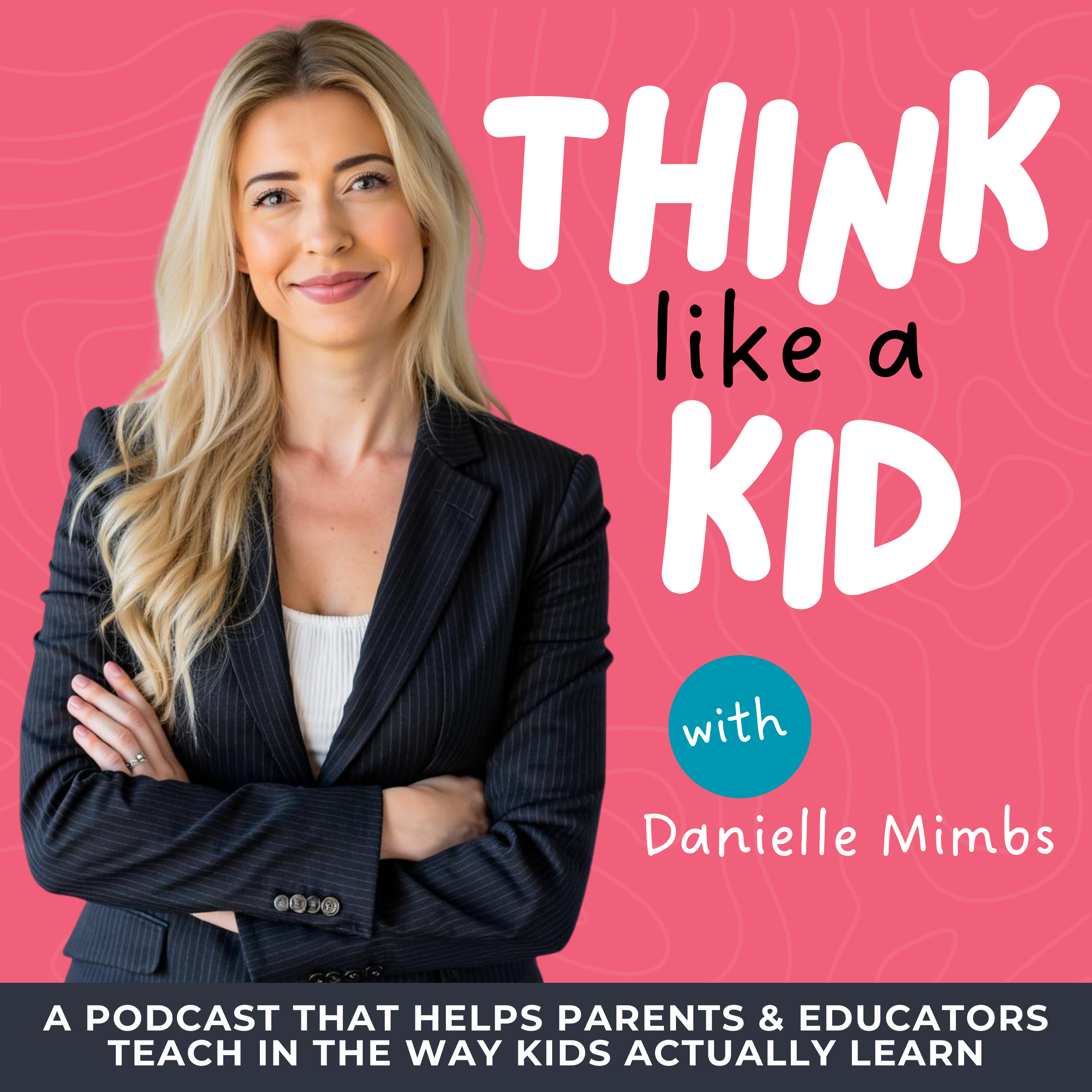
EPISODE · May 19, 2026 · 10 MIN
Episode 10: The SIMPLE Framework: 6 Steps to Learning That Sticks
from Think Like a Kid · host Danielle Mimbs
Have you ever felt like you were forcing a lesson, a conversation, or even just homework on your child, only for it to completely fall flat? When I started STEAM Made Simple, I realized that I had to simplify complex concepts not just for my students, but for myself. Out of that necessity, I developed the SIMPLE Framework. It is the exact blueprint I follow for every single thing I teach, whether it’s a high-level STEAM experiment or a foundational literacy skill.In this episode, I’m breaking down each letter of the framework: Start with the brain, Invite curiosity, Meet them where they are, Practice through play, Link to emotion, and Encourage independence. I’ll even walk you through a real-life example of how to use this framework to teach letter sounds without a single worksheet in sight.In this episode, we cover:S - Start with the Brain: Why no learning happens if a child isn't regulated and "online".I - Invite Curiosity: Using play invitations and novelty to open up learning pathways.M - Meet Them Where They Are: The vital importance of adjusting tasks to a child’s individual level rather than a textbook standard.P - Practice Through Play: Why playful exploration is the brain’s favorite way to build neural pathways.L - Link to Emotion: Using stories and purpose to turn short-term learning into long-term memory.E - Encourage Independence: Strengthening self-awareness and confidence by giving kids ownership over their learning.Featured Resources Mentioned in this Episode:The STEAM Made Preschool Curriculum: My fully launched curriculum that uses the SIMPLE Framework to build a strong foundation for four- and five-year-olds.AI Tool Tip: How to use ChatGPT to create personalized, emotion-linked stories for your child’s specific interests.Your "Think Like a Kid" Homework This Week:Try applying the SIMPLE Framework to one thing you want to teach this week. If it's letter sounds, don't reach for a worksheet. Instead, Invite Curiosity with a "Sound Hunt". Present it with excitement, like "instant dopamine" and have them find objects that start with a specific sound, like "mm" for mommy.. Remember to Start with the Brain by doing a playful wall push or a deep breath before you begin.Recommended Episodes:Episode 2: The Watchdog Brain (Why "Calm Down" Doesn't Work)Episode 4: The Power to Choose: Turning Power Struggles into Problem SolvingEpisode 5: STEAM for the Future: Raising Problem Solvers in an AI WorldIf you loved this conversation, make sure to follow and subscribe to the show so you never miss an episode or a quick win. And hey, if you’re looking for a way to bring this 'think like a kid' energy into your daily learning, check out my The STEAM Made Preschool Curriculum. It’s the best way to give your child a head start with an educational advantage that actually feels like play.You can also connect with me on Instagram @STEAMMadeSimple for daily tools, behind-the-scenes stories, and playful learning ideas.
What this episode covers
Have you ever felt like you were forcing a lesson, a conversation, or even just homework on your child, only for it to completely fall flat? When I started STEAM Made Simple, I realized that I had to simplify complex concepts not just for my students, but for myself. Out of that necessity, I developed the SIMPLE Framework. It is the exact blueprint I follow for every single thing I teach, whether it’s a high-level STEAM experiment or a foundational literacy skill.In this episode, I’m breaking down each letter of the framework: Start with the brain, Invite curiosity, Meet them where they are, Practice through play, Link to emotion, and Encourage independence. I’ll even walk you through a real-life example of how to use this framework to teach letter sounds without a single worksheet in sight.In this episode, we cover:S - Start with the Brain: Why no learning happens if a child isn't regulated and "online".I - Invite Curiosity: Using play invitations and novelty to open up learning pathways.M - Meet Them Where They Are: The vital importance of adjusting tasks to a child’s individual level rather than a textbook standard.P - Practice Through Play: Why playful exploration is the brain’s favorite way to build neural pathways.L - Link to Emotion: Using stories and purpose to turn short-term learning into long-term memory.E - Encourage Independence: Strengthening self-awareness and confidence by giving kids ownership over their learning.Featured Resources Mentioned in this Episode:The STEAM Made Preschool Curriculum: My fully launched curriculum that uses the SIMPLE Framework to build a strong foundation for four- and five-year-olds.AI Tool Tip: How to use ChatGPT to create personalized, emotion-linked stories for your child’s specific interests.Your "Think Like a Kid" Homework This Week:Try applying the SIMPLE Framework to one thing you want to teach this week. If it's letter sounds, don't reach for a worksheet. Instead, Invite Curiosity with a "Sound Hunt". Present it with excitement, like "instant dopamine" and have them find objects that start with a specific sound, like "mm" for mommy.. Remember to Start with the Brain by doing a playful wall push or a deep breath before you begin.Recommended Episodes:Episode 2: The Watchdog Brain (Why "Calm Down" Doesn't Work)Episode 4: The Power to Choose: Turning Power Struggles into Problem SolvingEpisode 5: STEAM for the Future: Raising Problem Solvers in an AI WorldIf you loved this conversation, make sure to follow and subscribe to the show so you never miss an episode or a quick win. And hey, if you’re looking for a way to bring this 'think like a kid' energy into your daily learning, check out my The STEAM Made Preschool Curriculum. It’s the best way to give your child a head start with an educational advantage that actually feels like play.You can also connect with me on Instagram @STEAMMadeSimple for daily tools, behind-the-scenes stories, and playful learning ideas.
NOW PLAYING
Episode 10: The SIMPLE Framework: 6 Steps to Learning That Sticks
No transcript for this episode yet
Similar Episodes
Mar 19, 2026 ·34m
Feb 18, 2026 ·11m
Feb 11, 2026 ·45m
Nov 12, 2025 ·35m
Oct 17, 2025 ·40m