
EPISODE · May 25, 2026 · 33 MIN
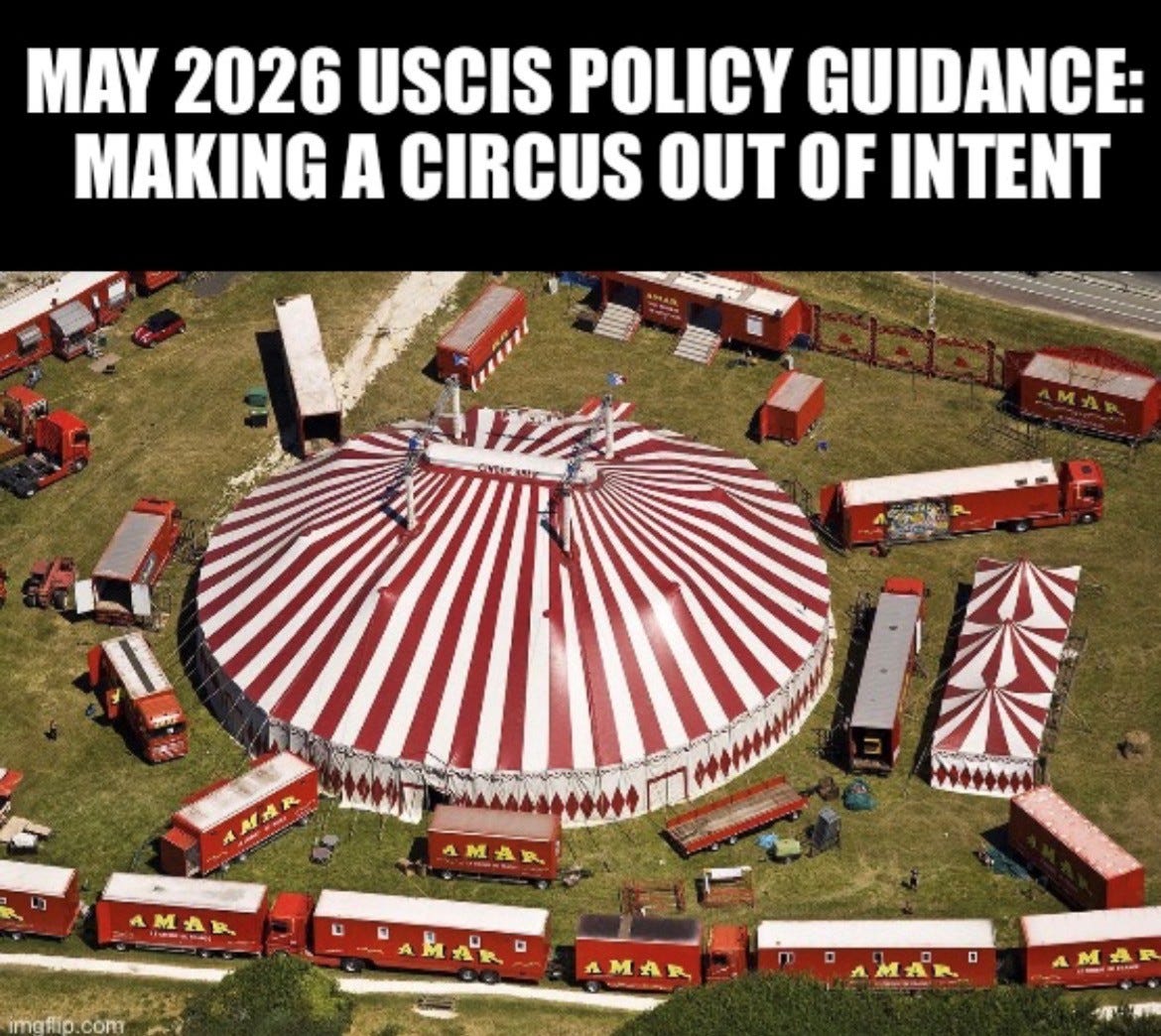
Episode 32: Adjustment of Status versus Immigrant Visa Processing: The Role of Temporary Intent
from The Maze: A Podcast about US Immigration Law · host Robert Webber
* May 21, 2026, Policy Memo on Adjustment of Status as Administrative Grace (PM-602-0199): Here* “Failure to depart” as a negative discretionary factor.* August 15, 2025, Policy Memo on Good Moral Character Standard for Naturalization (PM-602-0188): Here* August 19, 2025, Policy Alert on Anti-Semitic/Anti-American Behavior as “overwhelmingly negative” discretionary factor (PA-2025-16): Here* September 4, 2025: Policy Memo (PM-602-0190): Related to Public Charges.* September 20, 2025: $100k H-1B Surcharge Memo.* November/December 2025 and Jan 1, 2026: Various memos pausing processing of DV lottery cases, asylum cases, and benefits for people of 39 “high-risk” countries* November 2020 Policy Memo on Discretionary Factors in Adjustment of Status: Here* Family and Community Ties - Positive:* Family ties to the United States and the closeness of the underlying relationships.* Hardship to the applicant or close relatives if the adjustment application is denied.* Length of lawful residence in the United States, status held and conduct during that residence, particularly if the applicant began his or her residency at a young age.* Family and Community Ties - Negative:* Absence of close family, community, and residence ties.* Immigration Status History - Positive:* Compliance with immigration laws and the conditions of any immigration status held.* Approved humanitarian-based immigrant or nonimmigrant petition, waiver of inadmissibility, or other form of relief and the underlying humanitarian, hardship, or other factors that resulted in the approval.* Immigration Status and History - Negative:Violations of immigration laws and the conditions of any immigration status held.* Current or previous instances of fraud or false testimony in dealings with USCIS or any government agency.* Unexecuted exclusion, deportation, or removal orders* Business, Employment, and Skills - Positive:* Property, investment, or business ties in the United States.* Employment history, including type, length, and stability of the employment.* Education, specialized skills, and training obtained from an educational institution in the United States relevant to current or prospective employment and earning potential in the United States.* Business, Employment, and Skills - Negative:* History of unemployment or underemployment.* Unauthorized employment in the United States.* Employment or income from illegal activity or sources, including, but not limited to, income gained illegally from drug sales, illegal gambling, prostitution, or alien smuggling* Community Standing and Moral Character - Positive:* Respect for law and order, and good moral character (in the United States and abroad) demonstrated by a lack of a criminal record and evidence of good standing in the community.* Honorable service in the U.S. armed forces or other evidence of value and service to the community.* Compliance with tax laws.* Current or past cooperation with law enforcement authorities.* Demonstration of reformed or rehabilitated criminal conduct, where applicable.* Community service beyond any imposed by the courts.* Community Standing and Moral Character - Negative:* Moral depravity or criminal tendencies (in the United States and abroad) reflected by a single serious crime or an active or long criminal record, including the nature, seriousness, and recent occurrence of criminal violations.* Lack of reformation of character or rehabilitation.* Public safety or national security concerns.[43]* Failure to meet tax obligations.* Failure to pay child support.* Failure to comply with any applicable civil court orders.* Other - Positive* Absence of significant undesirable or negative factors and other indicators of good moral character in the United States and abroad.* Other - Negative* Other indicators adversely reflecting the applicant’s character and undesirability as an LPR of this country.Practical Tips:* When in the United States, act consistently with the visa issued to you.* If you enter on a temporary visa, particularly ESTA/Visa Waiver, a B visa, an F visa, or a J visa, understand your intent for that admission is temporary.* Regarding I-140 and I-130 preparation - plan for immigrant visa processing unless you have a truly dual intent visa (H-1B/H-4, or L-1/L-2).* Almost dual intent (TN, H-1B1, R-1, O-1, E-1/E-2/E-3) versus truly dual intent (H-1B/H-4, or L-1/L-2).If you are reading this before June 17, then here is a Shameless Plug to seek your vote for the Immie Award as People’s Choice Thought Leader:https://www.buildfellowship.com/immies-2026/nominee/robert-webber This is a public episode. If you'd like to discuss this with other subscribers or get access to bonus episodes, visit webberimmigration.substack.com/subscribe
Embed this episode
NOW PLAYING
Episode 32: Adjustment of Status versus Immigrant Visa Processing: The Role of Temporary Intent
No transcript for this episode yet
Similar Episodes
No similar episodes found.
Similar Podcasts
No similar podcasts found.