PodParley PodParley

Episode 34: An Interview with Tom LeClair

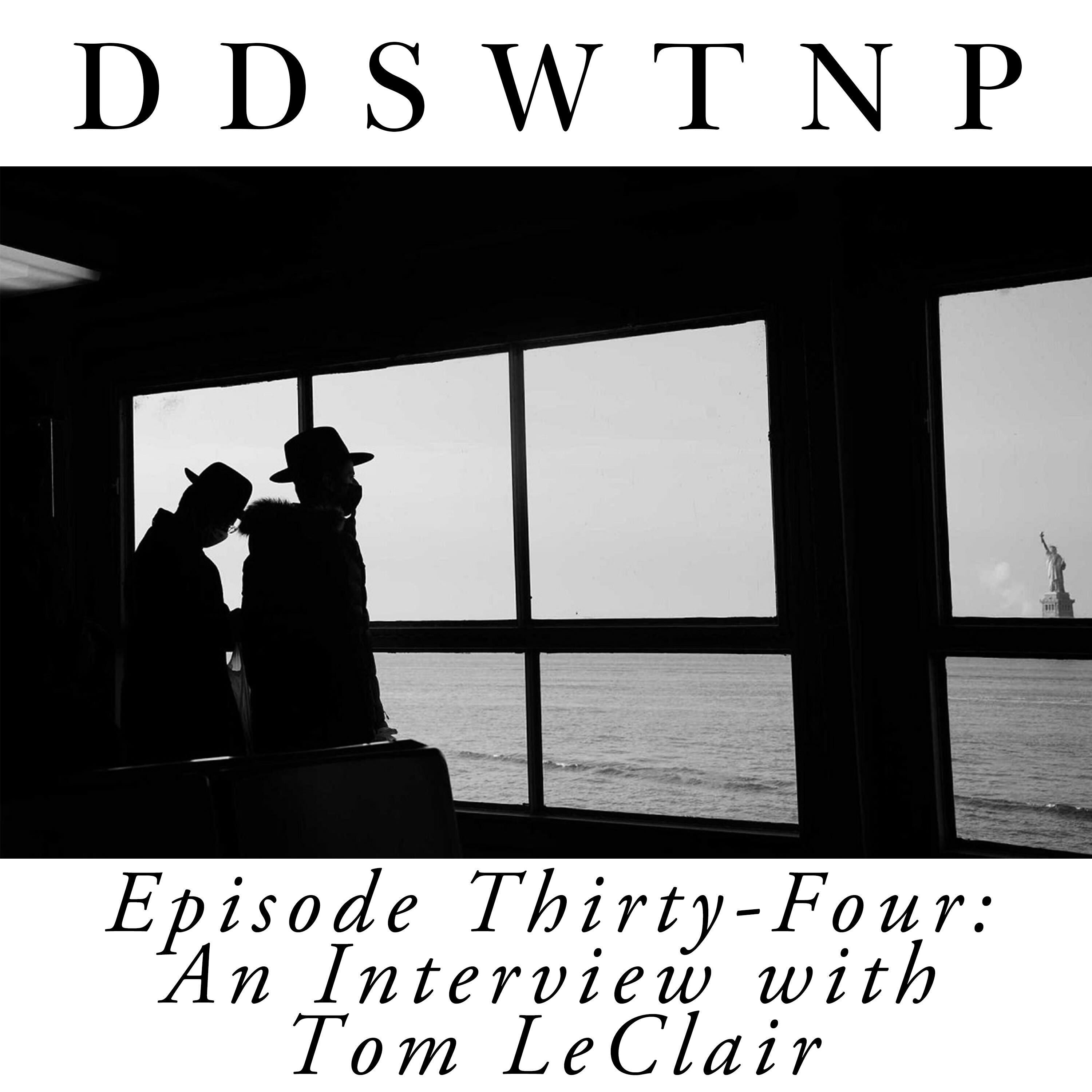
In Episode 34 DDSWTNP sit down for a revelatory talk with Tom LeClair, a founding critic in the study of DeLillo, his longtime friend and liaison to the literary world, and a figure who has both written fiction shaped by DeLillo’s and (he suggests) seen his own stories turned into scenes and dialogue by DeLillo himself. We get into LeClair’s relationship with DeLillo going back more than forty years, starting from the time the author sent him a copy of Ratner’s Star and proceeding to a 1979 interview in Athens that illuminated a then rather reclusive and secretive writer, including the story behind a card DeLillo handed out in those years reading “I don’t want to talk about it.” We also ask LeClair questions about his many readings of DeLillo’s and others’ works over the years, starting from his major books In the Loop: Don DeLillo and the Systems Novel (1987) and The Art of Excess: Mastery in Contemporary American Fiction (1989), studies that initiated LeClair’s career-long examination of encyclopedic works that form categories of “systext,” “monsterpiece,” and others he has defined in his many major magazine and newspaper reviews and in his current substack. What does LeClair make of the many mentions of “systems” in Underworld? What does a line from Point Omega suggest to him about the possibility someday of a DeLillo biography? What does LeClair mean when he calls DeLillo a thoroughly “intuitive” writer and an artist obsessed his whole life with embodiment, birth, death, and fear? Is “mystery” the right word for what drives DeLillo’s narrative seeking, and is Catholicism a useful lens? What to make of the ending of Zero K? Why did DeLillo want to visit Beirut with LeClair? And what do these two talk about when they have lunch together? The interview also gets into depth on the many comparisons LeClair sees with his own fiction, its set of Kierkegaardian maneuvers through the Greece-based world of basketball player Michael Keever, the hero of Passing Off (1996) who begins for LeClair a series of examinations of games, terrorism, and some familiar DeLillo territory that extends through the four other Passing novels that LeClair has published in the thirty years since. Cover photograph by Kinga Owczennikow. A native of Poland, Kinga Owczennikow is currently based in New York City. She holds a BA (Hons) in Photography from the University for the Creative Arts in the UK. Kinga is an Associate of the Royal Photographic Society, a member of the Center for Photographic Art in Carmel and an exhibiting member of the Soho Photo Gallery in New York City. Kinga had a solo exhibition “The secret paths of Hong Kong” at the Asia and Pacific Museum in Warsaw, in 2011. Her photographic work has also been exhibited internationally in group shows. Her first photobook "Framing the World" was published by Ephemere in Tokyo, in 2025.

Episode 34 of the Don DeLillo Should Win the Nobel Prize podcast, hosted by Jeffrey Severs & Michael Streit, titled "Episode 34: An Interview with Tom LeClair" was published on March 11, 2026 and runs 107 minutes.

March 11, 2026 ·107m · Don DeLillo Should Win the Nobel Prize

0:00 / 0:00

In Episode 34 DDSWTNP sit down for a revelatory talk with Tom LeClair, a founding critic in the study of DeLillo, his longtime friend and liaison to the literary world, and a figure who has both written fiction shaped by DeLillo’s and (he suggests) seen his own stories turned into scenes and dialogue by DeLillo himself. We get into LeClair’s relationship with DeLillo going back more than forty years, starting from the time the author sent him a copy of Ratner’s Star and proceeding to a 1979 interview in Athens that illuminated a then rather reclusive and secretive writer, including the story behind a card DeLillo handed out in those years reading “I don’t want to talk about it.” We also ask LeClair questions about his many readings of DeLillo’s and others’ works over the years, starting from his major books In the Loop: Don DeLillo and the Systems Novel (1987) and The Art of Excess: Mastery in Contemporary American Fiction (1989), studies that initiated LeClair’s career-long examination of encyclopedic works that form categories of “systext,” “monsterpiece,” and others he has defined in his many major magazine and newspaper reviews and in his current substack. What does LeClair make of the many mentions of “systems” in Underworld? What does a line from Point Omega suggest to him about the possibility someday of a DeLillo biography? What does LeClair mean when he calls DeLillo a thoroughly “intuitive” writer and an artist obsessed his whole life with embodiment, birth, death, and fear? Is “mystery” the right word for what drives DeLillo’s narrative seeking, and is Catholicism a useful lens? What to make of the ending of Zero K? Why did DeLillo want to visit Beirut with LeClair? And what do these two talk about when they have lunch together? The interview also gets into depth on the many comparisons LeClair sees with his own fiction, its set of Kierkegaardian maneuvers through the Greece-based world of basketball player Michael Keever, the hero of Passing Off (1996) who begins for LeClair a series of examinations of games, terrorism, and some familiar DeLillo territory that extends through the four other Passing novels that LeClair has published in the thirty years since. Cover photograph by Kinga Owczennikow. A native of Poland, Kinga Owczennikow is currently based in New York City. She holds a BA (Hons) in Photography from the University for the Creative Arts in the UK. Kinga is an Associate of the Royal Photographic Society, a member of the Center for Photographic Art in Carmel and an exhibiting member of the Soho Photo Gallery in New York City. Kinga had a solo exhibition “The secret paths of Hong Kong” at the Asia and Pacific Museum in Warsaw, in 2011. Her photographic work has also been exhibited internationally in group shows. Her first photobook "Framing the World" was published by Ephemere in Tokyo, in 2025.

In Episode 34 DDSWTNP sit down for a revelatory talk with Tom LeClair, a founding critic in the study of DeLillo, his longtime friend and liaison to the literary world, and a figure who has both written fiction shaped by DeLillo’s and (he suggests) seen his own stories turned into scenes and dialogue by DeLillo himself. We get into LeClair’s relationship with DeLillo going back more than forty years, starting from the time the author sent him a copy of Ratner’s Star and proceeding to a 1979 interview in Athens that illuminated a then rather reclusive and secretive writer, including the story behind a card DeLillo handed out in those years reading “I don’t want to talk about it.” We also ask LeClair questions about his many readings of DeLillo’s and others’ works over the years, starting from his major books In the Loop: Don DeLillo and the Systems Novel (1987) and The Art of Excess: Mastery in Contemporary American Fiction (1989), studies that initiated LeClair’s career-long examination of encyclopedic works that form categories of “systext,” “monsterpiece,” and others he has defined in his many major magazine and newspaper reviews and in his current substack. What does LeClair make of the many mentions of “systems” in Underworld? What does a line from Point Omega suggest to him about the possibility someday of a DeLillo biography? What does LeClair mean when he calls DeLillo a thoroughly “intuitive” writer and an artist obsessed his whole life with embodiment, birth, death, and fear? Is “mystery” the right word for what drives DeLillo’s narrative seeking, and is Catholicism a useful lens? What to make of the ending of Zero K? Why did DeLillo want to visit Beirut with LeClair? And what do these two talk about when they have lunch together? The interview also gets into depth on the many comparisons LeClair sees with his own fiction, its set of Kierkegaardian maneuvers through the Greece-based world of basketball player Michael Keever, the hero of Passing Off (1996) who begins for LeClair a series of examinations of games, terrorism, and some familiar DeLillo territory that extends through the four other Passing novels that LeClair has published in the thirty years since. 


Cover photograph by Kinga Owczennikow. A native of Poland, Kinga Owczennikow is currently based in New York City. She holds a BA (Hons) in Photography from the University for the Creative Arts in the UK. Kinga is an Associate of the Royal Photographic Society, a member of the Center for Photographic Art in Carmel and an exhibiting member of the Soho Photo Gallery in New York City. Kinga had a solo exhibition “The secret paths of Hong Kong” at the Asia and Pacific Museum in Warsaw, in 2011. Her photographic work has also been exhibited internationally in group shows. Her first photobook "Framing the World" was published by Ephemere in Tokyo, in 2025.


Texts by Tom LeClair and others discussed in this episode:


“Don DeLillo: The Word, The Image, The Gun.” BBC, 1991. https://www.imdb.com/title/tt4029096/


Amy Hungerford, “Don DeLillo’s Latin Mass.” Contemporary Literature 47.3 (Autumn 2006): 343-380.


Tom LeClair and Larry McCaffery, eds. Anything Can Happen: Interviews with Contemporary American Novelists. U. of Illinois P., 1983.


Tom LeClair. In the Loop: Don DeLillo and the Systems Novel. U. of Illinois P., 1987.


---. The Art of Excess: Mastery in Contemporary American Fiction.U. of Illinois P., 1989.


---. “Me and Mao II” (1993). https://perival.com/delillo/meandmaoii.html


---. Passing Off. Permanent Press, 1996.


---. “An Under-history of Mid-Century America” (review of Underworld). The Atlantic, October 1997.


---. “Two On One: Writing a Basketball Novel.” In What to Read (and Not): Essays and Reviews. Dzanc Books, 2014.


---. “Serious But Not Dangerous Don DeLillo” (review of The Silence). American Book Review 42.4 (May/June 2021): 10-11.


—-. Harpooning Donald Trump: A Novelist’s Essays. Mediacs, 2017.


---. Passing Again. 2022.


Tom LeClair’s Substack: https://tleclair.substack.com/


Vince Passaro, “Dangerous Don DeLillo.” New York Times Magazine, May 19, 1991. https://www.nytimes.com/1991/05/19/magazine/dangerous-don-delillo.html


Lawrence Weschler, Mr. Wilson’s Cabinet of Wonder: Pronged Ants, Horned Humans, Mice on Toast, and Other Marvels of Jurassic Technology. Vintage, 1995.

Don't Mind Fool and Scholar Productions An anthology mystery series by Fool & Scholar Productions.--------- Cruxmont: After his brother, Colin, goes missing on a UK road trip, American Neal leaves his comfort zone in search of Colin at is last known location; Cruxmont, UK. There, Neal meets Dr. Kingston, a neurologist with her own goal in mind; finding the source of an unrecognizable miracle. --------- Sealskin Rock: Two sisters and their deadbeat father are moving yet again, this time to a remote chateau off Canada’s New Brunswick coast. Tasked with renovating the creepy old building into a bougie hotel, the Morris’ are wholly unprepared for what waits for them within the walls of the Grotte Château atop Sealskin Rock.SpectreVision Radio is a bespoke podcast network at the intersection between the arts and the uncanny, featuring a tapestry of shows exploring the anomalous, the luminous, Don't Be Alone with Jay Kogen Straw Hut Media Don’t Be Alone with Jay Kogen is a comedy/advice podcast trying to fight the isolation of modern life. Each episode, Award winning TV writer/comedian/philosopher Jay Kogen has a conversation with a friend about how to solve the problems on Jay’s mind. These friends happen to be famous comics, musicians, actors, artists, writers, and sometimes even his family. It’s an entertaining, fun, and thoughtful show meant to bond us through humor, experience, and empathy.From Straw Hut Media The Four Agreements by Don Miguel Ruiz (Full Audiobook) Don Miguel Ruiz In The Four Agreements, bestselling author don Miguel Ruiz reveals the source of self-limiting beliefs that rob us of joy and create needless suffering. Based on ancient Toltec wisdom, The Four Agreements offer a powerful code of conduct that can rapidly transform our lives to a new experience of freedom, true happiness, and love.• A New York Times bestseller for over a decade• Translated into 46 languages worldwide “This book by don Miguel Ruiz, simple yet so powerful, has made a tremendous difference in how I think and act in every encounter.” — Oprah Winfrey“Don Miguel Ruiz’s book is a roadmap to enlightenment and freedom.” — Deepak Chopra, Author, The Seven Spiritual Laws of Success“An inspiring book with many great lessons.” — Wayne Dyer, Author, Real Magic“In the tradition of Castaneda, Ruiz distills essential Toltec wisdom, expressing with clarity and impeccability what it means for men and women to live as peaceful warriors in the modern world.” — Dan Millman, Author, Way Don Bosco Alexa Mayrin Ramos Olmedo Podcast español
URL copied to clipboard!