
EPISODE · Jun 30, 2026 · 33 MIN
Episode 4: Partner or Supplier — What Hydrogen Partnership Does Europe Need Between H2 Global and H2 Local?
from THE HYDROGEN ELEVATOR · host Jürgen Pfeiffer
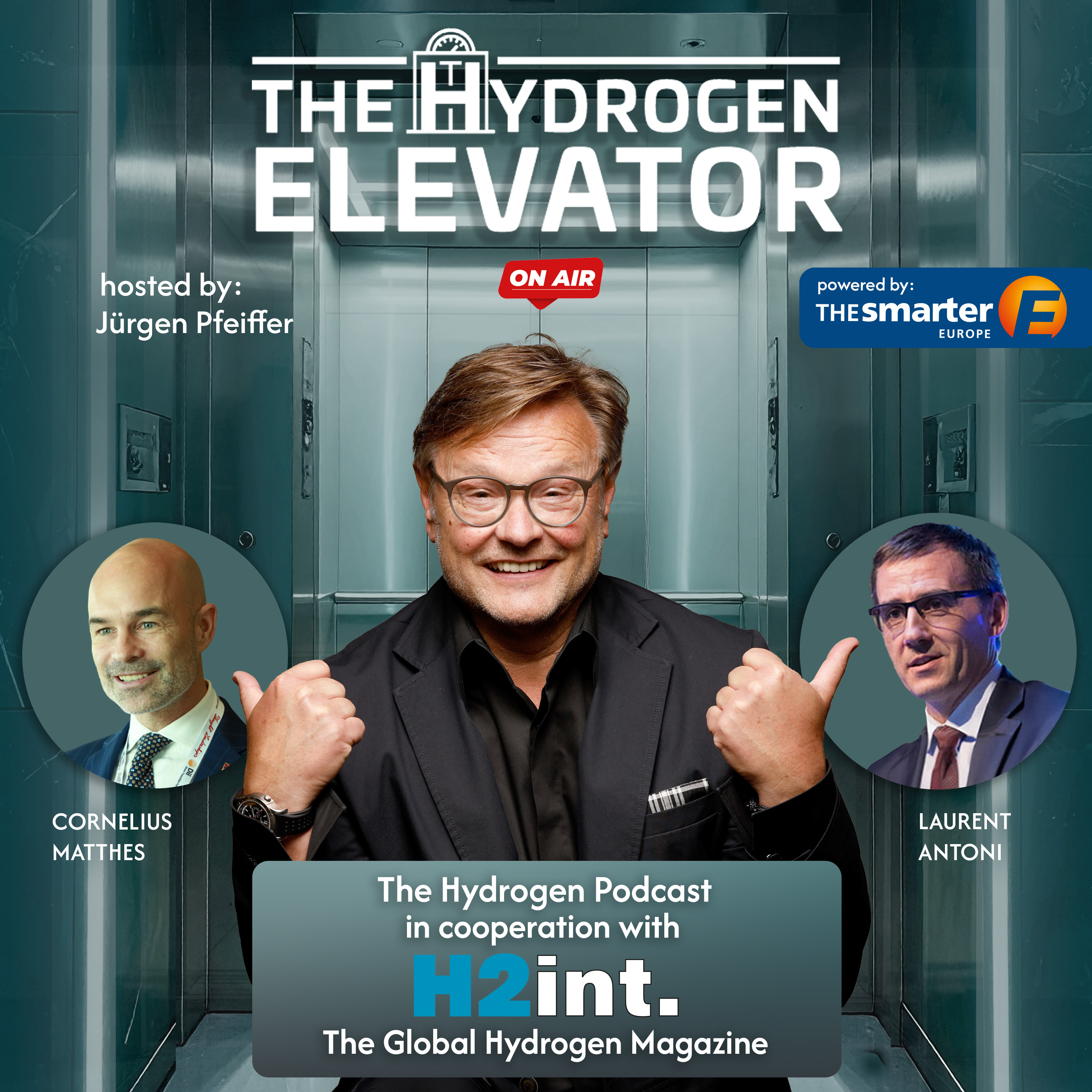
Live from a glass cube at The smarter E Europe in Munich: Cornelius Matthes, CEO of Dii Desert Energy, and Dr. Laurent Antoni, Executive Director of the IPHE, wrestle with the strategic core question of European hydrogen policy. Six dollars a kilo, they say. Too expensive, they say. But Matthes dismantles the myth: green hydrogen can be produced today for under three euros per kilo. What Europe lacks is not the price — it is the courage to make a binding, long-term commitment. Antoni shifts the debate: the biggest barrier to a global market is not cost, but 30 different certification schemes — and the absence of a shared language. The ISO standard published in April is the first step toward comparing apples with apples. The real point: Europe confuses partner with supplier. Treating an energy partner as a cheap source of supply reproduces exactly the dependency that Russia taught us. True partnership means co-ownership — shared technology, shared standards, long-term commitment. The verdict of both guests: Brussels can barely commit for twenty months. The desert model needs twenty years. That gap is the real construction site of European energy sovereignty. THE HYDROGEN ELEVATOR is taking a short summer break and returns in September — in cooperation with HZwei, the hydrogen magazine.
What this episode covers
Live from a glass cube at The smarter E Europe in Munich: Cornelius Matthes, CEO of Dii Desert Energy, and Dr. Laurent Antoni, Executive Director of the IPHE, wrestle with the strategic core question of European hydrogen policy. Six dollars a kilo, they say. Too expensive, they say. But Matthes dismantles the myth: green hydrogen can be produced today for under three euros per kilo. What Europe lacks is not the price — it is the courage to make a binding, long-term commitment. Antoni shifts the debate: the biggest barrier to a global market is not cost, but 30 different certification schemes — and the absence of a shared language. The ISO standard published in April is the first step toward comparing apples with apples. The real point: Europe confuses partner with supplier. Treating an energy partner as a cheap source of supply reproduces exactly the dependency that Russia taught us. True partnership means co-ownership — shared technology, shared standards, long-term commitment. The verdict of both guests: Brussels can barely commit for twenty months. The desert model needs twenty years. That gap is the real construction site of European energy sovereignty. THE HYDROGEN ELEVATOR is taking a short summer break and returns in September — in cooperation with HZwei, the hydrogen magazine.
NOW PLAYING
Episode 4: Partner or Supplier — What Hydrogen Partnership Does Europe Need Between H2 Global and H2 Local?
No transcript for this episode yet
Similar Episodes
No similar episodes found.
Similar Podcasts
No similar podcasts found.