
EPISODE · Feb 7, 2026 · 4 MIN
Episode 524 - Cosmic Conundrums
from Kevin McFarlane's podcast · host Kevin McFarlane
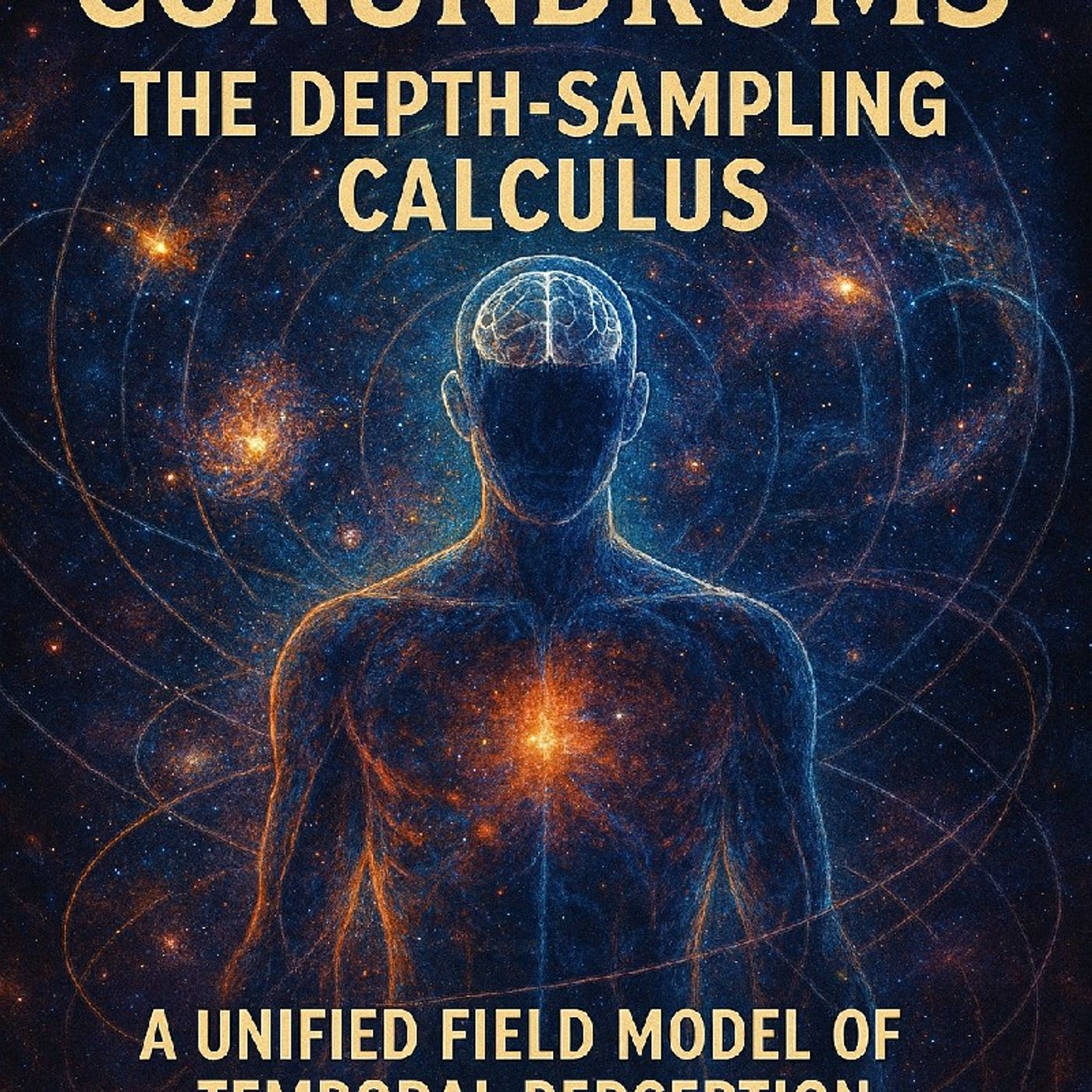
The historical reliance on time as a fundamental fourth dimension of spatial reality represents a conceptual relic that continues to impede the progression of theoretical physics. Traditional models, derived from a century of relativistic and Newtonian interpretations, treat time as a structural axis—a container within which events occur and objects age. However, a rigorous analysis of the underlying fabric of reality suggests that time is not a dimension of space but a constraint on perception. Within this ontological reconstruction, the height, length, and width of a three-dimensional object describe its form, while the transition between states is governed by a deeper field of resonance and potential. This depth field serves as the actual structural reality, rendering time a secondary artifact of how three-dimensional consciousness samples that field. The displacement of time by the depth dimension requires a fundamental shift in the categorization of physical change. Change is not a movement through a temporal axis; it is a relationship between states of coherence within the depth field. In this framework, a star does not age in the traditional sense of counting down seconds. Instead, it unfolds through depth, drawing activated matter from the potentiality of the field, increasing its internal resonance, and stabilizing its harmonics. This unfolding is a structural expression of the star's potential state, and the perceived duration of this process is merely the frequency at which an observer experiences the sequencing of that resonance.
Embed this episode
NOW PLAYING
Episode 524 - Cosmic Conundrums
No transcript for this episode yet
Similar Episodes
No similar episodes found.
Similar Podcasts
No similar podcasts found.