
EPISODE · Jun 11, 2026 · 21 MIN
🎙️ Episode 6: A Podcast Is Not the Story (with Dave Phillips and Joshua Wallace)
from Frames of Truth Podcast · host Bobby Rettew
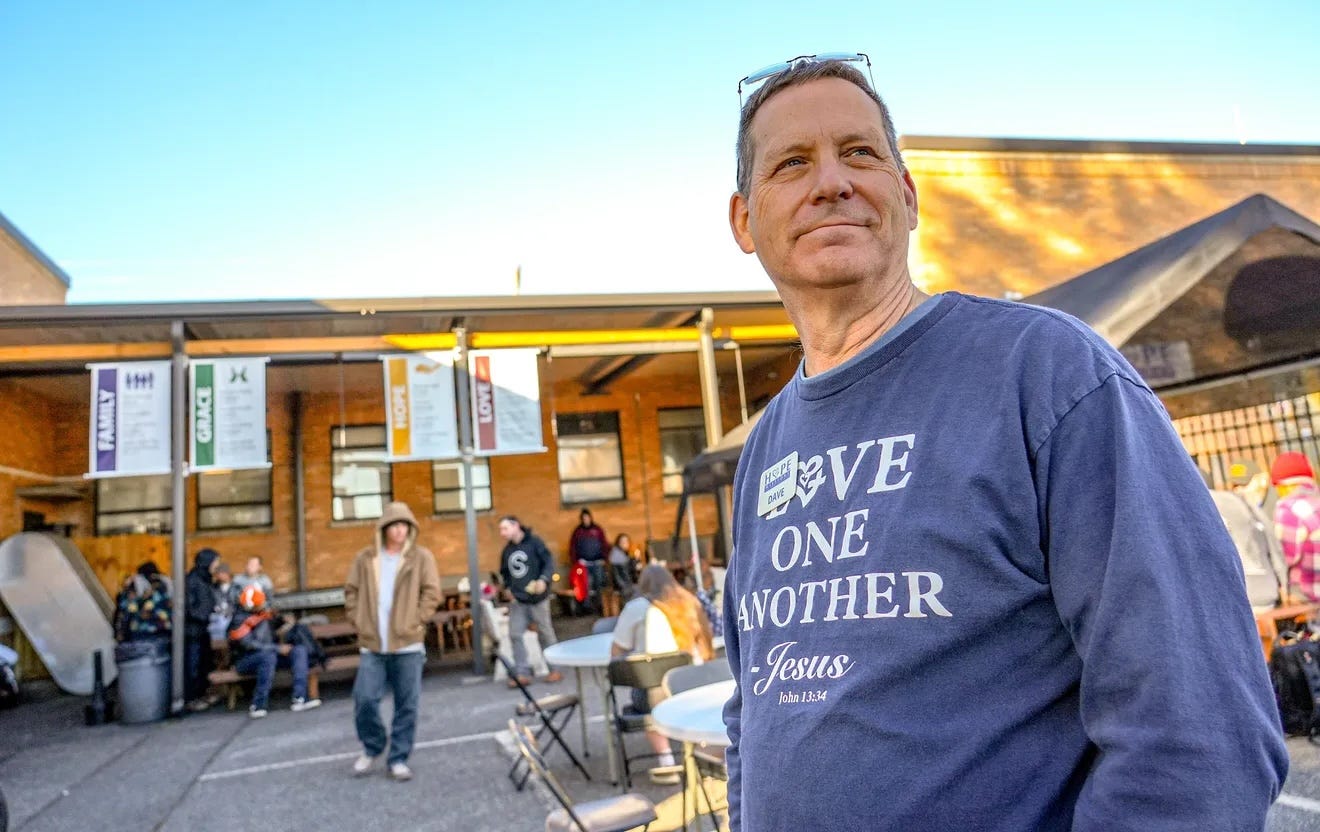
Most recently, I sat down with Dave Phillips and Joshua Wallace from Hope Mission in downtown Anderson, South Carolina.The purpose of the meeting was straightforward. They are exploring the idea of launching a podcast and wanted to think through strategy, structure, audience, and purpose before taking the first step.As a professor of communication, a documentary storyteller, a business owner, and someone who has spent years helping organizations develop podcasts and digital communication strategies, these conversations are among my favorites.Not because they are about microphones.Not because they are about distribution platforms.Not because they are about technology.They are about story.Over the years, I have worked with hospitals, universities, nonprofits, foundations, churches, and businesses. I have also spent years helping build podcast networks and digital media communities. One lesson continues to surface regardless of the organization or platform:The most successful podcasts are rarely about podcasting.They are about purpose.Starting with the Wrong QuestionMany organizations begin by asking:“Should we start a podcast?”I understand why.Podcasting has become one of the most accessible forms of media available today. The equipment is affordable. Distribution is easier than ever. Artificial intelligence can assist with transcription, summaries, social media posts, and search optimization.But that question often skips the most important step.Why are we doing this?As Dave and I talked, it became clear that he was not interested in creating content for content’s sake. He was not trying to become a podcast personality. He was not chasing downloads or subscribers.Instead, he kept returning to a simple idea.He wanted people to see others differently.Specifically, he wanted listeners to move beyond labels such as homeless, addict, mentally ill, poor, or marginalized and begin seeing human beings created in the image of God.The moment he said that, the conversation changed.We were no longer talking about podcasting.We were talking about transformation.Story Is the UndercurrentOne of the things I repeatedly tell my students is that story is often operating beneath the surface whether we recognize it or not.In communication courses, students frequently arrive believing that effective communication is primarily about delivering information. If we can simply provide enough facts, enough data, enough evidence, people will understand and respond accordingly.Experience has taught me otherwise.People rarely make meaning through information alone. They make meaning through narrative.This is one of the reasons I continue to return to scholars and storytellers such as John Yorke, David Trottier, and Professor Sean Gaffney. While each approaches story from a different perspective, they share a common understanding that story is fundamentally about movement. Someone encounters a disruption. Assumptions are challenged. A journey unfolds. By the end, something has changed.Yorke writes extensively about how stories move audiences through tension and transformation. Trottier reminds us that story emerges through conflict and character change. Gaffney’s five-part story structure similarly begins with balance, introduces disruption, and ultimately leads audiences toward a new understanding of the world.As I listened to Dave describe his hopes for the podcast, I realized that he was describing this same process.A listener begins with assumptions about poverty, homelessness, addiction, or hardship.They encounter a story.They hear a perspective they have never considered.Something shifts.That movement is not merely communication.It is story.The podcast itself is simply the medium through which the story travels.Why Podcasting WorksPodcasting creates a unique space because it allows room for nuance.A social media post is often too short.A newsletter may be skimmed.A video requires a different level of production and attention.A podcast allows people to spend twenty minutes walking, driving, exercising, or doing chores while listening to a conversation unfold.It creates room for complexity.It creates room for context.It creates room for humanity.As we talked, I encouraged Dave to think less about creating episodes and more about creating a rhythm.Every strong podcast develops a predictable pattern.Listeners begin to know what they are getting.There is a beginning.There is tension.There is discovery.There is resolution.There is an invitation to continue listening.Without realizing it, we were discussing some of the same principles found in three-act structure. Act One builds trust. Act Two introduces tension. Act Three provides reflection and resolution.People may not consciously recognize that structure.They feel it.And when they feel it, they stay engaged.Beyond InformationAs our conversation continued, we found ourselves discussing the difference between education and awareness. At first glance, those concepts appear similar. The more I teach communication, however, the more I see important distinctions between them.Education often focuses on the transfer of knowledge.Awareness focuses on perception.One can be educated about an issue without ever allowing that issue to reshape how they see the world.That distinction immediately brought to mind Aristotle’s rhetorical framework. For centuries, communicators have wrestled with the balance between logos, ethos, and pathos.Facts matter.Credibility matters.Evidence matters.Yet human beings rarely make decisions based solely on logic.We respond to stories.We remember people.We carry images and experiences with us long after we have forgotten statistics.Lloyd Bitzer argued that communication emerges from a rhetorical situation. There is a problem, challenge, or exigence that demands a response. As I listened to Dave describe Hope Mission’s work, I realized the primary challenge was not homelessness itself.The challenge was misunderstanding.The challenge was perception.The challenge was helping people move beyond labels and assumptions.This is where many nonprofit organizations struggle. They often possess extraordinary data and remarkable expertise, but they have difficulty translating that knowledge into experiences that audiences can feel.Story bridges that gap.Story creates the space where information becomes human.In many ways, that was the central challenge we were discussing.Not how to produce a podcast.But how to create conversations capable of helping listeners see differently.Building a Strategic AssetOne of the biggest misconceptions about podcasting is that it is only a podcast.A well-designed podcast becomes much more.A single conversation can become:* A podcast episode* A blog post* Social media content* Newsletter content* Educational resources* Volunteer engagement tools* Grant support materials* Searchable website contentIn other words, each episode becomes an asset.Over time, those assets accumulate.Trust accumulates.Authority accumulates.Institutional knowledge accumulates.For organizations seeking to become trusted voices within their communities, that long-term value is often more important than any individual episode.This was one of the themes that surfaced repeatedly during our conversation.The goal was not simply to record conversations.The goal was to build a library.A repository of stories, perspectives, experiences, and insights that could continue serving the community long after the recording session ends.The Real ChallengeThe greatest challenge in podcasting is rarely technology.It is consistency.The first episode is exciting.The eighth episode is work.Guests must be scheduled.Conversations recorded.Audio edited.Content distributed.Feedback processed.Then the cycle begins again.I have seen this repeatedly through my own work, through client projects, and through the podcast networks I have helped build over the years.Many podcasts never make it beyond a handful of episodes.Not because the content is poor.Not because the hosts lack passion.But because sustainable systems were never established.The organizations that succeed are not necessarily the most talented.They are the most disciplined.They understand that trust is built one episode at a time.They understand that consistency matters more than perfection.And they continue showing up long after the novelty has worn off.The Beloved CommunityAs our conversation came to a close, I found myself reflecting on something larger than podcast strategy.Throughout our discussion, Dave continually returned to a single idea:Helping people see one another differently.Not fixing people.Not rescuing people.Not winning arguments.Seeing people.That language resonated deeply with me because it echoes themes I have encountered repeatedly through the writings of Josiah Royce and his vision of the Beloved Community.Royce argued that communities are ultimately shaped by the loyalties they cultivate and the ways individuals learn to recognize their obligations to one another. Healthy communities emerge when people commit themselves to purposes larger than their own self-interest.What struck me during our conversation was that Hope Mission’s podcast is not fundamentally about homelessness, poverty, or even nonprofit work.It is about recognition.It is about helping listeners recognize the humanity, dignity, and worth of people they may have previously overlooked.The podcast itself is only a tool.The deeper work is relational.The deeper work is communal.The deeper work is helping build a community where people begin to understand that their lives are connected to the lives of others.That is a communication goal.That is a storytelling goal.And perhaps, in the deepest sense, that is the work of building a beloved community.A Podcast Is Not the StoryAs I drove away from Hope Mission that afternoon, I found myself thinking less about podcast equipment, editing software, hosting platforms, or distribution strategies.Instead, I found myself thinking about story.John Yorke would recognize the transformation.David Trottier would recognize the conflict.Sean Gaffney would recognize the movement from one understanding to another.Aristotle would recognize the balance of credibility, logic, and emotion.Bitzer would recognize the rhetorical challenge demanding a response.Royce would recognize the pursuit of beloved community.The podcast was never the point.The story was.And perhaps that is why the best podcast strategies are never really about podcasting at all.They are about creating space for people to listen, reflect, and ultimately see one another more fully.Everything else is simply the vehicle.Works CitedAristotle. The Art of Rhetoric. Translated by Hugh Lawson-Tancred, Penguin Classics, 2004.Bitzer, Lloyd F. “The Rhetorical Situation.” Philosophy and Rhetoric, vol. 1, no. 1, 1968, pp. 1–14.hooks, bell. Teaching to Transgress: Education as the Practice of Freedom. Routledge, 1994.Royce, Josiah. The Problem of Christianity. The Macmillan Company, 1913.Trottier, David. The Screenwriter’s Bible: A Complete Guide to Writing, Formatting, and Selling Your Script. 7th ed., Silman-James Press, 2022.Yorke, John. Into the Woods: How Stories Work and Why We Tell Them. Penguin Books, 2014. This is a public episode. If you would like to discuss this with other subscribers or get access to bonus episodes, visit bobbyrettew.substack.com
NOW PLAYING
🎙️ Episode 6: A Podcast Is Not the Story (with Dave Phillips and Joshua Wallace)
No transcript for this episode yet
Similar Episodes
No similar episodes found.
Similar Podcasts
No similar podcasts found.