
EPISODE · May 27, 2026 · 6 MIN
Episode 720 - Cosmic Conundrums
from Kevin McFarlane's podcast · host Kevin McFarlane
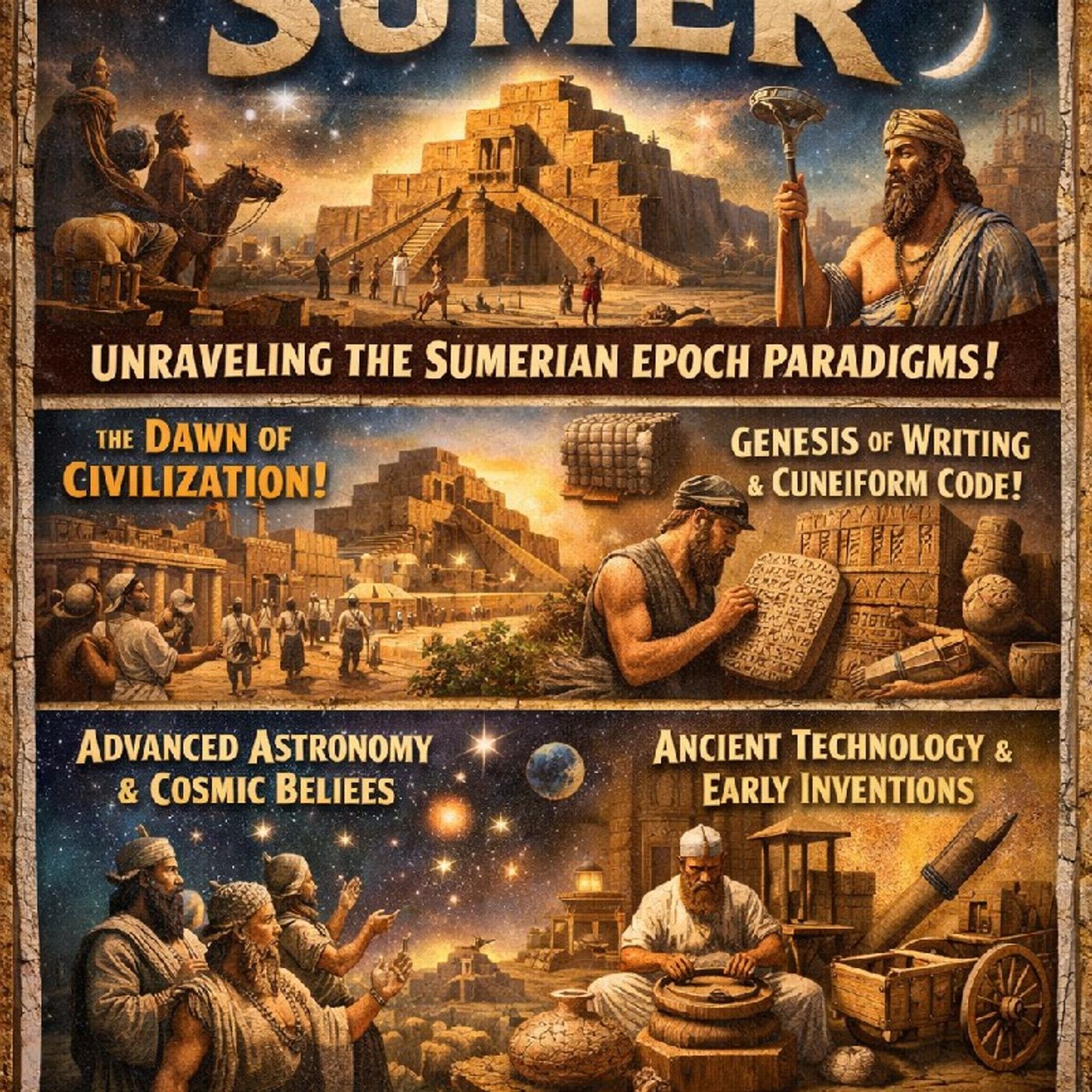
The Sumerian civilization, which emerged in the alluvial plains between the Tigris and Euphrates rivers in modern-day Iraq, represents one of the earliest known urban-centric societies in human history. This civilization was not a static entity but rather an evolving socio-political network divided by modern scholars into six distinct historical epochs. Beginning with the Ubaid period, characterized by early canalization, agricultural expansion, and the development of a distinctive greenish-colored pottery decorated with geometric designs, the region progressed into the highly urbanized Uruk period. During this era, major city-states crystallized from the amalgamation of smaller settlements, as seen in the merging of Kullaba and Eanna to form the metropolitan center of Uruk. As the civilization moved through the Early Dynastic period into the Akkadian, Gutian, and eventually the Ur III period—often referred to as the Sumerian Renaissance—the administrative infrastructure grew increasingly centralized. The early governance of Sumerian city-states was characterized by a deeply integrated theocracy led by a high priest, known as the En or Ensí, or a high priestess, the Nin, who managed resources directly from the central temple estates. Over centuries of conflict, this theocratic management transitioned into a dynastic monarchy led by a military ruler, the Lugal. This shifting political reality shaped a highly stratified three-tiered social hierarchy. The ruling class, comprising the kings, priests, warriors, and high-ranking administrative officials, occupied the apex. Beneath them, the largest segment of society was the middle class, consisting of skilled artisans, merchants, farmers, and fishermen. The base of this social hierarchy was populated by enslaved individuals, including prisoners of war, convicted criminals, and citizens working off massive household debts.
Embed this episode
NOW PLAYING
Episode 720 - Cosmic Conundrums
No transcript for this episode yet
Similar Episodes
No similar episodes found.
Similar Podcasts
No similar podcasts found.