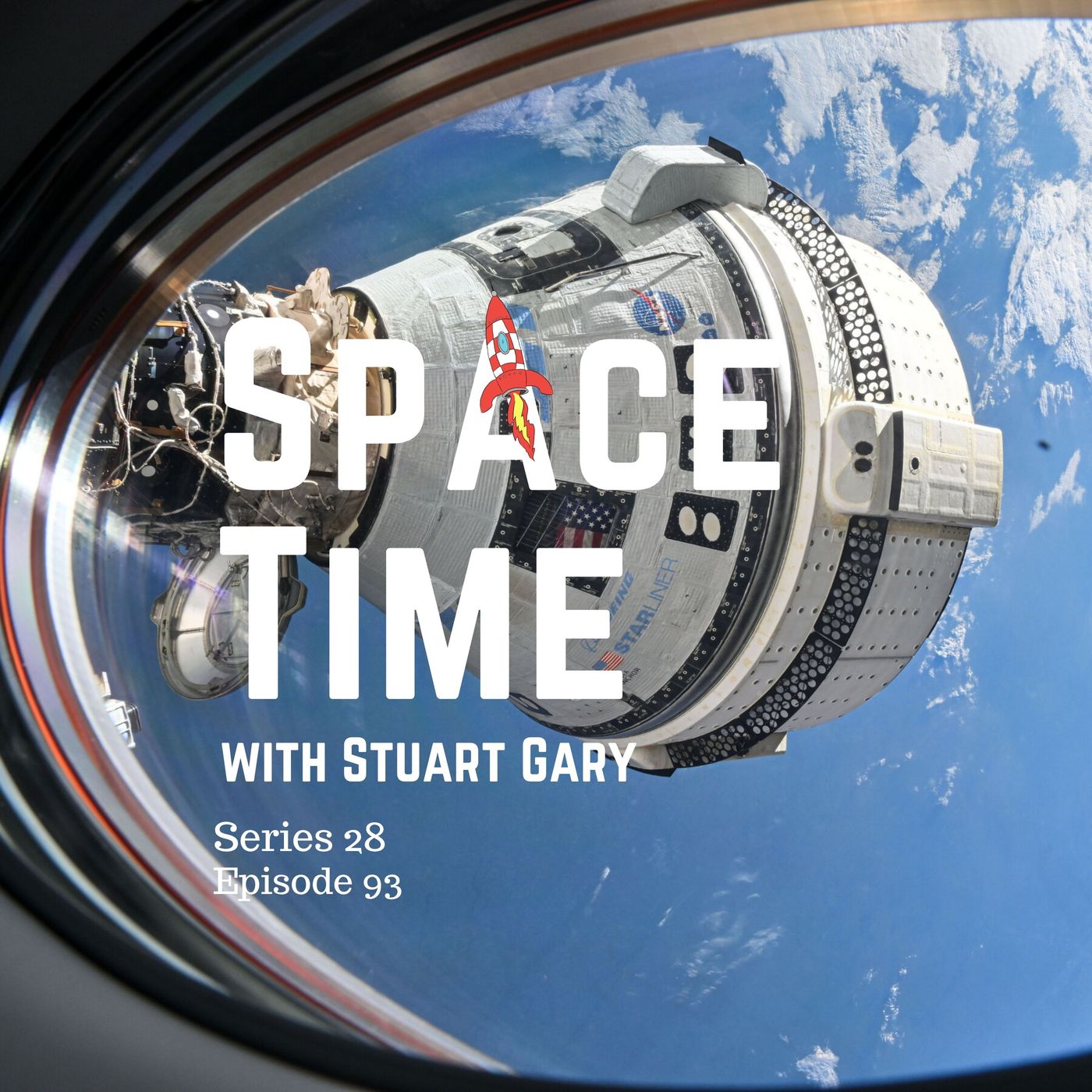
ERIS 1: Australia's Orbital Rocket Launch Attempt and the Cosmic Origins of Life episode artwork

EPISODE · Aug 4, 2025 · 24 MIN

ERIS 1: Australia's Orbital Rocket Launch Attempt and the Cosmic Origins of Life

from SpaceTime with Stuart Gary · host Stuart Gary

In this episode of SpaceTime, we delve into significant developments in space exploration, from Australia's latest rocket launch attempt to groundbreaking theories about the origins of life.Australia's ERIS 1 Rocket Launch: A Learning ExperienceIn a dramatic turn of events, Gilmour Space's ERIS 1 rocket experienced a failure just seconds after liftoff, marking Australia's first orbital rocket launch in years. Despite the setback, CEO Adam Gilmour emphasizes the lessons learned from the test flight, which will inform the design and operation of future launches. The rocket's ascent was initially promising, but engine failures led to a crash shortly after clearing the launch tower. Fortunately, no injuries or environmental damage occurred, and the mission provided valuable data that will enhance the next attempt.Life's Origins: A Cosmic PerspectiveA new study suggests that the building blocks of life may have originated in outer space rather than on Earth. Using the ALMA radio telescope, astronomers detected complex organic molecules in the protoplanetary disk of the protostar UH V883 Orionis. These findings indicate that essential compounds, such as ethylene glycol and glycolonitrile, are not only present in various cosmic environments but may also be the precursors to amino acids and other vital biological components. This research supports the notion that the seeds of life are widespread throughout the universe.Boeing's Starliner Delays ContinueBoeing's Starliner spacecraft faces further delays, now pushed back to at least 2026 before it can carry humans into space. Ongoing technical issues have plagued the project, including helium leaks and thruster control problems. NASA is working closely with Boeing to address these challenges, but the timeline for crewed missions remains uncertain as SpaceX continues to lead in transporting astronauts to the International Space Station.www.spacetimewithstuartgary.com✍️ Episode ReferencesAstrophysical Journal Lettershttps://iopscience.iop.org/journal/1538-4357NASA's Commercial Crew Programhttps://www.nasa.gov/exploration/commercial/crew/index.htmlGilmour Spacehttps://gilmourspace.com/Become a supporter of this podcast: https://www.spreaker.com/podcast/spacetime-space-astronomy--2458531/support.00:00 A new study says the evolution of life may well have origins in outer space00:47 Gilmour Space's Ares 1 orbital rocket crashed two seconds after launch10:37 A new study says the evolution of life may have origins in outer space11:28 Astronomers find 17 complex organic molecules in distant planet forming disk19:35 New study finds images can shape public opinion regardless of true facts22:06 World Meteorological Organization says megaflash stretched 829km in 2017

In this episode of SpaceTime, we delve into significant developments in space exploration, from Australia's latest rocket launch attempt to groundbreaking theories about the origins of life.Australia's ERIS 1 Rocket Launch: A Learning ExperienceIn a dramatic turn of events, Gilmour Space's ERIS 1 rocket experienced a failure just seconds after liftoff, marking Australia's first orbital rocket launch in years. Despite the setback, CEO Adam Gilmour emphasizes the lessons learned from the test flight, which will inform the design and operation of future launches. The rocket's ascent was initially promising, but engine failures led to a crash shortly after clearing the launch tower. Fortunately, no injuries or environmental damage occurred, and the mission provided valuable data that will enhance the next attempt.Life's Origins: A Cosmic PerspectiveA new study suggests that the building blocks of life may have originated in outer space rather than on Earth. Using the ALMA radio telescope, astronomers detected complex organic molecules in the protoplanetary disk of the protostar UH V883 Orionis. These findings indicate that essential compounds, such as ethylene glycol and glycolonitrile, are not only present in various cosmic environments but may also be the precursors to amino acids and other vital biological components. This research supports the notion that the seeds of life are widespread throughout the universe.Boeing's Starliner Delays ContinueBoeing's Starliner spacecraft faces further delays, now pushed back to at least 2026 before it can carry humans into space. Ongoing technical issues have plagued the project, including helium leaks and thruster control problems. NASA is working closely with Boeing to address these challenges, but the timeline for crewed missions remains uncertain as SpaceX continues to lead in transporting astronauts to the International Space Station.www.spacetimewithstuartgary.com✍️ Episode ReferencesAstrophysical Journal Lettershttps://iopscience.iop.org/journal/1538-4357NASA's Commercial Crew Programhttps://www.nasa.gov/exploration/commercial/crew/index.htmlGilmour Spacehttps://gilmourspace.com/Become a supporter of this podcast: https://www.spreaker.com/podcast/spacetime-space-astronomy--2458531/support.00:00 A new study says the evolution of life may well have origins in outer space00:47 Gilmour Space's Ares 1 orbital rocket crashed two seconds after launch10:37 A new study says the evolution of life may have origins in outer space11:28 Astronomers find 17 complex organic molecules in distant planet forming disk19:35 New study finds images can shape public opinion regardless of true facts22:06 World Meteorological Organization says megaflash stretched 829km in 2017

NOW PLAYING

ERIS 1: Australia's Orbital Rocket Launch Attempt and the Cosmic Origins of Life

0:00 24:11

No transcript for this episode yet

We transcribe on demand. Request one and we'll notify you when it's ready — usually under 10 minutes.

No similar episodes found.

No similar podcasts found.

Frequently Asked Questions

How long is this episode of SpaceTime with Stuart Gary?

This episode is 24 minutes long.

When was this SpaceTime with Stuart Gary episode published?

This episode was published on August 4, 2025.

What is this episode about?

In this episode of SpaceTime, we delve into significant developments in space exploration, from Australia's latest rocket launch attempt to groundbreaking theories about the origins of life.Australia's ERIS 1 Rocket Launch: A Learning ExperienceIn a...

Is there a transcript available for this episode?

Yes, a full transcript is available for this episode. You can read the complete transcript on the episode page.

Can I download this SpaceTime with Stuart Gary episode?

Yes, you can download this episode by clicking the download button on the episode player, or subscribe to the podcast in your preferred podcast app for automatic downloads.
URL copied to clipboard!