
EPISODE · Jan 14, 2026 · 11 MIN
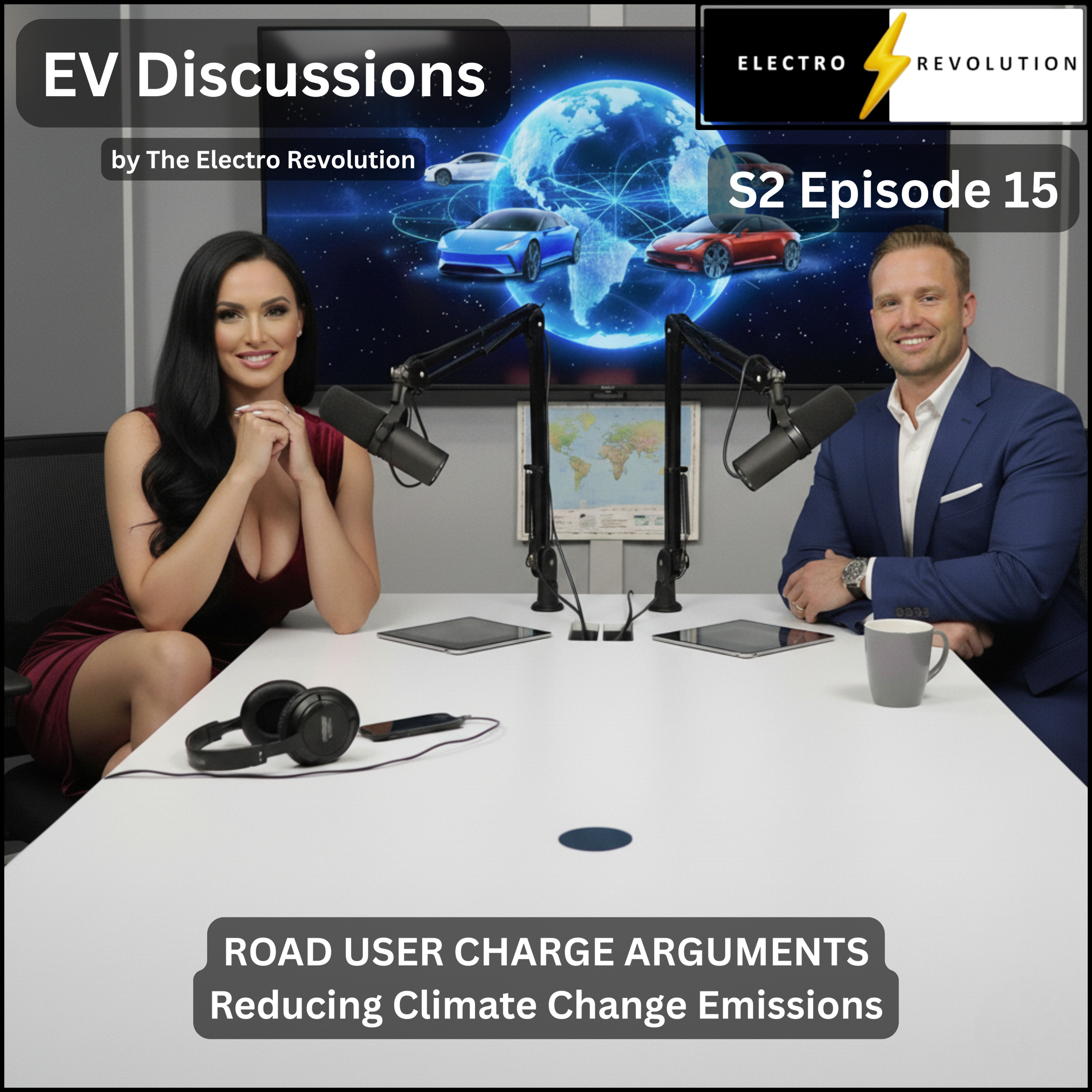
EV Discussions Podcast — S2Ep15 — Road User Charge Arguments — Reducing Climate Change Emissions
from EV Discussions by The Electro Revolution — with your hosts — Jess and James, Adriana and Chris · host The Electro Revolution
YouTube video related news: https://youtu.be/HThH-2p0kTMYouTube video podcast: https://youtu.be/Vgm295YgWak🌱 This is Episode 3 in our Road User Charges series, so if you missed Episodes 1 & 2, be sure to check them out first as today builds on those discussions.🚘 In this episode, we dive deep into the statement: “EV drivers help reduce climate-damaging emissions.”We look at the facts, myths, and misconceptions around EVs and climate impact:🔋 History of EVs – Did you know electric vehicles were invented in the 1830s, long before petrol cars? By the early 1900s, a third of cars in the US were EVs.🌍 EVs vs ICE emissions – Yes, EVs require more energy upfront to mine and process battery materials, but after the first 1–2 years, EVs dramatically outperform petrol and diesel cars over their lifetime by producing far fewer emissions.🏙 Local health impact – Unlike ICE vehicles, EVs produce no tailpipe emissions in our suburbs and cities, where pollution directly harms human health.📉 Depreciation & insurance myths – EVs do depreciate faster due to rapid tech updates, but the common claim that EV insurance is always higher than ICE is not backed by fact. In my own experience with multiple EVs, premiums were the same—or even cheaper.⚡ Charging & clean energy – With over 4 million solar-powered homes in Australia, many EV drivers already charge primarily from renewable energy. Even when grid-charged, EVs still cut lifecycle CO₂ emissions by 30–50%. Research from the ICCT shows EVs emit up to two-thirds less CO₂ than petrol cars in countries transitioning to renewables.🌞 Australia’s opportunity – With abundant solar, we have the ability to make EVs one of the cleanest transport solutions globally while also improving public health.This episode, from The Electro Revolution, discusses the environmental and economic arguments surrounding electric vehicles (EVs) compared to internal combustion engine (ICE) vehicles. The source asserts that while battery production is resource-intensive, EVs ultimately produce significantly lower life-cycle emissions, especially as electricity grids shift toward renewable energy. The author addresses common criticisms by arguing that higher depreciation is a result of rapid technological advancement, while also using personal experience to dispute claims of inflated insurance premiums. Furthermore, the text highlights the historical longevity of electric transport and emphasizes the health benefits of removing tailpipe pollutants from urban areas. Ultimately, the source advocates for EV adoption as a critical tool for reducing national carbon output and improving public safety.Chapters:00:00 EV Road User Charge Debate Overview01:00 EVs Are Older Than Petrol Cars02:02 Battery Mining Emissions Explained03:26 EV Emissions Break Even Point04:09 Dirty Grid Myth and Efficiency Reality05:00 Pollution Location Cities vs Power Plants05:53 Transport Emissions Australia 19 Percent06:04 EV Depreciation Technology Obsolescence07:11 EV Insurance Cost Myth Tested08:30 Solar Charging and Lifetime CO2 Cuts09:47 Why EVs Get Cleaner Over Time
Embed this episode
NOW PLAYING
EV Discussions Podcast — S2Ep15 — Road User Charge Arguments — Reducing Climate Change Emissions
No transcript for this episode yet
Similar Episodes
No similar episodes found.
Similar Podcasts
No similar podcasts found.