
EPISODE · Jan 22, 2026 · 12 MIN
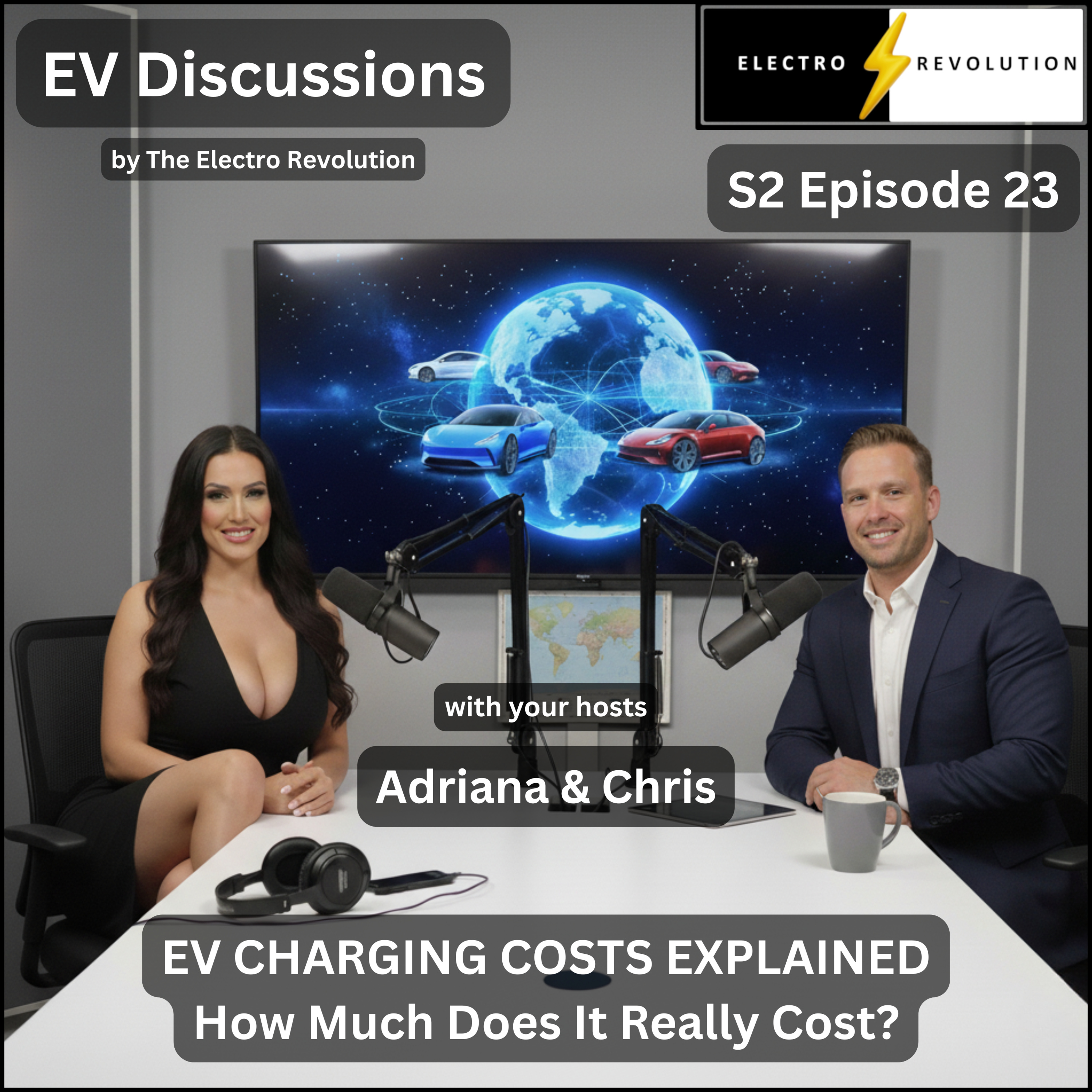
EV Discussions Podcast — S2Ep23 — EV Charging Costs Explained — How Much Does It Really Cost?
from EV Discussions by The Electro Revolution — with your hosts — Jess and James, Adriana and Chris · host The Electro Revolution
YouTube video related news: https://youtu.be/JV6Ye5KmuwIYouTube video podcast: https://youtu.be/fD8MEYVM1Jg⚡In this episode, Michael dives deep into one of the most important questions for current and future EV owners — how much does it actually cost to charge an electric vehicle (EV) in 2025.Whether you’re in Australia, the UK, or anywhere in the world, the charging cost principles remain the same. Michael breaks down the real-world costs of EV charging, from home solar setups and off-peak plans to public fast chargers and Tesla Superchargers.Learn how to get the most out of your charging setup, save hundreds every year, and understand why EVs are still far cheaper to run than petrol or diesel vehicles — even when using high-speed DC chargers.💡 Key Takeaways:🔹 Home charging (especially with solar) is the cheapest — sometimes completely free🔹 Off-peak energy rates can be as low as 8¢ per kWh🔹 Public fast chargers can cost up to $1 per kWh, but are great for long trips🔹 Smart scheduling and solar self-use maximize your savings🔹 Even when fast-charging, EVs still cost less to run than petrol vehiclesThe episode, from The Electro Revolution, outlines the various methods and costs associated with electric vehicle (EV) charging. It emphasises that home charging is the most economical approach, particularly when integrated with rooftop solar or off-peak electricity rates. The source categorises charging into three levels, ranging from standard household plugs to high-speed public DC chargers, which offer convenience at a higher price point. Practical advice is offered regarding battery health, such as maintaining a charge between 20% and 80%, and using mobile apps to locate chargers. Ultimately, the text asserts that while public infrastructure is essential for long trips, EVs consistently offer lower running costs than traditional petrol vehicles. This overview serves as a guide for prospective owners to navigate the logistical shift from internal combustion engines to sustainable transport.Chapters:00:00 EV Charging Costs Explained01:08 Do EVs Really Save Money01:31 Home Charging vs Petrol Costs02:21 Off-Peak Power and Free Charging03:15 Solar Charging Zero Cost Driving03:47 EV Energy Use and Battery Sizes04:15 Level 1 vs Level 2 Home Charging05:48 Level 3 DC Fast Charging Explained07:06 The Public Charging Cost Trap10:14 Smart Charging Tips and EV Future
Embed this episode
NOW PLAYING
EV Discussions Podcast — S2Ep23 — EV Charging Costs Explained — How Much Does It Really Cost?
No transcript for this episode yet
Similar Episodes
No similar episodes found.
Similar Podcasts
No similar podcasts found.