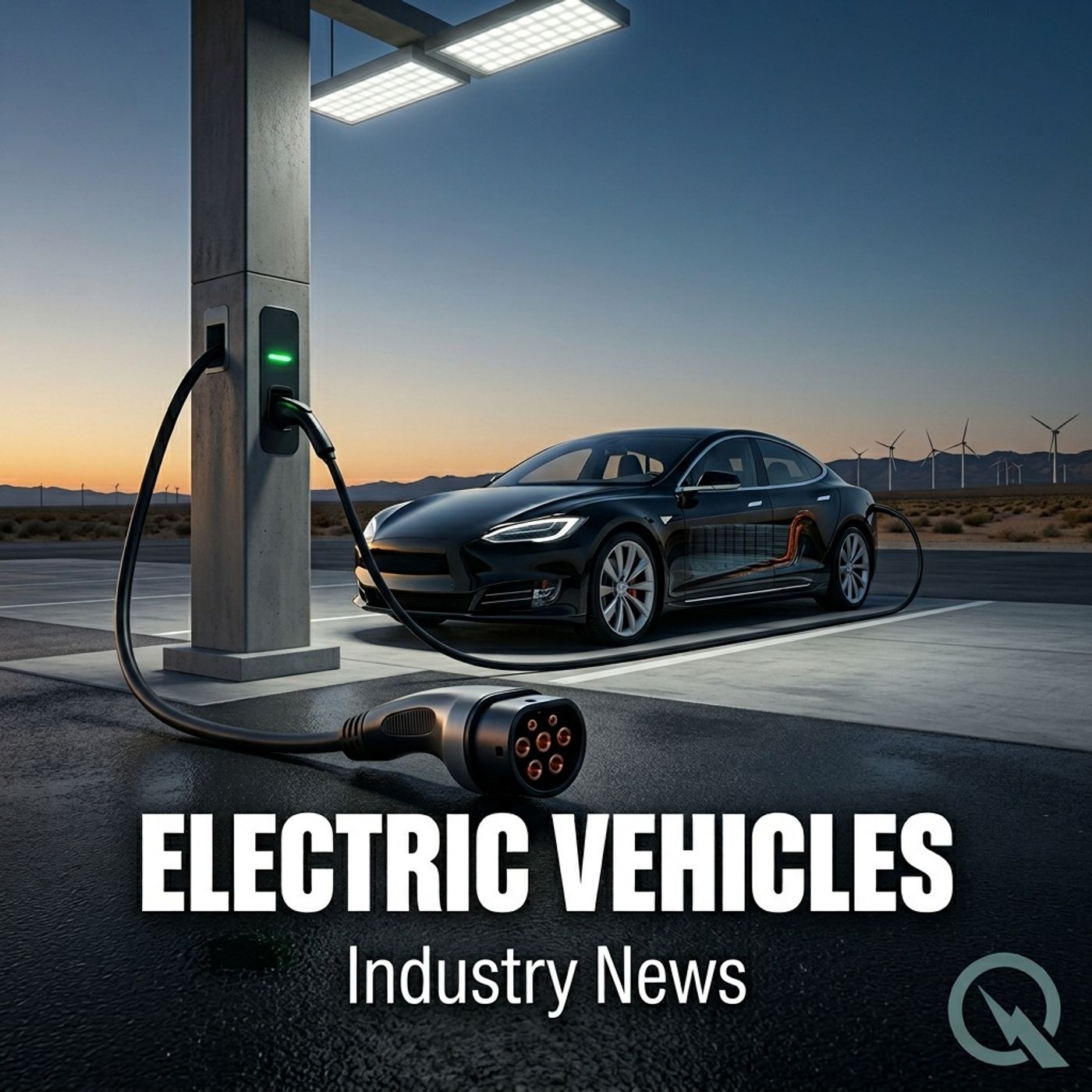
EV Industry Shifts: Competition, Regulations, and Evolving Consumer Trends episode artwork

EPISODE · Jan 22, 2025 · 3 MIN

EV Industry Shifts: Competition, Regulations, and Evolving Consumer Trends

from Electric Vehicles Industry News · host Inception Point AI

The electric vehicle (EV) industry is experiencing significant changes, driven by increasing competition, regulatory shifts, and evolving consumer behavior. Recent market movements indicate a mixed landscape, with some regions showing promising growth while others face challenges. In 2023, electric vehicles accounted for 16% of new car sales in Europe, up from under 1% in 2019, despite the removal of purchase subsidies in certain markets[2]. The United States and Europe experienced the fastest growth among major EV markets, with battery demand increasing by over 40% year-on-year, closely followed by China at about 35%[3]. However, the industry faces challenges. The combined market capitalization of pure-play EV carmakers fell by nearly 20% on average relative to 2022, while that of major incumbent carmakers remained flat[1]. Venture capital investments in EV start-ups dropped in 2023, following the global trend[1]. New market entrants are attracting customer interest, particularly in Europe, where over 35 new OEMs have started selling battery electric vehicles in the past three years, with over 400 new EV models expected to hit the market in the next three years[2]. Regulatory changes are also impacting the industry. The incoming Trump administration's anticipated revisions to US emissions standards are expected to significantly impact battery electric vehicle production and market share[4]. In contrast, China's scrappage subsidy extension is expected to further support production growth, leading to an anticipated total output of 30.1 million units in 2024, representing a 3.8% increase from the previous year[4]. Industry leaders are responding to current challenges by focusing on innovation and expansion. BYD, for example, became the world's best-selling EV company in 2023, accounting for over 20% of global electric car sales, and plans to expand its operations in the United States[1]. Hyundai-Kia plans to start manufacturing operations at a Georgia-based factory in 2024, qualifying for IRA benefits[1]. Consumer behavior is also shifting, with a small share of EV owners willing to switch back to traditional ICE vehicles, while new market entrants are attracting interest among European customers[2]. In conclusion, the electric vehicle industry is experiencing significant changes driven by increasing competition, regulatory shifts, and evolving consumer behavior. While challenges persist, industry leaders are responding by focusing on innovation and expansion, and new market entrants are attracting customer interest. The industry's future growth will depend on its ability to adapt to these changes and continue to innovate. This content was created in partnership and with the help of Artificial Intelligence AI.

The electric vehicle (EV) industry is experiencing significant changes, driven by increasing competition, regulatory shifts, and evolving consumer behavior. Recent market movements indicate a mixed landscape, with some regions showing promising growth while others face challenges. In 2023, electric vehicles accounted for 16% of new car sales in Europe, up from under 1% in 2019, despite the removal of purchase subsidies in certain markets[2]. The United States and Europe experienced the fastest growth among major EV markets, with battery demand increasing by over 40% year-on-year, closely followed by China at about 35%[3]. However, the industry faces challenges. The combined market capitalization of pure-play EV carmakers fell by nearly 20% on average relative to 2022, while that of major incumbent carmakers remained flat[1]. Venture capital investments in EV start-ups dropped in 2023, following the global trend[1]. New market entrants are attracting customer interest, particularly in Europe, where over 35 new OEMs have started selling battery electric vehicles in the past three years, with over 400 new EV models expected to hit the market in the next three years[2]. Regulatory changes are also impacting the industry. The incoming Trump administration's anticipated revisions to US emissions standards are expected to significantly impact battery electric vehicle production and market share[4]. In contrast, China's scrappage subsidy extension is expected to further support production growth, leading to an anticipated total output of 30.1 million units in 2024, representing a 3.8% increase from the previous year[4]. Industry leaders are responding to current challenges by focusing on innovation and expansion. BYD, for example, became the world's best-selling EV company in 2023, accounting for over 20% of global electric car sales, and plans to expand its operations in the United States[1]. Hyundai-Kia plans to start manufacturing operations at a Georgia-based factory in 2024, qualifying for IRA benefits[1]. Consumer behavior is also shifting, with a small share of EV owners willing to switch back to traditional ICE vehicles, while new market entrants are attracting interest among European customers[2]. In conclusion, the electric vehicle industry is experiencing significant changes driven by increasing competition, regulatory shifts, and evolving consumer behavior. While challenges persist, industry leaders are responding by focusing on innovation and expansion, and new market entrants are attracting customer interest. The industry's future growth will depend on its ability to adapt to these changes and continue to innovate. This content was created in partnership and with the help of Artificial Intelligence AI.

NOW PLAYING

EV Industry Shifts: Competition, Regulations, and Evolving Consumer Trends

0:00 3:12

No transcript for this episode yet

We transcribe on demand. Request one and we'll notify you when it's ready — usually under 10 minutes.

Breaking News Show | eTurboNews Juergen Thomas Steinmetz News is relevant to the global travel and tourism industry, human rights and global issues.Breaking news when it happens and only from the source. Chewing the Fat with WorkForge WorkForge Bite-Sized Conversations for Building a Stronger Workforce Welcome to Chewing the Fat, a podcast delving deep into the world of food manufacturing. Dive into real conversations around critical topics like staffing, retention, onboarding, and career development in this essential industry. Subscribe now to gain insights from your peers, subject matter experts and more on the biggest issues facing food manufacturers today: -Hiring and retaining employees -Addressing the challenges of the Silver Tsunami -Improving time to productivity of new employees -Engaging employees from hire to retire And more... Tune in to Chewing the Fat, a WorkForge podcast, and join the conversation on how to build and sustain a resilient, high-performing workforce in food manufacturing. Show Nuff Entertainment News We write about Entertainment News from around the world. celebrities, sports, movies, and more... All On A Positive Level!!! The Professionals Infosys Knowledge Institute Lawyers, accountants, and consultants reveal their secrets to success and discuss future trends in The Professionals, an Infosys Knowledge Institute podcast. Hosted by Samad Masood, a former journalist and industry analyst with more than 20 years experience observing this dynamic and ever growing industry.

Frequently Asked Questions

How long is this episode of Electric Vehicles Industry News?

This episode is 3 minutes long.

When was this Electric Vehicles Industry News episode published?

This episode was published on January 22, 2025.

What is this episode about?

The electric vehicle (EV) industry is experiencing significant changes, driven by increasing competition, regulatory shifts, and evolving consumer behavior. Recent market movements indicate a mixed landscape, with some regions showing promising...

Can I download this Electric Vehicles Industry News episode?

Yes, you can download this episode by clicking the download button on the episode player, or subscribe to the podcast in your preferred podcast app for automatic downloads.
URL copied to clipboard!