
EPISODE · Jan 12, 2025 · 3 MIN
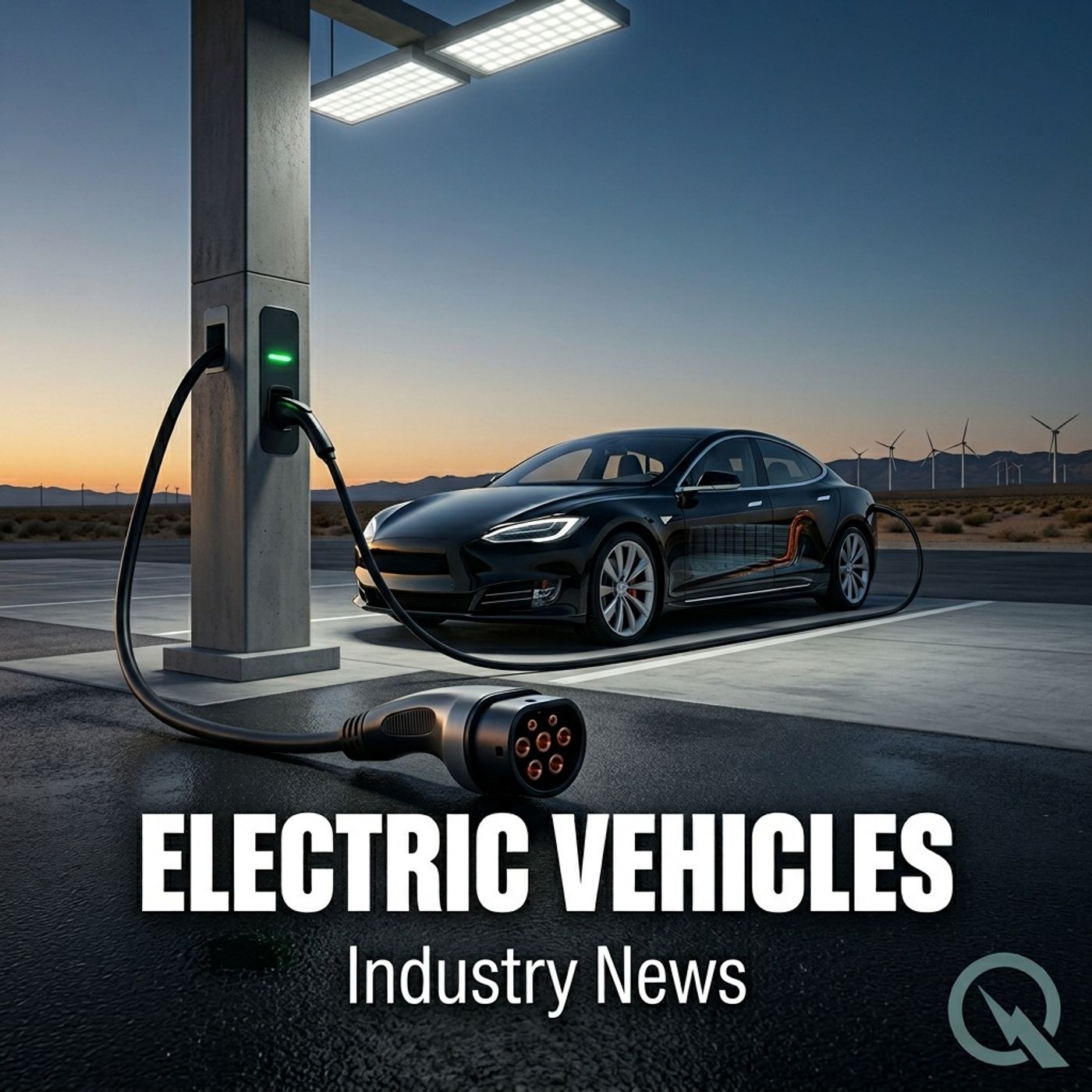
EV Industry Surges Amidst Challenges: Navigating Supply Chains, Policy Shifts, and Global Competition
from Electric Vehicles Industry News · host Inception Point AI
The electric vehicle (EV) industry continues to see robust growth, with sales nearing 14 million in 2023 and expected to reach around 17 million by the end of 2024, representing a more than 20% year-on-year increase[1]. This growth is driven by national policies and incentives, increasing price competition, and the expansion of major battery and EV manufacturers. Key markets such as China, Europe, and the United States remain at the forefront of EV sales. China accounted for around 60% of global electric car sales in 2023, with Europe and the United States also showing significant increases, reaching sales shares of over 20% and around 10%, respectively[1]. The industry is becoming increasingly competitive, with BYD and Tesla leading the global market, accounting for 35% of all electric car sales in 2023[2]. Other manufacturers, such as Hyundai-Kia and European carmakers, are also making significant strides, with Hyundai-Kia planning to start manufacturing operations in the United States and European carmakers like Volkswagen and Stellantis expanding their EV offerings[2]. Despite the growth, the industry faces challenges, including supply chain disruptions, battery metal price fluctuations, and increasing competition, which have impacted investor confidence and EV stocks[2]. Venture capital investments in EV start-ups have also dropped in 2023, following the global trend[2]. Looking ahead, 2025 is expected to be a solid year for EVs, with global sales projected to rise about 20%[3]. Numerous automakers are preparing to deliver cheaper models, which will help drive down costs and increase consumer options. However, the US EV market may face challenges due to potential policy changes under the incoming administration[3]. In Europe, the EV transition is fully underway, with EVs accounting for 16% of new-car sales, up from under 1% in 2019[4]. Despite the removal of purchase subsidies in certain markets, sales have remained stable, and new market entrants, including Chinese auto brands, are attracting interest among European customers[4]. Major manufacturers are investing heavily in EV production, with companies like BMW, Volkswagen, and GM committing billions to EV and battery investments[5]. The year 2026 is seen as a tipping point for an acceleration in EV adoption, with many manufacturers aiming for significant electrification of their product portfolios by 2025 and 2030[5]. Overall, the EV industry continues to grow, driven by policy support, increasing competition, and expanding consumer options. However, challenges such as supply chain disruptions and potential policy changes in key markets may impact future growth. Industry leaders are responding to these challenges by investing in new technologies, expanding their product offerings, and diversifying their export markets. This content was created in partnership and with the help of Artificial Intelligence AI.
Embed this episode
NOW PLAYING
EV Industry Surges Amidst Challenges: Navigating Supply Chains, Policy Shifts, and Global Competition
No transcript for this episode yet
Similar Episodes
No similar episodes found.
Similar Podcasts
No similar podcasts found.