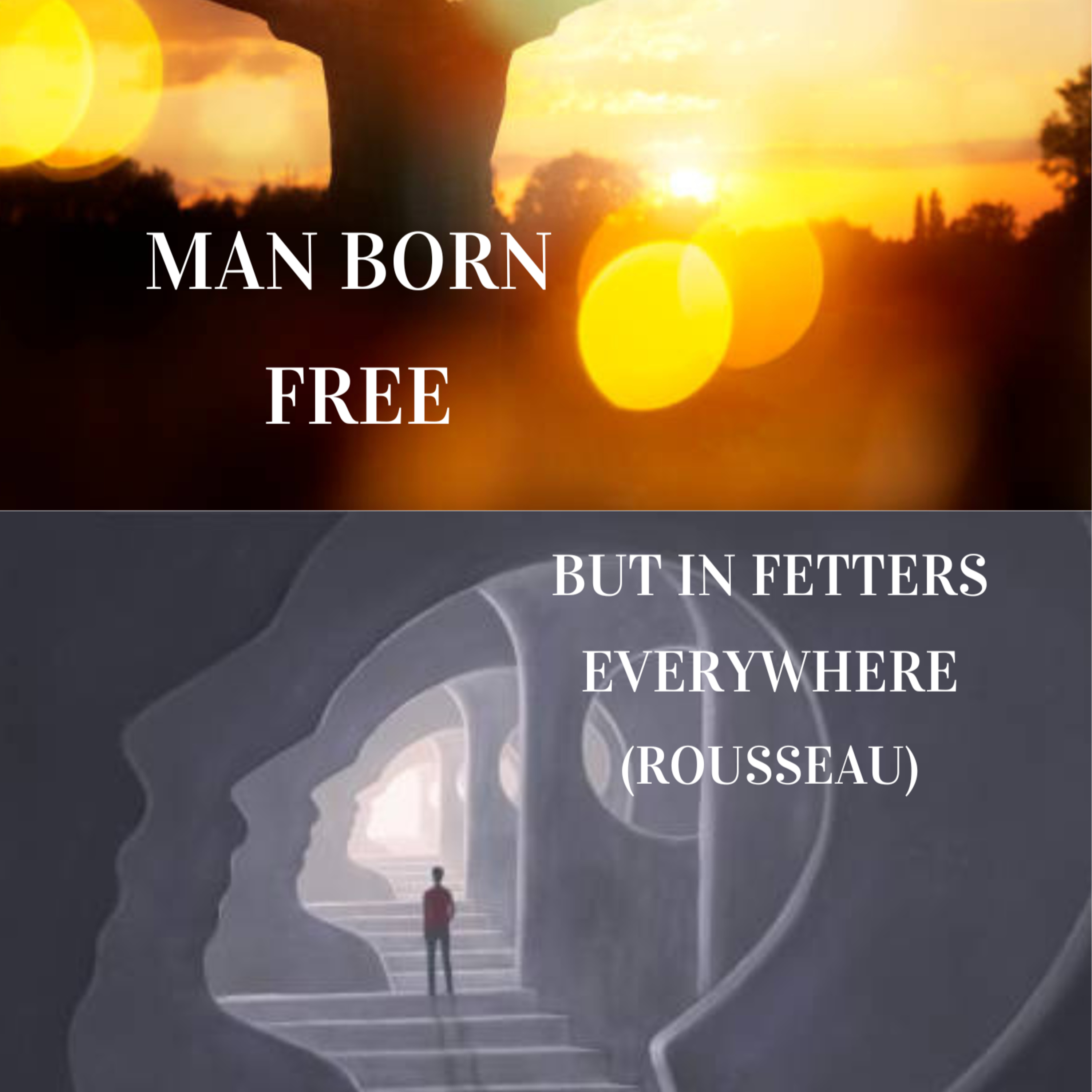
FASCINATING PHILOSOPHY - MAN IS BORN FREE BUT HE IS IN FETTERS EVERYWHERE (ROUSSEAU) episode artwork

EPISODE · Feb 14, 2024 · 3 MIN

FASCINATING PHILOSOPHY - MAN IS BORN FREE BUT HE IS IN FETTERS EVERYWHERE (ROUSSEAU)

from BEYOND THE OBVIOUS · host Purushothaman C

FASCINATING PHILOSOPHY MAN IS BORN FREE BUT HE IS IN FETTERS EVERYWHERE (ROUSSEAU) The quote "Man is born free but he is in fetters everywhere" encapsulates the philosophical notion of the inherent freedom of individuals at birth juxtaposed against the constraints imposed by society, institutions and various external factors throughout life. This profound statement, attributed to Jean-Jacques Rousseau, a prominent Enlightenment thinker, delves into the complex interplay between natural liberty and societal influences. At the core of Rousseau's philosophy is the idea that individuals are born with a state of natural freedom, unburdened by the societal constructs that emerge later in life. This primal freedom, however, encounters numerous shackles as individuals navigate the complexities of society. The "fetters everywhere" refer to the manifold constraints that encircle individuals, shaping their thoughts, actions, and choices. One interpretation of this quote underscores the impact of societal norms and expectations on an individual's autonomy. From early childhood, individuals are subjected to cultural, familial, and educational norms that mold their behavior and perceptions. These norms act as societal fetters, subtly shaping and influencing individuals to conform to established patterns of behavior. The innate freedom with which one is born becomes entangled within the web of societal expectations. In addition to societal norms, political structures and institutions play a pivotal role in constraining individual freedom. Rousseau was critical of the existing political systems of his time arguing that they contributed to the erosion of natural liberty. Governments, in his view, imposed laws and regulations that curtailed the inherent freedom of individuals. The very institutions established to safeguard collective interests often became instruments of constraint, leading to the paradox of individuals being born free but living in a world bound by laws and regulations. Furthermore, economic factors contribute to the fetters that Rousseau highlights. In a society marked by inequality, economic disparities can limit opportunities and hinder the realization of individual potential. The constraints imposed by economic systems can create a cycle of dependence and deprivation, restricting the ability of individuals to exercise their freedom fully. The phrase also echoes the psychological and emotional constraints that individuals may experience. Social expectations, peer pressure, and fear of judgment can become internalized, shaping one's choices and stifling the expression of true self. The quest for acceptance and validation can lead individuals to compromise their authenticity, inadvertently reinforcing the fetters that Rousseau speaks of. In conclusion, Rousseau's quote encapsulates a profound observation about the inherent contradiction between the natural freedom with which individuals are born and the multitude of constraints imposed by society. Whether through cultural norms, political structures, economic systems, or psychological pressures, individuals find themselves entangled in fetters that often obscure the untamed liberty of their early existence. This reflection prompts us to critically examine the forces that shape our lives and consider the balance between societal order and individual autonomy in the ongoing quest for harmonious coexistence.

FASCINATING PHILOSOPHY MAN IS BORN FREE BUT HE IS IN FETTERS EVERYWHERE (ROUSSEAU) The quote "Man is born free but he is in fetters everywhere" encapsulates the philosophical notion of the inherent freedom of individuals at birth juxtaposed against the constraints imposed by society, institutions and various external factors throughout life. This profound statement, attributed to Jean-Jacques Rousseau, a prominent Enlightenment thinker, delves into the complex interplay between natural liberty and societal influences. At the core of Rousseau's philosophy is the idea that individuals are born with a state of natural freedom, unburdened by the societal constructs that emerge later in life. This primal freedom, however, encounters numerous shackles as individuals navigate the complexities of society. The "fetters everywhere" refer to the manifold constraints that encircle individuals, shaping their thoughts, actions, and choices. One interpretation of this quote underscores the impact of societal norms and expectations on an individual's autonomy. From early childhood, individuals are subjected to cultural, familial, and educational norms that mold their behavior and perceptions. These norms act as societal fetters, subtly shaping and influencing individuals to conform to established patterns of behavior. The innate freedom with which one is born becomes entangled within the web of societal expectations. In addition to societal norms, political structures and institutions play a pivotal role in constraining individual freedom. Rousseau was critical of the existing political systems of his time arguing that they contributed to the erosion of natural liberty. Governments, in his view, imposed laws and regulations that curtailed the inherent freedom of individuals. The very institutions established to safeguard collective interests often became instruments of constraint, leading to the paradox of individuals being born free but living in a world bound by laws and regulations. Furthermore, economic factors contribute to the fetters that Rousseau highlights. In a society marked by inequality, economic disparities can limit opportunities and hinder the realization of individual potential. The constraints imposed by economic systems can create a cycle of dependence and deprivation, restricting the ability of individuals to exercise their freedom fully. The phrase also echoes the psychological and emotional constraints that individuals may experience. Social expectations, peer pressure, and fear of judgment can become internalized, shaping one's choices and stifling the expression of true self. The quest for acceptance and validation can lead individuals to compromise their authenticity, inadvertently reinforcing the fetters that Rousseau speaks of. In conclusion, Rousseau's quote encapsulates a profound observation about the inherent contradiction between the natural freedom with which individuals are born and the multitude of constraints imposed by society. Whether through cultural norms, political structures, economic systems, or psychological pressures, individuals find themselves entangled in fetters that often obscure the untamed liberty of their early existence. This reflection prompts us to critically examine the forces that shape our lives and consider the balance between societal order and individual autonomy in the ongoing quest for harmonious coexistence.

NOW PLAYING

FASCINATING PHILOSOPHY - MAN IS BORN FREE BUT HE IS IN FETTERS EVERYWHERE (ROUSSEAU)

0:00 3:44

No transcript for this episode yet

We transcribe on demand. Request one and we'll notify you when it's ready — usually under 10 minutes.

Frequently Asked Questions

How long is this episode of BEYOND THE OBVIOUS?

This episode is 3 minutes long.

When was this BEYOND THE OBVIOUS episode published?

This episode was published on February 14, 2024.

What is this episode about?

FASCINATING PHILOSOPHY MAN IS BORN FREE BUT HE IS IN FETTERS EVERYWHERE (ROUSSEAU) The quote "Man is born free but he is in fetters everywhere" encapsulates the philosophical notion of the inherent freedom of individuals at birth juxtaposed against...

Can I download this BEYOND THE OBVIOUS episode?

Yes, you can download this episode by clicking the download button on the episode player, or subscribe to the podcast in your preferred podcast app for automatic downloads.
URL copied to clipboard!