
EPISODE · Jun 26, 2026 · 25 MIN
Financial Advice: Focuses heavily on behavioral finance on how mindset and decision-making patterns impact financial success.
from The Steve Harvey Morning Show · host iHeartPodcasts
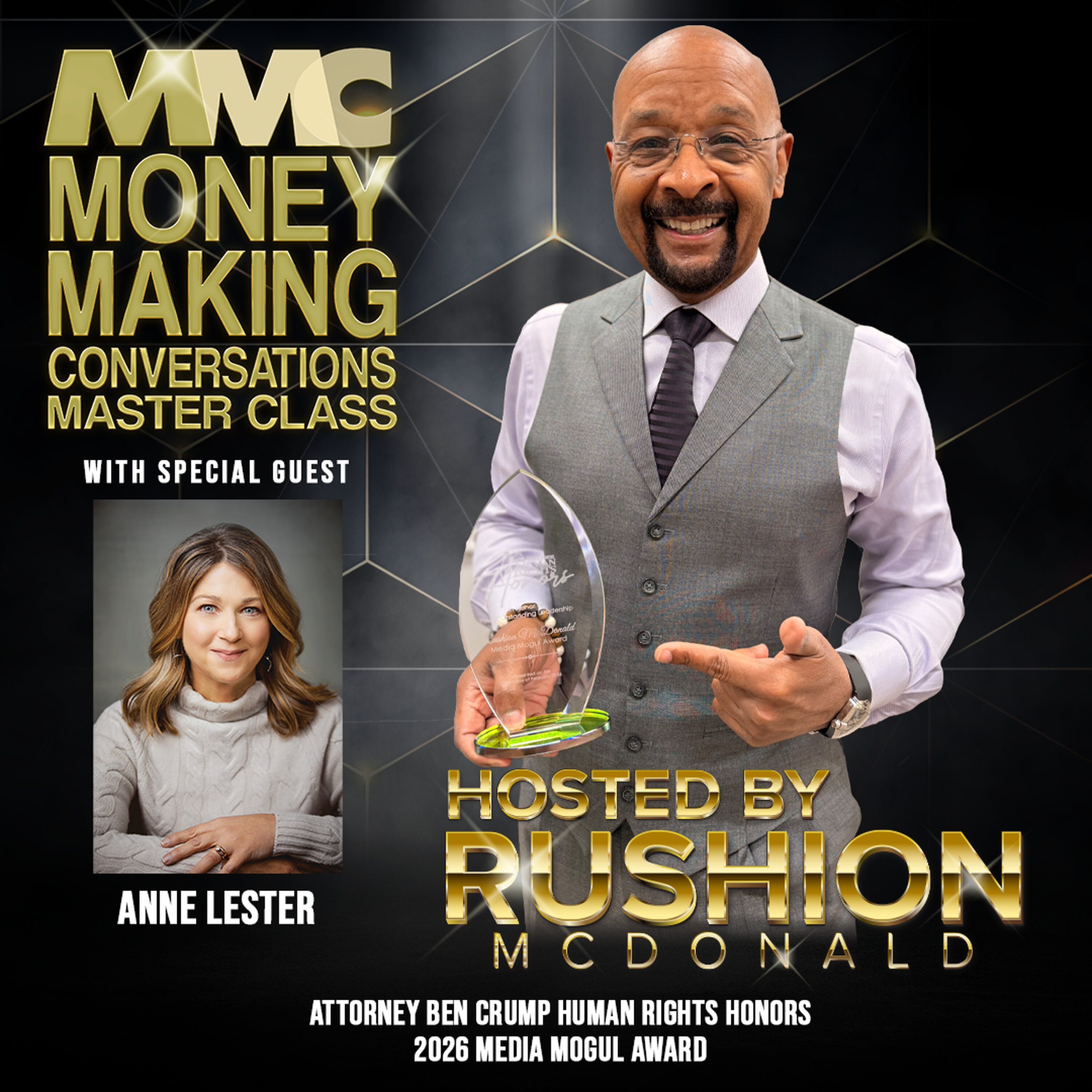
Listen and subscribe to Money Making Conversations on iHeartRadio, Apple Podcasts, Spotify, www.moneymakingconversations.com/subscribe/ or wherever you listen to podcasts. New Money Making Conversations episodes drop daily. I want to alert you, so you don’t miss out on expert analysis and insider perspectives from my guests who provide tips that can help you uplift the community, improve your financial planning, motivation, or advice on how to be a successful entrepreneur. Keep winning! Two-time Emmy and Three-time NAACP Image Award-winning, television Executive Producer Rushion McDonald interviewed Anne Lester. 🎙️ Interview Summary Overview:Anne Lester, a longtime asset manager and author of Your Best Financial Life: Save Smart Now for the Future You Want, discusses practical strategies for saving, investing, and managing personal finances. The conversation focuses heavily on behavioral finance—how mindset, habits, and decision-making patterns impact financial success. 🎯 Purpose of the Interview 1. Financial Education & Practical Guidance Teach listeners how to build sustainable saving and investing habits. Break down financial concepts into simple, actionable steps. 2. Behavioral Change Help people understand why they make poor financial decisions. Offer “mental hacks” to overcome bad habits and biases. 3. Empowerment Without Shame Encourage people to stop dwelling on past financial mistakes. Promote forward-looking planning and self-improvement. 🔑 Key Takeaways 1. Most Financial Mistakes Are Behavioral, Not Knowledge-Based Lester admits she made “every mistake” early in her career. Financial success comes from changing habits, not just learning concepts. 👉 Lesson: Money problems are often about behavior, not intelligence. 2. Start Saving Early—But Start Small Even minimal contributions build the habit of saving. Gradual increases (e.g., saving part of raises) are more sustainable. 👉 Lesson: Consistency matters more than starting big. 3.“Consumption Creep” Is a Major Wealth Killer People increase spending as income rises (cars, homes, lifestyle upgrades). If saving doesn’t increase too, long-term financial stability suffers. 👉 Lesson: Control lifestyle inflation to build wealth. 4. Save First, Then Invest Strategically Emergency savings should be liquid (cash or high-yield accounts). Long-term funds (retirement, wealth-building) should be invested. 👉 Lesson: Separate short-term safety from long-term growth. 5. Build an Emergency Fund First Target: 3–6 months of living expenses Serves as a financial buffer to prevent debt or crisis. 👉 Lesson: Stability comes before investment risk. 6. Use Structured Rules to Make Decisions Examples: Save at least half of every raise Ask before spending from savings: Is this really an emergency? Do I need to spend this? Do I need to spend it now? 👉 Lesson: Decision frameworks reduce emotional spending. 7. Financial Communication Is Critical in Relationships Couples must openly discuss money habits and goals. Financial compatibility requires transparency and negotiation. 👉 Lesson: Money issues can damage relationships if not addressed early. 8. Subscriptions Quietly Drain Finances Many people unknowingly overpay for subscriptions. Simple tactics: Avoid auto-renew Audit credit cards Think annually (not monthly) Rotate services (e.g., streaming) 👉 Lesson: Small recurring costs can significantly impact finances over time. 9. Don’t Let Shame Block Financial Progress Many people feel guilt or embarrassment about money mistakes. Lester emphasizes moving forward instead of dwelling on the past. 👉 Lesson: Progress starts when you stop self-judgment. 10. Your Brain Works Against Long-Term Financial Thinking Humans are wired for short-term survival, not future planning. You must “hack” your behavior to align with long-term goals. 👉 Lesson: Build systems to override natural impulses. 💬 Notable Quotes On Mistakes & Learning “I made every single mistake you could make.” [ANNE LESTER | Txt] On Saving Strategy “Save at least half of every raise.” [ANNE LESTER | Txt] On Lifestyle Inflation “Your lifestyle just keeps getting better… and if you don’t increase your savings rate, you’re creating a world of pain for yourself.” [ANNE LESTER | Txt] On Starting Small “If you can only put in 25 or 50 bucks… just start.” [ANNE LESTER | Txt] On Financial Identity “You change the way you look at yourself… you’re suddenly a person who is a saver.” [ANNE LESTER | Txt] On Emergency Spending Decisions “Do I have to spend this money… and do I have to spend it now?” [ANNE LESTER | Txt] On Behavioral Finance “Our brains are not wired to help us make rational, long-term financial decisions.” [ANNE LESTER | Txt] On Motivation for the Book “It’s the book I wish I had when I was in my 20s.” [ANNE LESTER | Txt] 🧠 Bottom Line This interview emphasizes that financial success is less about income and more about behavior. Anne Lester’s core message: Build habits → control lifestyle → invest wisely → stay consistent Her approach reframes money management as a psychological and behavioral challenge, not just a mathematical one. #STRAW #BEST #SHMSSee omnystudio.com/listener for privacy information.
Embed this episode
Ready to play
Financial Advice: Focuses heavily on behavioral finance on how mindset and decision-making patterns impact financial success.
No transcript for this episode yet
Similar Episodes
No similar episodes found.
Similar Podcasts
No similar podcasts found.