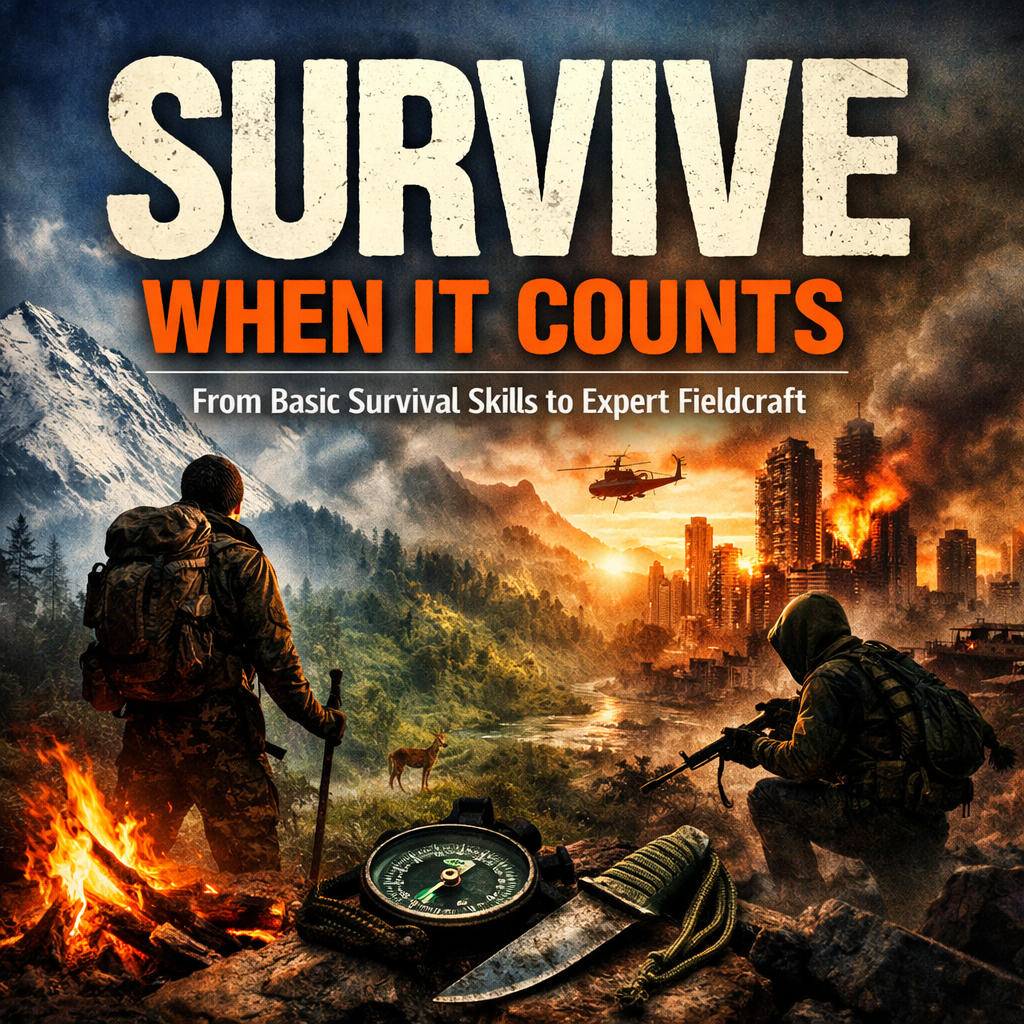
Fire Starting episode artwork

EPISODE · Apr 15, 2026 · 3 MIN

Fire Starting

from Survive When It Counts

When people think about survival, they often imagine dramatic rescues, rugged landscapes, or extreme weather. But in the field, one of the most important skills is much simpler: fire starting. A good fire can give you warmth, reduce stress, dry clothing, purify water, signal for help, and boost morale when conditions get difficult. In this episode, we’re breaking down fire starting as a practical survival skill that depends less on luck and more on preparation, patience, and judgment. The first thing to understand is that fire starting begins long before you strike a spark. Good fuel selection matters. Fire needs the right combination of tinder, kindling, and fuel wood, and each layer has to be dry enough and sized correctly to catch the flame from the layer beneath it. Tinder is the easiest material to ignite, so think of dry grass, birch bark, fine wood shavings, cotton, or other natural fire starters. Kindling should be pencil-thin at first, then gradually larger. If you rush this step and pile on thick logs too early, the fire will choke before it gets established. A strong fire is built, not forced. Another key part of fire starting is choosing the right fire lay for the conditions. In wet weather, a compact teepee or log cabin style can help concentrate heat and shelter the flame. In windy conditions, you may need natural windbreaks or a shallow trench to protect the ignition point. On the ground, fire safety matters too: clear away leaves, roots, and debris, and make sure your fire is set in a safe place away from low branches and anything that could catch. Good fire craft is not just about making flames; it is about controlling them. Next comes ignition, and this is where calm technique really pays off. Whether you’re using a lighter, matches, a ferro rod, or another fire starter, the goal is the same: transfer enough heat into your tinder to create a sustained flame. Many people fail because they focus on the spark instead of the whole process. A spark is only the beginning. You need a dry, well-prepared tinder bundle, enough airflow, and a steady hand. If one method doesn’t work, don’t panic. Reassess your fuel, protect your tinder from moisture, and try again with better preparation rather than more force. Finally, fire starting is as much about confidence as it is about skill. In survival situations, frustration can lead to wasted fuel, poor decisions, and wasted energy. The more you practice under different conditions, the more you’ll learn how fire behaves in damp air, wind, cold, or low-quality fuel environments. That experience builds judgment. And judgment is what turns fire from a lucky success into a dependable tool. If you can build a fire when conditions are less than ideal, you gain one of the most valuable advantages in the field. Fire starting is a foundational survival skill because it solves multiple problems at once. It keeps you warm, helps you think clearly, and gives you a better chance of staying safe through the night. In the next stages of survival training, fire becomes part of a larger system that includes shelter, water, and navigation. But it starts right here, with understanding your materials, reading your environment, and learning to make flame on purpose. Master that, and you’ve taken a major step toward real self-reliance. Sponsor: Find the book on Amazon and Books Central Website

When people think about survival, they often imagine dramatic rescues, rugged landscapes, or extreme weather. But in the field, one of the most important skills is much simpler: fire starting. A good fire can give you warmth, reduce stress, dry clothing, purify water, signal for help, and boost morale when conditions get difficult. In this episode, we’re breaking down fire starting as a practical survival skill that depends less on luck and more on preparation, patience, and judgment. The first thing to understand is that fire starting begins long before you strike a spark. Good fuel selection matters. Fire needs the right combination of tinder, kindling, and fuel wood, and each layer has to be dry enough and sized correctly to catch the flame from the layer beneath it. Tinder is the easiest material to ignite, so think of dry grass, birch bark, fine wood shavings, cotton, or other natural fire starters. Kindling should be pencil-thin at first, then gradually larger. If you rush this step and pile on thick logs too early, the fire will choke before it gets established. A strong fire is built, not forced. Another key part of fire starting is choosing the right fire lay for the conditions. In wet weather, a compact teepee or log cabin style can help concentrate heat and shelter the flame. In windy conditions, you may need natural windbreaks or a shallow trench to protect the ignition point. On the ground, fire safety matters too: clear away leaves, roots, and debris, and make sure your fire is set in a safe place away from low branches and anything that could catch. Good fire craft is not just about making flames; it is about controlling them. Next comes ignition, and this is where calm technique really pays off. Whether you’re using a lighter, matches, a ferro rod, or another fire starter, the goal is the same: transfer enough heat into your tinder to create a sustained flame. Many people fail because they focus on the spark instead of the whole process. A spark is only the beginning. You need a dry, well-prepared tinder bundle, enough airflow, and a steady hand. If one method doesn’t work, don’t panic. Reassess your fuel, protect your tinder from moisture, and try again with better preparation rather than more force. Finally, fire starting is as much about confidence as it is about skill. In survival situations, frustration can lead to wasted fuel, poor decisions, and wasted energy. The more you practice under different conditions, the more you’ll learn how fire behaves in damp air, wind, cold, or low-quality fuel environments. That experience builds judgment. And judgment is what turns fire from a lucky success into a dependable tool. If you can build a fire when conditions are less than ideal, you gain one of the most valuable advantages in the field. Fire starting is a foundational survival skill because it solves multiple problems at once. It keeps you warm, helps you think clearly, and gives you a better chance of staying safe through the night. In the next stages of survival training, fire becomes part of a larger system that includes shelter, water, and navigation. But it starts right here, with understanding your materials, reading your environment, and learning to make flame on purpose. Master that, and you’ve taken a major step toward real self-reliance. Sponsor: Find the book on Amazon and Books Central Website

NOW PLAYING

Fire Starting

0:00 3:33

No transcript for this episode yet

We transcribe on demand. Request one and we'll notify you when it's ready — usually under 10 minutes.

Breaking News Show | eTurboNews Juergen Thomas Steinmetz News is relevant to the global travel and tourism industry, human rights and global issues.Breaking news when it happens and only from the source. LIGHTS, CAMERA, SMILE! Creatives Club Media Lights, Camera, Smile, is a podcast for anyone with a dream to share something with the world, out of the overflow of themselves - be it their mind, their heart, their personalities, and much more. Each of us are alive in this moment in time, with an innate ability to have ideas and create various things to benefit both ourselves and the people around us for a reason, and here, you will find the encouragement, the inspiration, and the motivation to do just that. Hosted by Cicily, founder of Creatives Club, she dives into various topics surrounding creativity and business. Exploring entrepreneurship for creatives in a corporate reality, sharing tips and tricks in a media centered company, answering questions regarding what a creative actually is are just a few of the things discussed on this podcast. Be encouraged to create for yourself as Cicily gets vulnerable by pivoting the camera to herself for the first time.To submit questions for Cicily to answer, or have her address certain t Solving for Change MOBIA Technology Innovations Solving for Change welcomes business and technology leaders to share stories of bold business transformation within complex organizations. In an era when technology and markets are changing around businesses, the key to staying competitive is to evolve in response to those changes.  MOBIA’s Mike Reeves and Marc LeBlanc investigate business transformation, deconstructing the challenges, ambitions, and market disruptions that drive companies to embark on transformation journeys, and exploring their unique approaches to achieving meaningful outcomes.  What sparks leaders to pursue business transformation? How do they overcome the challenges along the way? What are the keys to creating enduring change?  Through in-depth conversations with business and technology leaders, Mike and Marc answer these questions and explore how businesses evolve by pulling four key transformation levers: people, process, technology, and culture. Invictus by Greyana, A Tomione Podfic M+G Readings Sporadic uploads thanks to gallstones.Voldemort intended the object to be used by his most loyal follower in the event that his horcruxes were destroyed, but it ended up in Hermione’s possession instead.It sent her back to a time when he was much less the monster that she’d always known him to be. Nothing could have prepared her for the intelligence and charm of Tom Riddle.He isn’t who she thought he was.Hermione discovers that it’s a dark descent into the madness of the man she should hate, but can’t… a descent she will never emerge fr

Frequently Asked Questions

How long is this episode of Survive When It Counts?

This episode is 3 minutes long.

When was this Survive When It Counts episode published?

This episode was published on April 15, 2026.

What is this episode about?

When people think about survival, they often imagine dramatic rescues, rugged landscapes, or extreme weather. But in the field, one of the most important skills is much simpler: fire starting. A good fire can give you warmth, reduce stress, dry...

Can I download this Survive When It Counts episode?

Yes, you can download this episode by clicking the download button on the episode player, or subscribe to the podcast in your preferred podcast app for automatic downloads.
URL copied to clipboard!