First a plague, then a fire: How a changing city rebuilt the modern stage episode artwork

EPISODE · Mar 20, 2026 · 44 MIN

First a plague, then a fire: How a changing city rebuilt the modern stage

from Berkeley Talks

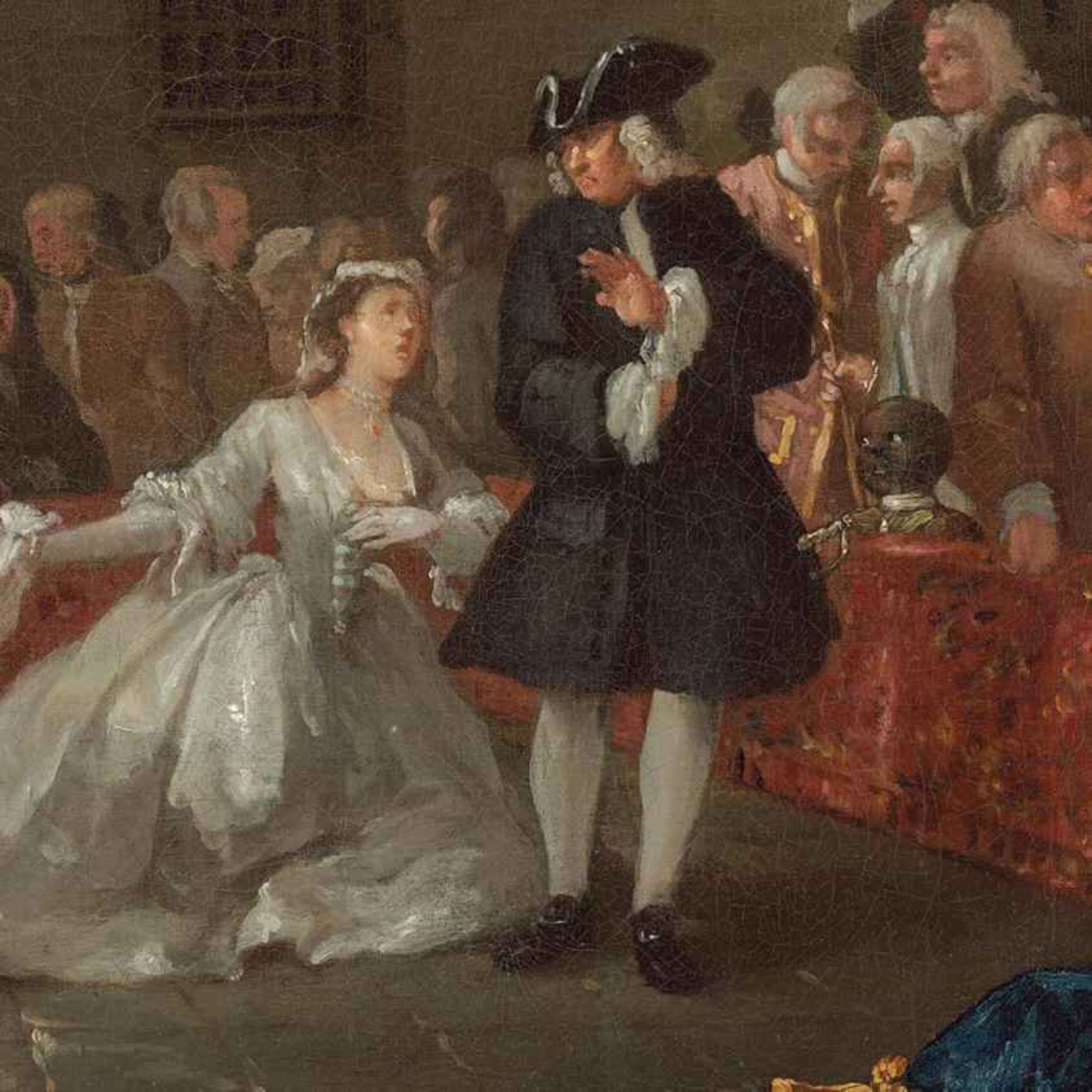
When William Shakespeare wrote Hamlet around 1600, the power of London’s theater lived almost entirely in language. The stage was mostly bare and the scenery imagined. To mark a shift in setting, an actor might simply declare, “This is the Forest of Arden.”But by the mid-17th century, this mode of performance began to change. Following decades of civil war and Puritan rule, King Charles II’s 1660 restoration of the monarchy reopened public theaters that had been closed for nearly two decades. It marked the beginning of the Restoration era, when movable scenery debuted — massive painted flats slid along wooden grooves, transforming the stage in seconds — and women, immigrants, servants and enslaved people first moved across it as performers and stagehands. The English stage became a space of motion, a vivid counterpart to a London rebuilt after the 1665 plague and the Great Fire of 1666.In this Berkeley Talks episode, UC Berkeley Professor Julia Fawcett discusses her 2025 book Moveable Londons: Performance and the Modern City, which traces how this mechanical innovation echoed a deeper cultural one. It was, she says, a “revolution in English performance” that redefined movement, agency and belonging in a rapidly changing city.And that revolution, she contends, provided the template not only for modern theater’s moving sets, star actresses and illusionistic stages, but also for ways of moving through — and belonging in — the modern city.Fawcett’s talk, which took place on Feb. 11, 2025, was part of a Berkeley Book Chats event hosted by the Townsend Center for the Humanities. She was in conversation with Joshua Gang, an associate professor of English at Berkeley.Listen to the episode and read the transcript on UC Berkeley News (news.berkeley.edu/podcasts/berkeley-talks).Music by HoliznaCC0.Image from Moveable Londons book cover. Hosted on Acast. See acast.com/privacy for more information.

When William Shakespeare wrote Hamlet around 1600, the power of London’s theater lived almost entirely in language. The stage was mostly bare and the scenery imagined. To mark a shift in setting, an actor might simply declare, “This is the Forest of Arden.”But by the mid-17th century, this mode of performance began to change. Following decades of civil war and Puritan rule, King Charles II’s 1660 restoration of the monarchy reopened public theaters that had been closed for nearly two decades. It marked the beginning of the Restoration era, when movable scenery debuted — massive painted flats slid along wooden grooves, transforming the stage in seconds — and women, immigrants, servants and enslaved people first moved across it as performers and stagehands. The English stage became a space of motion, a vivid counterpart to a London rebuilt after the 1665 plague and the Great Fire of 1666.In this Berkeley Talks episode, UC Berkeley Professor Julia Fawcett discusses her 2025 book Moveable Londons: Performance and the Modern City, which traces how this mechanical innovation echoed a deeper cultural one. It was, she says, a “revolution in English performance” that redefined movement, agency and belonging in a rapidly changing city.And that revolution, she contends, provided the template not only for modern theater’s moving sets, star actresses and illusionistic stages, but also for ways of moving through — and belonging in — the modern city.Fawcett’s talk, which took place on Feb. 11, 2025, was part of a Berkeley Book Chats event hosted by the Townsend Center for the Humanities. She was in conversation with Joshua Gang, an associate professor of English at Berkeley.Listen to the episode and read the transcript on UC Berkeley News (news.berkeley.edu/podcasts/berkeley-talks).Music by HoliznaCC0.Image from Moveable Londons book cover. Hosted on Acast. See acast.com/privacy for more information.

NOW PLAYING

First a plague, then a fire: How a changing city rebuilt the modern stage

0:00 44:01

No transcript for this episode yet

We transcribe on demand. Request one and we'll notify you when it's ready — usually under 10 minutes.

Carnivores Don't Get Sunburn - Carnivore Diet Talks Carnivores Don't Get Sunburn - Carnivore Diet Talks Welcome to “Carnivores Don’t Get Sunburn,” where we have fun and explore the carnivore diet and its transformative power. Join us as we uncover real stories from individuals who have thrived on this diet, defying convention and embracing optimal health. Plus, stay tuned for our upcoming documentary featuring diverse carnivores overcoming health challenges. Learn more at www.carnivoredietdocumentary.com.Excitingly, we’re working on an upcoming documentary where we’ll feature carnivores from various walks of life, conquering diverse health challenges. Join us on this journey and learn more at www.carnivoredietdocumentary.com.Join us in uncovering the power of the carnivore diet. Prepare to be inspired, informed, and empowered to embrace optimal health and well-being.Welcome to “Carnivores Don’t Get Sunburn: Unveiling Real Stories of the Carnivore Diet.” Stay tuned for our upcoming documentary. Discover how this lifestyle can transform lives. Learn more at www.carnivoredietdocumentary.com IT IS WHAT IT IS with SHALLZ - SHALLY ZOMORODI Shally Zomorodi What?  "It is what it is" with ShallZ – Shally ZomorodiWhen? WeeklyHow long? 35 minutesEvery week, Mother of 4, wife, morning TV news anchor and ultimate hostess, Shally Zomorodi talks about life - its up's and downs and how to stay on track in her weekly podcast, ‘It is what it is.’  Known for her high energy, infectious smile and ability to see the cup as half full Shally talks about all things in life and how to work through its challenges. From parenting, marriage, friendships, current events to how to smile when it just seems impossible ‘It is what it is’ is the perfect podcast to help inspire you to dance through the rain. Tracking Nuclear Weapons Programs Center for Strategic and International Studies The CSIS Proliferation Prevention Program talks to experts about transparency and nuclear weapons. Cover Stories with Chess Life US Chess Chess Life Editor John Hartmann talks to the authors of each month's Chess Life cover story.

Frequently Asked Questions

How long is this episode of Berkeley Talks?

This episode is 44 minutes long.

When was this Berkeley Talks episode published?

This episode was published on March 20, 2026.

What is this episode about?

When William Shakespeare wrote Hamlet around 1600, the power of London’s theater lived almost entirely in language. The stage was mostly bare and the scenery imagined. To mark a shift in setting, an actor might simply declare, “This is the Forest of...

Can I download this Berkeley Talks episode?

Yes, you can download this episode by clicking the download button on the episode player, or subscribe to the podcast in your preferred podcast app for automatic downloads.
URL copied to clipboard!