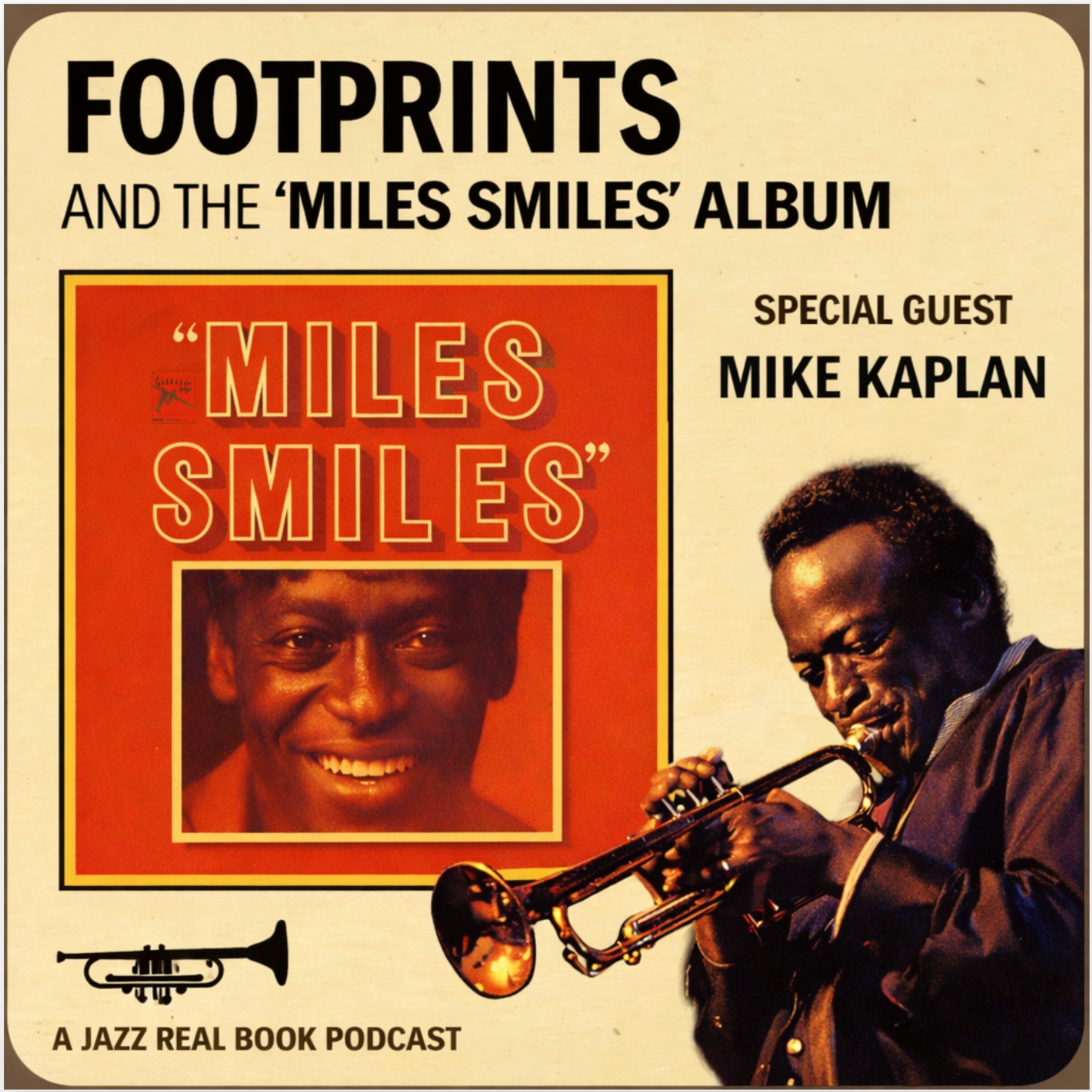
Footprints and Miles Davis' Miles Smiles (With Guest Mike Kaplan)  episode artwork

EPISODE · Apr 12, 2026 · 1H 36M

Footprints and Miles Davis' Miles Smiles (With Guest Mike Kaplan)

from The Jazz Real Book · host Jay Sweet

“Footprints,” composed by Wayne Shorter, first appeared on Adam’s Apple (1966) but became widely known through its performance on Miles Smiles by Miles Davis. The piece is a haunting minor blues that blends traditional structure with modern harmonic color. Often played in C minor, the tune uses a distinctive bass ostinato that outlines a 12-bar blues form while introducing subtle modal movement. On Miles Smiles, the rhythm section—Herbie Hancock, Ron Carter, and Tony Williams—reshapes the groove into a loose 6/8 feel that shifts fluidly between swing and Afro-Cuban influences.Released in 1967, Miles Smiles is one of the defining recordings of the Miles Davis Second Great Quintet. Featuring Davis, Shorter, Hancock, Carter, and Williams, the album reflects a move toward greater rhythmic freedom, interactive improvisation, and abstract harmony. Rather than strict chord-scale improvisation, the group emphasizes collective interplay, making Miles Smiles a landmark of post-bop innovation. (EP 119)

“Footprints,” composed by Wayne Shorter, first appeared on Adam’s Apple (1966) but became widely known through its performance on Miles Smiles by Miles Davis. The piece is a haunting minor blues that blends traditional structure with modern harmonic color. Often played in C minor, the tune uses a distinctive bass ostinato that outlines a 12-bar blues form while introducing subtle modal movement. On Miles Smiles, the rhythm section—Herbie Hancock, Ron Carter, and Tony Williams—reshapes the groove into a loose 6/8 feel that shifts fluidly between swing and Afro-Cuban influences.Released in 1967, Miles Smiles is one of the defining recordings of the Miles Davis Second Great Quintet. Featuring Davis, Shorter, Hancock, Carter, and Williams, the album reflects a move toward greater rhythmic freedom, interactive improvisation, and abstract harmony. Rather than strict chord-scale improvisation, the group emphasizes collective interplay, making Miles Smiles a landmark of post-bop innovation. (EP 119)

NOW PLAYING

Footprints and Miles Davis' Miles Smiles (With Guest Mike Kaplan)

0:00 1:36:28

No transcript for this episode yet

We transcribe on demand. Request one and we'll notify you when it's ready — usually under 10 minutes.

Frequently Asked Questions

How long is this episode of The Jazz Real Book?

This episode is 1 hour and 36 minutes long.

When was this The Jazz Real Book episode published?

This episode was published on April 12, 2026.

What is this episode about?

“Footprints,” composed by Wayne Shorter, first appeared on Adam’s Apple (1966) but became widely known through its performance on Miles Smiles by Miles Davis. The piece is a haunting minor blues that blends traditional structure with modern harmonic...

Can I download this The Jazz Real Book episode?

Yes, you can download this episode by clicking the download button on the episode player, or subscribe to the podcast in your preferred podcast app for automatic downloads.
URL copied to clipboard!