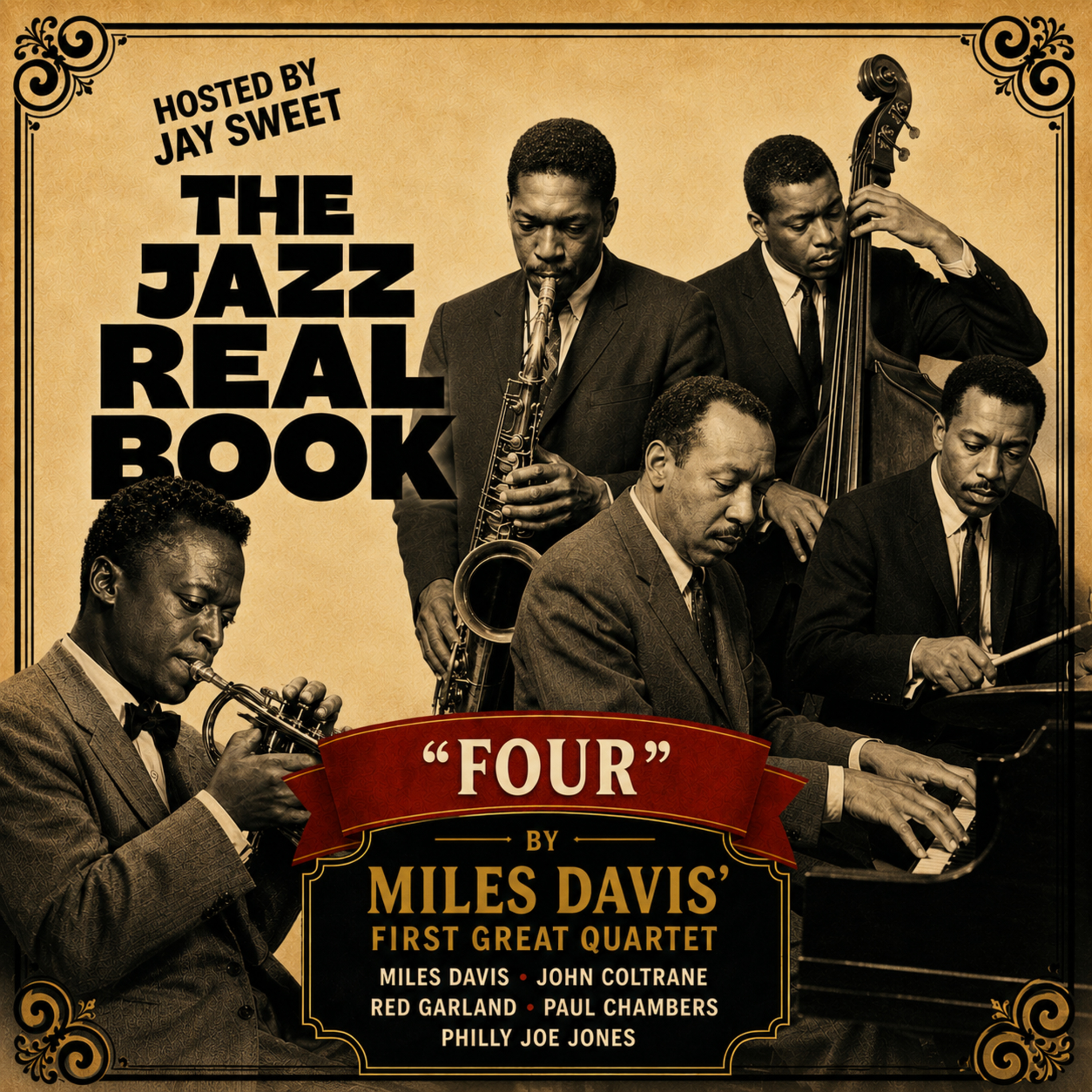
Four and Miles Davis’ First Great Quintet  episode artwork

EPISODE · May 17, 2026 · 17 MIN

Four and Miles Davis’ First Great Quintet 

from The Jazz Real Book · host Jay Sweet

“Four” and Miles Davis’ First Great Quintet “Four” became one of the signature performances associated with Miles Davis’ First Great Quintet, one of the most influential small groups in jazz history. Formed in 1955, the ensemble featured John Coltrane on tenor saxophone, Red Garland on piano, Paul Chambers on bass, and Philly Joe Jones. Their version of “Four,” particularly the recording on the album Workin' with the Miles Davis Quintet, helped establish the tune as a modern jazz standard.The group balanced bebop sophistication with blues feeling, swing, and melodic clarity. Miles Davis approached the tune with restraint and space, allowing his phrases to breathe rather than relying on technical excess. John Coltrane, still developing the “sheets of sound” approach that would later define his style, brought urgency and harmonic depth to the performance. Red Garland’s elegant block chords, Paul Chambers’ flowing bass lines, and Philly Joe Jones’ explosive yet conversational drumming created one of the greatest rhythm sections in jazz history. Together, the quintet transformed “Four” into a model of hard bop interplay, sophistication, and rhythmic drive.Miles Davis (1954) Miles Davis with the First Great Quintet The Jazz Real Book Podcast Vol. 2

“Four” and Miles Davis’ First Great Quintet “Four” became one of the signature performances associated with Miles Davis’ First Great Quintet, one of the most influential small groups in jazz history. Formed in 1955, the ensemble featured John Coltrane on tenor saxophone, Red Garland on piano, Paul Chambers on bass, and Philly Joe Jones. Their version of “Four,” particularly the recording on the album Workin' with the Miles Davis Quintet, helped establish the tune as a modern jazz standard.The group balanced bebop sophistication with blues feeling, swing, and melodic clarity. Miles Davis approached the tune with restraint and space, allowing his phrases to breathe rather than relying on technical excess. John Coltrane, still developing the “sheets of sound” approach that would later define his style, brought urgency and harmonic depth to the performance. Red Garland’s elegant block chords, Paul Chambers’ flowing bass lines, and Philly Joe Jones’ explosive yet conversational drumming created one of the greatest rhythm sections in jazz history. Together, the quintet transformed “Four” into a model of hard bop interplay, sophistication, and rhythmic drive.Miles Davis (1954) Miles Davis with the First Great Quintet The Jazz Real Book Podcast Vol. 2

NOW PLAYING

Four and Miles Davis’ First Great Quintet 

0:00 17:24

No transcript for this episode yet

We transcribe on demand. Request one and we'll notify you when it's ready — usually under 10 minutes.

Frequently Asked Questions

How long is this episode of The Jazz Real Book?

This episode is 17 minutes long.

When was this The Jazz Real Book episode published?

This episode was published on May 17, 2026.

What is this episode about?

“Four” and Miles Davis’ First Great Quintet “Four” became one of the signature performances associated with Miles Davis’ First Great Quintet, one of the most influential small groups in jazz history. Formed in 1955, the ensemble featured John...

Can I download this The Jazz Real Book episode?

Yes, you can download this episode by clicking the download button on the episode player, or subscribe to the podcast in your preferred podcast app for automatic downloads.
URL copied to clipboard!