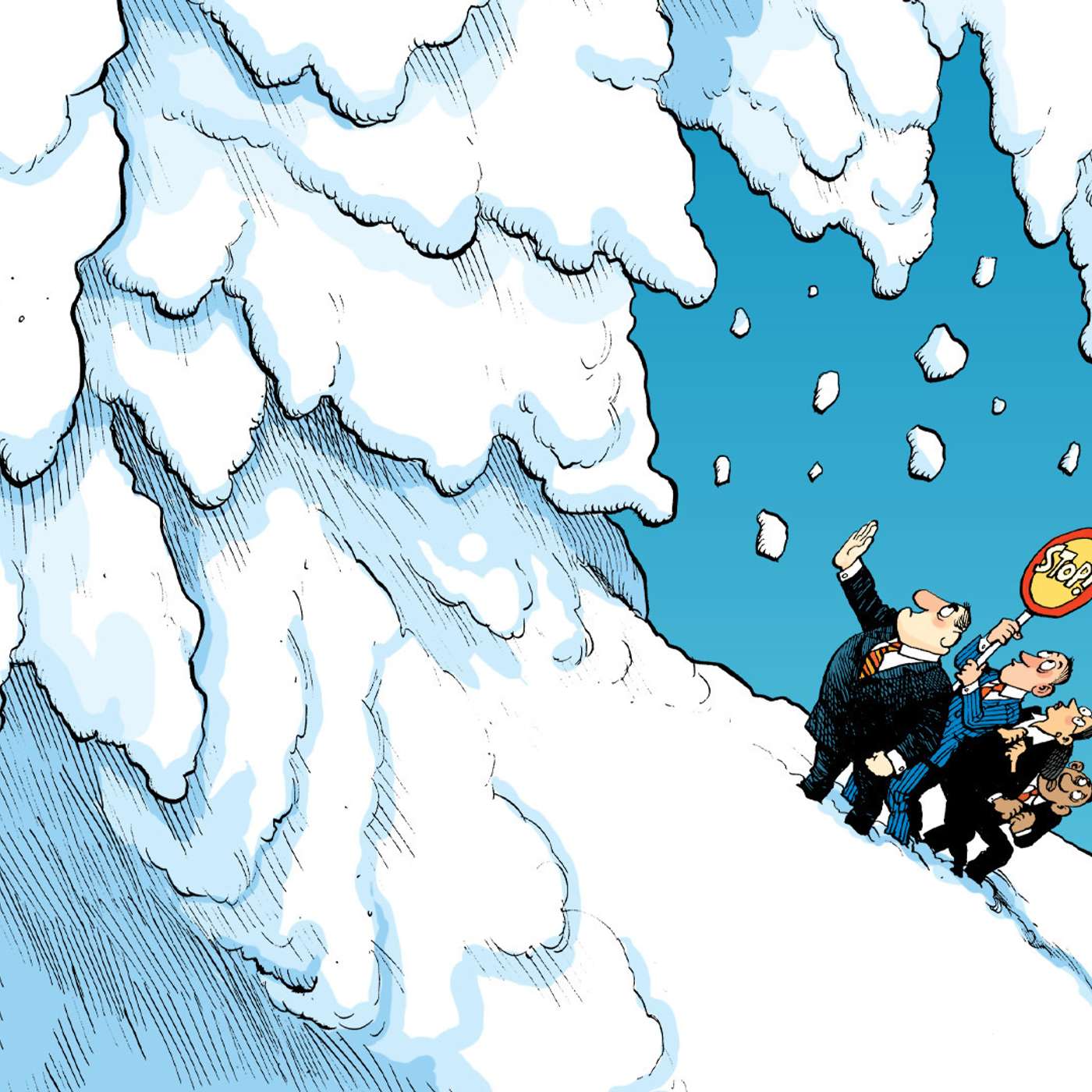
Fragile, Complex Systems episode artwork

EPISODE · May 1, 2020 · 38 MIN

Fragile, Complex Systems

from Eurodollar University · host Jeff Snider

In 1929 a plague struck Florida resulting in an overwhelming government response.  The consequences were not only agricultural but financial as banks, heavily exposed to the Sunshine State's horticulture sector, approached insolvency.  Bank stability, Federal Reserve responses and a suitcase stuffed with six million dollars are all part of the thrilling story.  But so is the notion of bureaucratic delay, wild swings from hope to despair (and back), contemporary titans of industry offering reassuring words, and the impotence of human effort against the monstrous chaos of a complex system reverting back towards simplicity.In today's day, the US Treasury bond market was warning for the better part of two years that the monetary, financial and economic - to say nothing of the political and social - facets of our system were fragile.  Weak.  Already enervated by six years of political upheaval and a dozen years of monetary disorder.  The virus was the banana peel upon the wall that Humpty Dumpty was dancing on.The United States and European Union GDP estimates for the first quarter corroborate the bond market's opinion.  Though the virus, and the government response to it, only took hold in the final month of the quarter (with exceptions of course, Italy for example) the result was catastrophic nonetheless.  In other words, the US and EU economies were already stumbling about the street, late at night after a 12-year bender when Corona stepped out from the shadowy alleyway with a billy club and an appetite for mayhem.1929 Florida Plague as ParableBond Markets Dismiss FedQ1 US GDPQ1 EU GDPJeff Snider, Head of Global Research at Alhambra Investments and Officer of the Offshore with Emil Kalinowski, Getting His Pump On.  Artwork by the Caravaggio of caricature, David Parkins.

Hubris. It will get us to the stars but seduce us into believing we belong there. Today, monetary authorities suffer it, believing they can manage the nonlinearity, emergence, spontaneous order, adaptation, and feedback loops of the unravelling.

NOW PLAYING

Fragile, Complex Systems

0:00 38:52

No transcript for this episode yet

We transcribe on demand. Request one and we'll notify you when it's ready — usually under 10 minutes.

Third Eye Edify Podcast Jorge Mesa Get my new book:Paperback: https://a.co/d/httI0daEbook: https://books2read.com/u/mBAx6OCheck out my website: http://thirdeyeedify.com/Join my Bass Player University:https://jorgemesamusic.com/bassplayeruniversityThis podcast is on a relentless quest for truth, no matter what dark corner it is hiding in. Hosted on Acast. See acast.com/privacy for more information. What Works? Sophie Scott, UCL PALS Prof Sophie Scott, Director of the Institute of Cognitive Neuroscience at University College London, discusses life and science and careers with her colleagues from the Division of Psychology and Language Sciences at UCL, and beyond. The aim of the show is to highlight some amazing scientists, and explore their journeys through science and life, and find out what works for them. MomDocs St. Louis Childrens Hospital - MomDocs A monthly podcast from Washington University pediatric specialists at St. Louis Children’s HospitalThe MomDocs are pediatricians at St. Louis Children’s Hospital. They work in a variety of specialties and share their advice and expertise on the questions we all face as parents. WW2 - the Key Questions, answered by Laurence Rees. Laurence Rees A former Head of BBC TV History programmes, Laurence has specialized in writing books and making television documentaries about World War Two, the Nazis and Stalinism for thirty years. He won a BAFTA and a Peabody for his TV series 'The Nazis: A Warning from History' and a British Book Award for his book on Auschwitz, which is also the world's best selling book on this notorious camp. His book 'the Holocaust: A New History' was described by the Times as 'exemplary' and by the Daily Telegraph as 'the best single volume account of the atrocity ever written'. Educated at Oxford University, for several years he was a visiting senior fellow at the London School of Economics, London University. He holds honorary doctorates from the University of Sheffield and the Open University. Professor Robert Service, of Oxford University, described Rees as 'one of the world's experts on the Second World War'. Sir Max Hastings wrote in the Sunday Times, in a review of Laurence Rees' 'World War Two: Behi

Frequently Asked Questions

How long is this episode of Eurodollar University?

This episode is 38 minutes long.

When was this Eurodollar University episode published?

This episode was published on May 1, 2020.

What is this episode about?

In 1929 a plague struck Florida resulting in an overwhelming government response.  The consequences were not only agricultural but financial as banks, heavily exposed to the Sunshine State's horticulture sector, approached insolvency.  Bank...

Can I download this Eurodollar University episode?

Yes, you can download this episode by clicking the download button on the episode player, or subscribe to the podcast in your preferred podcast app for automatic downloads.
URL copied to clipboard!