
EPISODE · Apr 21, 2026 · 15 MIN
Frankenstein, Death, and Original Sin
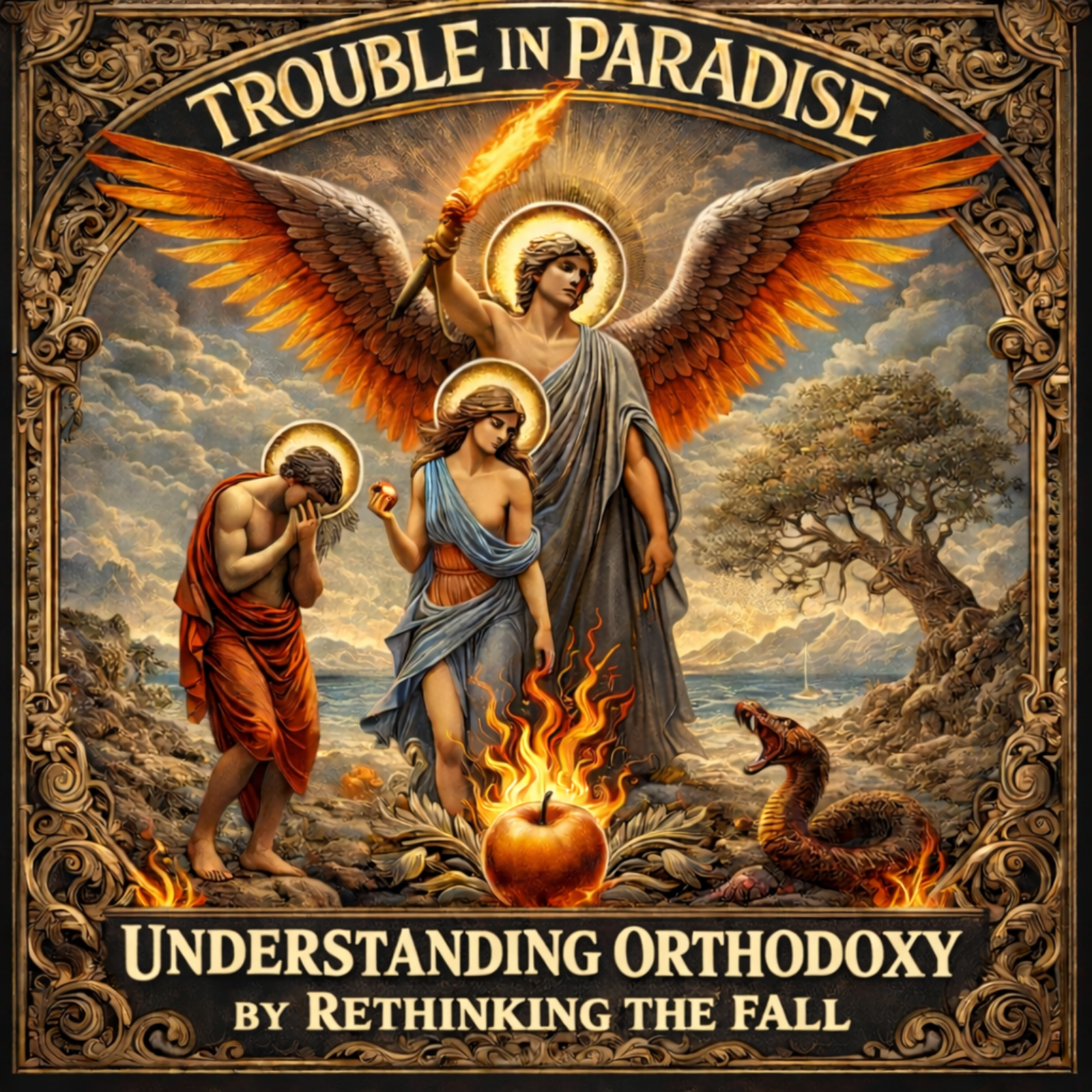
from Trouble in Paradise - Understanding Orthodoxy by Rethinking the Fall
Episode 11 —Frankenstein, Death, and Original SinThis episode explores Frankenstein by Mary Shelley as more than a warning about science—it’s a story about death, the human will, and what happens when traditional theological frameworks collapse.🧭 Core IdeaIn earlier Christian thought—seen clearly in Paradise Lost—the pattern is:sin → deathBut in Frankenstein, that pattern is reversed:death → becomes the engine that drives human actionThe novel presents a world where death is no longer explained within a theological framework, but becomes the central problem shaping everything.⚔️ Historical and Theological BackgroundJohn Milton writes within a world shaped by:Reformation theologydivine sovereigntyhuman fallennessJohn Calvin and later thinkers emphasize:the brokenness of the human willsalvation as something givenBy Shelley’s time:these ideas are still presentbut increasingly questioned and rejectedWilliam Godwin (Shelley’s father):raised in a Calvinist environmentrejects it in favor of reason and human perfectibilityMary Wollstonecraft (her mother):rejects the idea that humans are born ruinedretains belief in moral progress💀 Death as the EngineIn Frankenstein:The death of Victor’s mother becomes the turning pointDeath is no longer a consequence—it becomes the driving forceFear of death leads to:controltechnological interventiondesecration of the human bodyThe grave becomes a resource. The body becomes material.🧠 The Will: Control vs. TrustVictor’s response to death reveals a deeper tension:The will is active, but shaped by fearFaced with death, there are two paths:Resurrection (received)death is not finalnot ours to overcomeControl (attempted)death must be defeated directlyleads to manipulation and violationVictor chooses control.🧩 The Creature and BelongingThe Creature reads Paradise Lost and asks:Am I Adam… or a fallen angel?He begins with longing and moral awarenessHe seeks relationship and acceptanceHe is consistently rejectedHis turning point comes when:he concludes he will never be receivedThis leads to:collapse of hopeemergence of rage⚡ Key QuestionThe novel leaves a central question unresolved:Are we corrupt because of how we are made… or do we become destructive because death is already at work?🔥 The HorrorThe real fear in Frankenstein is not the Creature itself—it is the recognition that his transformation makes senseUnder the same conditions:isolationrejectionfear of deathwe would become him✝️ Final ReflectionThe episode closes with a contrast:If death is ultimate → fear drives everythingIf resurrection is real → death is not the final authorityThe question is not whether we face death— but how we face it.🎯 Key TakeawayWe don’t escape becoming the Creature by overcoming death— but by trusting that death has already been overcome.
Embed this episode
NOW PLAYING
Frankenstein, Death, and Original Sin
No transcript for this episode yet
Similar Episodes
No similar episodes found.
Similar Podcasts
No similar podcasts found.