
EPISODE · Feb 25, 2026 · 41 MIN
From A&E to Westminster: Inside National Clinical Leadership with Adrian Boyle
from Leadership & culture in healthcare · host Adrian Boyle, Matthew winn
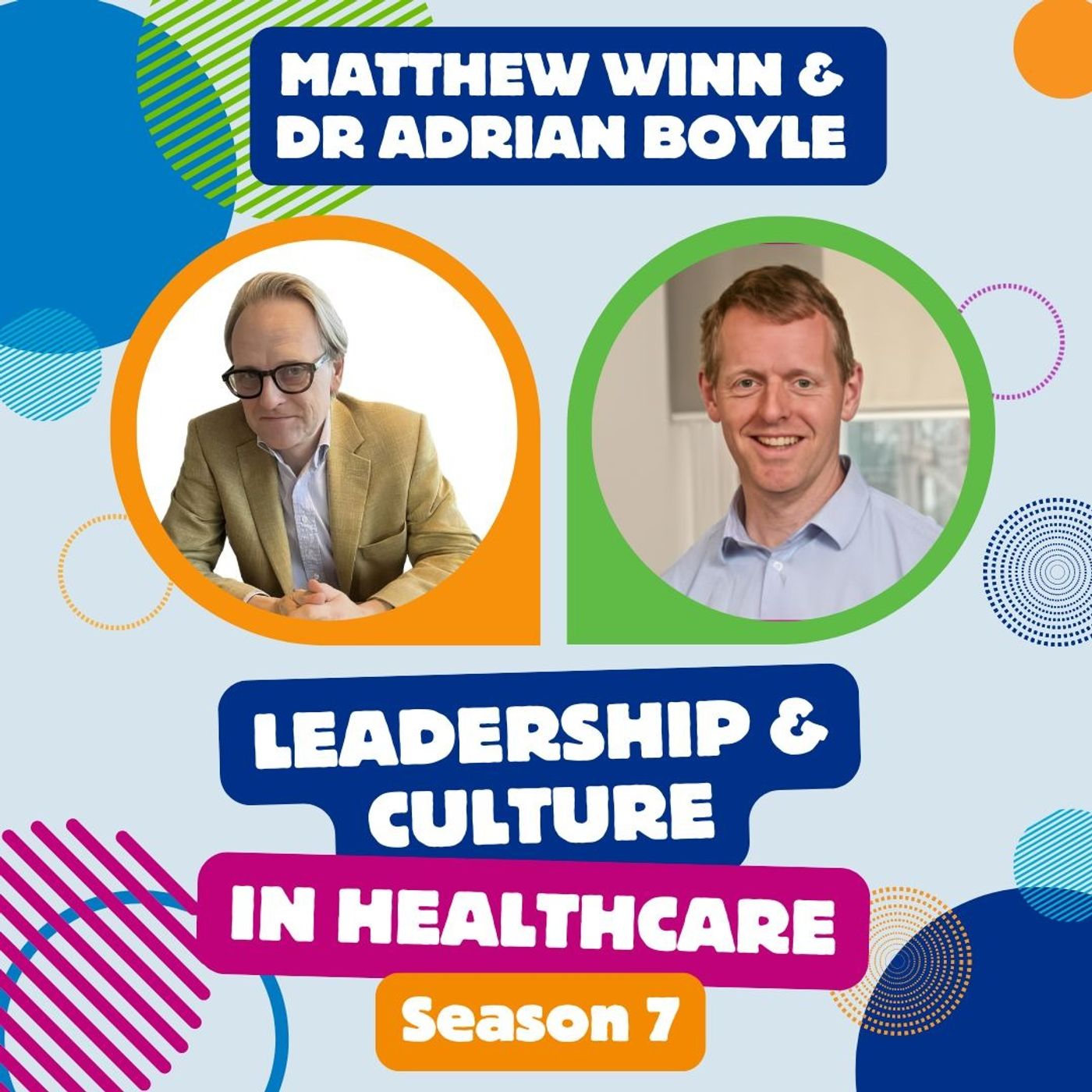
In this episode of Leadership and Culture in Healthcare, host Matthew Winn is joined by Professor Adrian Boyle, Consultant in Emergency Medicine at Cambridge University Hospitals and immediate past President of the Royal College of Emergency Medicine (2022–2025). The conversation explores clinical leadership at its most exposed: leading a national professional body in a politically charged environment, under intense media scrutiny, and amid unprecedented pressure on urgent and emergency care.Adrian reflects candidly on what it meant to hold the presidency during a period of sustained crisis for emergency departments. He describes the role as far more than representational, requiring careful judgement about when and how to speak publicly, knowing that statements could act as “Exocet missiles” in the policy and political arena. A recurring theme is the ethical tension between “being right” and “doing the right thing” — particularly the responsibility to avoid unintended harm to patients, such as increasing anxiety or deterring people from seeking care. Adrian emphasises that leadership decisions are rarely clear-cut and always involve trade-offs, requiring deliberate anticipation of second- and third-order consequences.The discussion situates emergency department crowding not as an isolated failure, but as a visible symptom of wider system dysfunction — including delayed discharges, lack of community capacity, workforce pressures, and insufficient preventative services. Adrian describes how urgent and emergency care often competes with other parts of the system for political and policy attention, characterising this as a form of “Victim Olympics,” where services such as GP access, dentistry, elective care, and emergency care vie for visibility based on public and parliamentary pressure rather than system coherence.Adrian traces how his leadership capability was shaped by a diverse career path, including clinical work in southern Africa, academic training in statistics and epidemiology, and senior departmental leadership during the COVID-19 pandemic. He highlights the importance of data literacy, credibility, and evidence-based advocacy, noting that the College deliberately framed its arguments through robust analysis to strengthen its influence. His experience leading an emergency department through the pandemic exposed him to intense change management demands and deepened his focus on staff wellbeing, resilience, and moral leadership under pressure.A significant part of the episode focuses on policy-making and implementation. Adrian critiques the NHS’s tendency towards “initiative-itis,” where repeated plans and directives risk conflating activity with progress. He explains how the College took a deliberately challenging stance on urgent and emergency care plans, pushing for genuine collaboration, proper evaluation, and realism about priorities. This advocacy contributed to NHS England commissioning independent evaluation of proposed interventions through the National Institute for Health Research — a concrete example of how clinical leadership can shift system behaviour.Looking ahead, Adrian outlines ongoing national work to define clear service specifications for emergency departments, arguing that without clinicians setting boundaries and standards, others will define them instead. He also discusses the College’s engagement with Parliament, including work through the All-Party Parliamentary Group on Emergency Care, producing regular reports on issues such as exit block, crowding, mental health, and children’s emergency care. He highlights the strategic nature of policy influence, including building alliances and identifying advocates within Parliament.The episode closes with a strong message to trainees and early-career clinicians: leadership is not a distant or abstract concept, but something developed through engagement, research, and professional involvement. Adrian encourages listeners not to be bystanders, but to actively shape the systems they work within. Reflecting on his presidency, he describes it unequivocally as the best job he has ever done — challenging, demanding, and deeply meaningful.The episode offers a rich, honest exploration of clinical leadership at scale, illustrating how credibility, courage, data, and values intersect when clinicians step into national leadership roles at the heart of healthcare policy and public debate.Quotes from Adrian:National Leadership & Policy Influence • “We knew that what we were saying would land like an Exocet missile. Being right isn’t always the same as doing the right thing.” • “Every leadership decision has trade-offs. They’re never completely obvious, and you have to spend time anticipating the consequences.” • “In health policy there’s a kind of ‘Victim Olympics’ — the services that generate the most noise and anxiety get the most attention.” • “If everything is a priority, then nothing really is.” • “There’s a real risk of confusing activity with progress. Publishing a plan doesn’t mean you’ve fixed the problem.” • “If clinicians don’t define what emergency care is and isn’t, someone else will do it for us.”Clinical Leadership in High-Pressure Systems • “Emergency department crowding isn’t the problem — it’s the symptom of everything else in the system not working.” • “Leadership in healthcare is about weighing harm: not just what’s happening today, but what your actions might trigger tomorrow.” • “You can do an awful lot of harm if you speak without being absolutely solid in your evidence.” • “We spent a lot of time agonising over what our words would mean for patients, not just for policy makers.” • “Change management during the pandemic was extraordinary — and the wellbeing of staff had to be at the centre of every decision.”Emergency Medicine & Its System Role • “Very few people go to A&E compared to GP or dentistry — but when emergency care fails, the consequences are immediate and visible.” • “Emergency medicine sits at the sharp end of the system, receiving the impact of failures everywhere else.” • “Exit block is not an emergency department issue; it’s a whole-system issue.” • “We need clear service specifications for emergency departments so that expectations are realistic and safe.”Developing Future Clinical Leaders • “Don’t be a bystander. Get involved — in research, in your College, in shaping how the system works.” • “Leadership skills don’t come from training programmes alone; they come from experience, credibility, and engagement over time.” Matthew Winn, podcast host and an experienced leader in healthcare in the UK.
Embed this episode
What this episode covers
In this episode of Leadership and Culture in Healthcare, Matthew Winn speaks with Professor Adrian Boyle, Consultant in Emergency Medicine and former President of the Royal College of Emergency Medicine, about what it truly means to lead clinically at a national level. Adrian reflects on the realities of representing a profession under intense political, media, and public scrutiny, highlighting the careful judgement required to speak out without causing unintended harm to patients or the system. He frames emergency department pressures as a symptom of wider system failure rather than an isolated problem, challenges the NHS tendency towards short-term initiatives over sustained improvement, and emphasises the importance of evidence, credibility, and strategic influence in national leadership. The conversation offers a powerful insight into clinical leadership under pressure and a clear call to clinicians to engage, influence, and help shape the future of emergency care.
Ready to play
From A&E to Westminster: Inside National Clinical Leadership with Adrian Boyle
No transcript for this episode yet
Similar Episodes
Similar Podcasts
No similar podcasts found.