
EPISODE · Nov 4, 2025 · 9 MIN
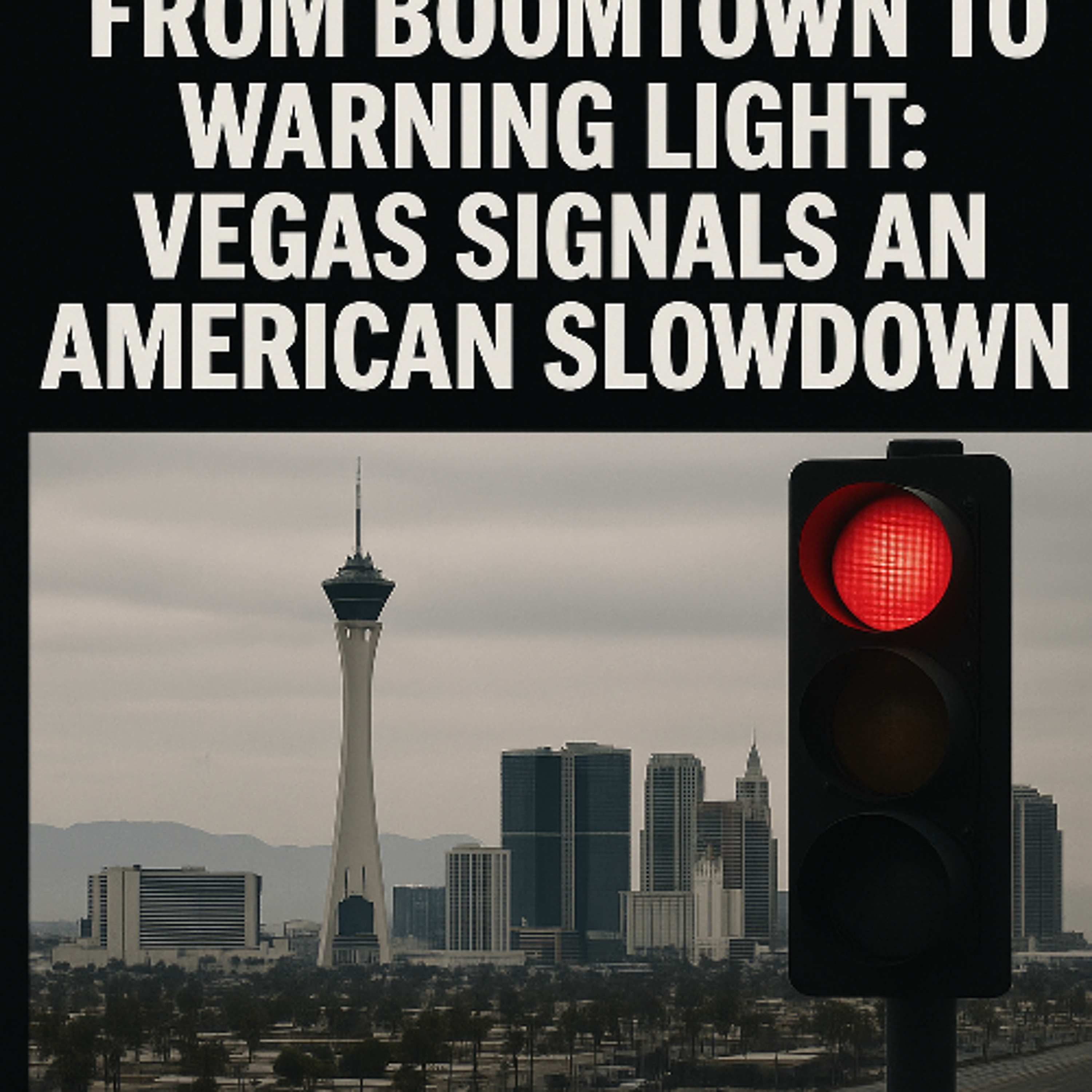
From Boomtown to Warning Light: Vegas Signals an American Slowdown
from The Rock of Talk · host Eddy Aragon
Economic Outlook: Imminent Downturn Signaled by Las Vegas Trends Core Conclusion - An economic downturn is imminent, with Las Vegas acting as a national barometer due to its dependence on discretionary spending and large-scale hospitality investment. - Key Las Vegas indicators point to broad consumer strain, weakening tourism, and deteriorating hospitality performance, suggesting wider national impact. Las Vegas Tourism and Hospitality Metrics - Visitation - Year-over-year visits have declined for nine consecutive quarters. - September visitation down 8.8% YoY. - General leisure travel is falling; notable drop in weekend trips from Los Angeles. - Gaming and Table Games - Strip gaming revenue fell nearly 8% YoY. - Certain table games declined nearly 6% YoY. - Overall gambling activity is in a steep decline, approaching free fall. - Visitor mix is shifting toward higher-spending, gaming-focused guests; overall losses persist (11% YoY decrease cited). - Occupancy and Revenue - Hotel occupancy fell 14.9% in June. - Worst decline among the top 25 U.S. hotel markets in mid-July; occupancy dropped 16.8% to 66.7%. - RevPAR plunged 28.7% to $102. - Pricing and Amenities - Room prices have doubled over the past five years. - Drinks priced around $12–$16 (or more for alcoholic beverages). - All-you-can-eat buffets largely eliminated or priced at ~$45 per person. - Disappearing amenities reduce perceived value and deter lower- and middle-income tourists. - Affordability and Accessibility - Las Vegas is increasingly unaffordable for working-class Americans due to markups on small items and higher resort costs. - Shift toward luxury/high-end experiences raises average tourist income to ~$93,000 per year (more than twice the national average), deterring traditional middle-class visitors. Labor and Local Economic Conditions - Unemployment - Las Vegas-area unemployment rose to 5.8%, up from 5.5% in May. - Historical context: rapid escalation from 3.8% to 19% during the 2008 crash. - Layoffs - Reports of massive hospitality layoffs across Las Vegas; limited mainstream coverage. - Political/Economic Environment - Despite Nevada’s no state income tax advantage, the downturn is enabling greater union and Democratic influence due to economic stress and workforce conditions. Spillover to Other Gaming Markets - Broader Casino Stress - Casinos beyond Las Vegas face financial difficulties (examples: Isleta, Sandia, Route 66). - Reduced disposable income is impacting gaming nationwide. - Corporate Distress - Maverick Gaming filed Chapter 11 (U.S. Southern District of Texas, earlier this month). - Portfolio: 5 casinos across Nevada, Colorado, Washington. - Assets: ~1,200 rooms, 1,700 slot machines, 43 table games; Washington resorts include 17 card tables.
Embed this episode
NOW PLAYING
From Boomtown to Warning Light: Vegas Signals an American Slowdown
No transcript for this episode yet
Similar Episodes
No similar episodes found.
Similar Podcasts
No similar podcasts found.