
EPISODE · Jan 20, 2026 · 58 MIN
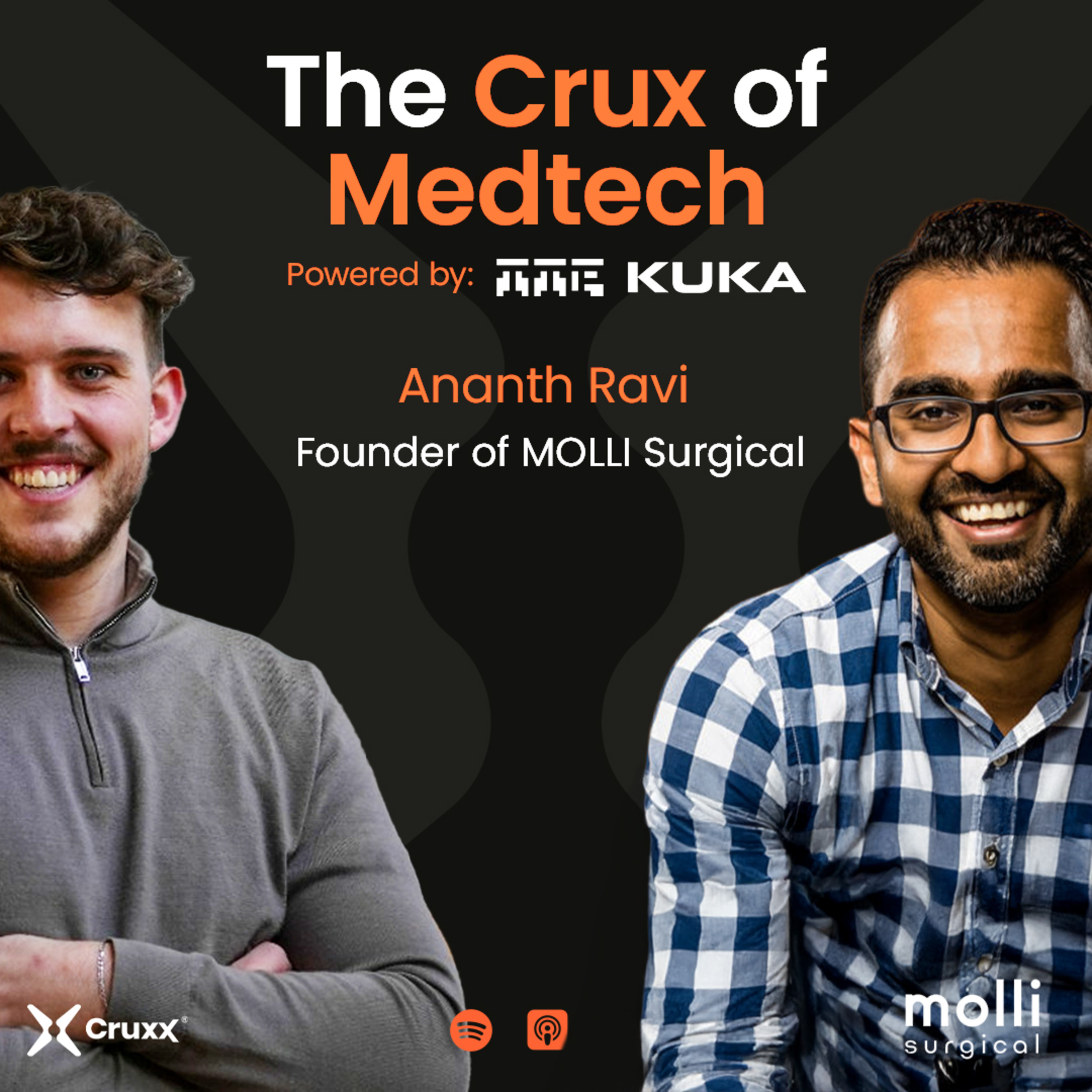
From Research Bench to Exit with Ananth Ravi, Founder of MOLLI Surgical
from The Crux of Medtech · host Crux of Medtech
In this episode of the Cruxx of MedTech podcast, host Henry Norton sits down with Ananth Ravi, founder of MOLLI Surgical and former medical physicist at the University of Toronto, to unpack the full journey from hospital research lab to acquisition by Stryker.Ananth shared the origin story behind MOLLI, a GPS-guided surgical system that replaced painful wire localisation with a tiny radioactive seed and sub-millimeter precision tracking. What started as a side project became a commercial product after inbound interest from physicians made it clear he had something worth pursuing.He discussed the challenges of spinning technology out of an academic institution, navigating FDA clearance with no regulatory background, and rebuilding a sales organisation after a painful first attempt.Ananth also opened up about the acquisition process itself: why Stryker's BD team stood out by actually showing up to watch cases in the OR, how he managed a bittersweet decision with his co-founder and investors, and what it felt like to communicate the news to a team facing uncertain futures.Key Topics:Ananth's path from medical physicist to medtech founderSpinning IP out of Sunnybrook and structuring university partnershipsNavigating FDA submissions as a first-time founderRestructuring a failing sales org around outcomes, not activityWhat made Stryker's BD approach different from other acquirersManaging team communication during an acquisitionFinding purpose and pace after a successful exitRelated Insights:The "regret framework" for making high-stakes founder decisionsWhy one cornerstone investor beats a crowded cap tableThe case against putting strategics on your cap table too earlyConsultants should check your work, not do it for youBuilding for profitability gives you optionality over building for exitCore Challenges:MOLLI replaced a painful, time-consuming wire localisation procedure with a tiny implantable marker and a digital GPS system, improving precision, patient experience, and hospital throughput. Scaling that technology required learning FDA submissions from scratch, restructuring a sales team mid-flight, and building a culture where smart people were trusted to make mistakes and learn fast.Founders face pressure to optimise for exit, but Ananth and his team built for profitability and optionality, which ultimately made the Stryker acquisition possible on their terms. For founders weighing similar decisions, his advice: keep talking to strategics, stay authentic about your limitations, and remember that the team who shows up and watches cases is the one who truly understands your value.🎧 Tune in now to hear how one founder went from tenured professor to Stryker acquisition, and why he's already back building again.The Crux of MedTech podcast is brought to you by Cruxx, a specialist surgical robotics recruitment agency. To learn more about Cruxx, click here.A big thank you to our sponsors on this season of the podcast; TTP plc With a 35-year track record, TTP excels in turning innovative ideas into market-ready solutions. Their team of 300+ experts deliver breakthrough solutions in areas ranging from endoluminal robotics and navigation systems to ultrasound imaging. Whether you're a startup or a multinational, TTP plc can accelerate your development with the latest technologies. Learn more at TTP.com&KUKA is a global leader in robotics with over 25 years of experience partnering with medtech companies on their journey to market. Their reputation is built on robust technology, reliability and long term collaboration and being more than just a supplier.KUKA provides trusted support throughout the product life cycle, from development to integration and beyond. Find out more at kuka.com/healthcare
Embed this episode
NOW PLAYING
From Research Bench to Exit with Ananth Ravi, Founder of MOLLI Surgical
No transcript for this episode yet
Similar Episodes
No similar episodes found.
Similar Podcasts
No similar podcasts found.