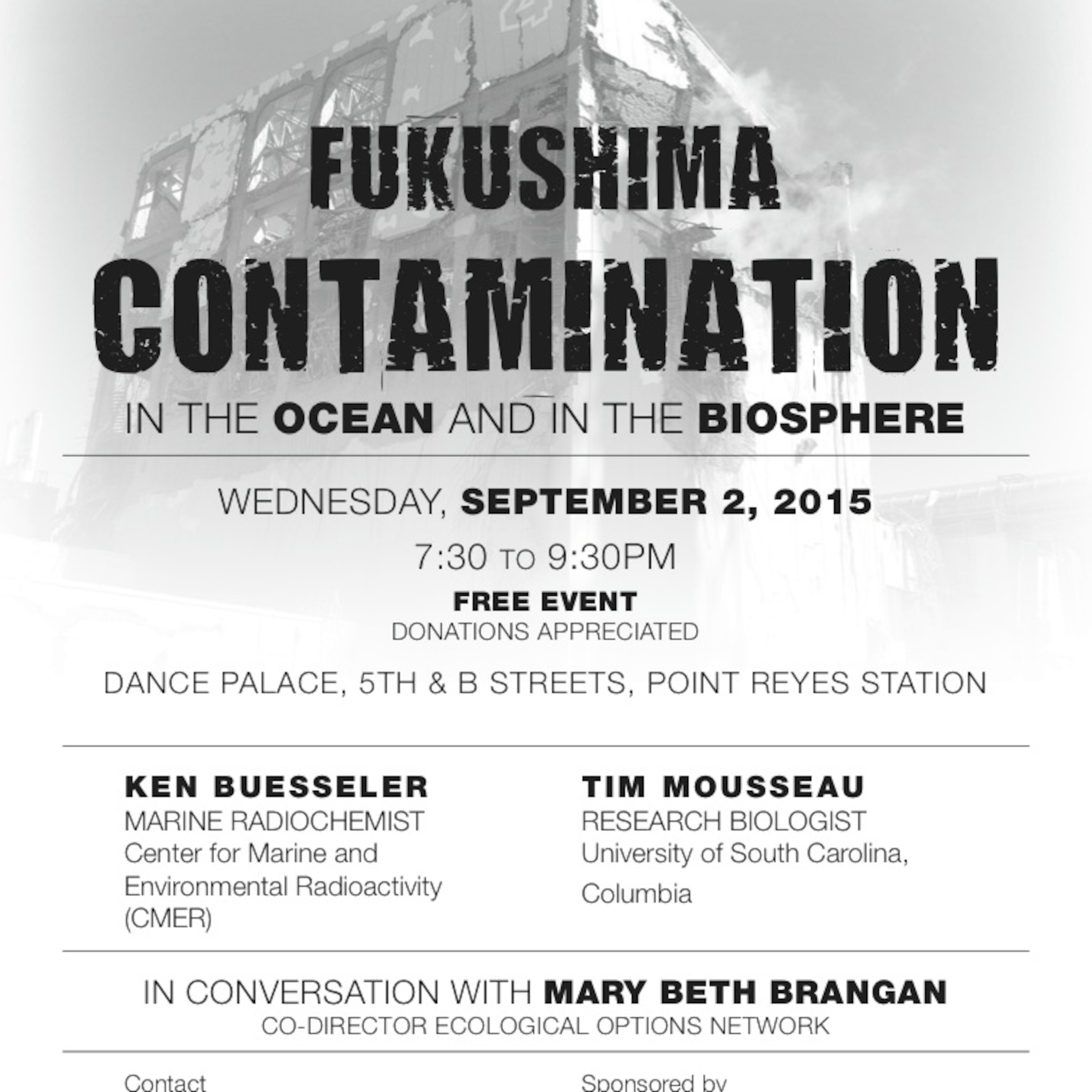
Fukushima Contamination: In the Ocean and in the Biosphere episode artwork

EPISODE · Sep 4, 2015 · 2H 4M

Fukushima Contamination: In the Ocean and in the Biosphere

from KWMR Post Carbon Radio · host Bing Gong

Two eminent scientists report on their latest research to track and document the ongoing impacts of the nuclear disaster in Japan. With scientists, Ken Buesseler and Tim Mousseau, and moderator, Mary Beth Brangan. We are now well into our fourth year since the Fukushima Dai-ichi reactors exploded and the global spread of radionuclides that went into the ocean, air and environment at that time is constantly being increased by continual radioactive releases from the uncontained melted nuclear cores and spent fuel material. While the levels of contamination so far detected here on the west coast remain small, the potential impacts over time and across generations can not be ignored or denied. Ken Buesseler is a Marine Radiochemist at the Center for Marine and Environmental Radioactivity (CMER). Within months of the Fukushima disaster, Ken Buesseler assembled an international research cruise to sample the waters surrounding the nuclear plant. To date, important fisheries off Fukushima remain closed due to cesium levels above Japanese limits for seafood. Buesseler is now monitoring over 50 sites along the West Coast, from Alaska to Mexico, with citizen-scientist funding and participation. In April 2015, signature Fukushima radioactivity was detected in ocean water samples gathered at the shoreline in Ucluelet BC, north of Vancouver. Timothy Mousseau, a Research Biologist at the University of South Carolina, Columbia, has studied the impacts of radioactive contaminants on biological communities in the Chernobyl region of Ukraine and Fukushima Prefecture, Japan. His research suggests that many species of birds, plants and animals have experienced direct toxicity as a result of the Fukushima disaster. This mutational load has had dramatic consequences for development, reproduction and survival, and the effects observed at individual and population levels are having significant impacts on the region. Mary Beth Brangan, co-director of the Ecological Options Network (EON), will anchor the discussion between Buesseler and Mousseau with an informed perspective developed in her work as a national organizer and award-winning filmmaker. Having studied nuclear issues such as bio-accumulation and the Linear No-Threshold (LNT) model, Brangan will show how the research data they are compiling relates to the environmental and social impacts of Fukushima contamination, both immediate and long term.

Two eminent scientists report on their latest research to track and document the ongoing impacts of the nuclear disaster in Japan. With scientists, Ken Buesseler and Tim Mousseau, and moderator, Mary Beth Brangan. We are now well into our fourth year since the Fukushima Dai-ichi reactors exploded and the global spread of radionuclides that went into the ocean, air and environment at that time is constantly being increased by continual radioactive releases from the uncontained melted nuclear cores and spent fuel material. While the levels of contamination so far detected here on the west coast remain small, the potential impacts over time and across generations can not be ignored or denied. Ken Buesseler is a Marine Radiochemist at the Center for Marine and Environmental Radioactivity (CMER). Within months of the Fukushima disaster, Ken Buesseler assembled an international research cruise to sample the waters surrounding the nuclear plant. To date, important fisheries off Fukushima remain closed due to cesium levels above Japanese limits for seafood. Buesseler is now monitoring over 50 sites along the West Coast, from Alaska to Mexico, with citizen-scientist funding and participation. In April 2015, signature Fukushima radioactivity was detected in ocean water samples gathered at the shoreline in Ucluelet BC, north of Vancouver. Timothy Mousseau, a Research Biologist at the University of South Carolina, Columbia, has studied the impacts of radioactive contaminants on biological communities in the Chernobyl region of Ukraine and Fukushima Prefecture, Japan. His research suggests that many species of birds, plants and animals have experienced direct toxicity as a result of the Fukushima disaster. This mutational load has had dramatic consequences for development, reproduction and survival, and the effects observed at individual and population levels are having significant impacts on the region. Mary Beth Brangan, co-director of the Ecological Options Network (EON), will anchor the discussion between Buesseler and Mousseau with an informed perspective developed in her work as a national organizer and award-winning filmmaker. Having studied nuclear issues such as bio-accumulation and the Linear No-Threshold (LNT) model, Brangan will show how the research data they are compiling relates to the environmental and social impacts of Fukushima contamination, both immediate and long term.

NOW PLAYING

Fukushima Contamination: In the Ocean and in the Biosphere

0:00 2:04:51

No transcript for this episode yet

We transcribe on demand. Request one and we'll notify you when it's ready — usually under 10 minutes.

Frequently Asked Questions

How long is this episode of KWMR Post Carbon Radio?

This episode is 2 hours and 4 minutes long.

When was this KWMR Post Carbon Radio episode published?

This episode was published on September 4, 2015.

What is this episode about?

Two eminent scientists report on their latest research to track and document the ongoing impacts of the nuclear disaster in Japan. With scientists, Ken Buesseler and Tim Mousseau, and moderator, Mary Beth Brangan. We are now well into our fourth...

Can I download this KWMR Post Carbon Radio episode?

Yes, you can download this episode by clicking the download button on the episode player, or subscribe to the podcast in your preferred podcast app for automatic downloads.
URL copied to clipboard!