
EPISODE · May 10, 2026 · 11 MIN
Fundamentals of Investing — Episode 5 — Stocks
from The Unlearned Investor Podcast · host The Unlearned Investor
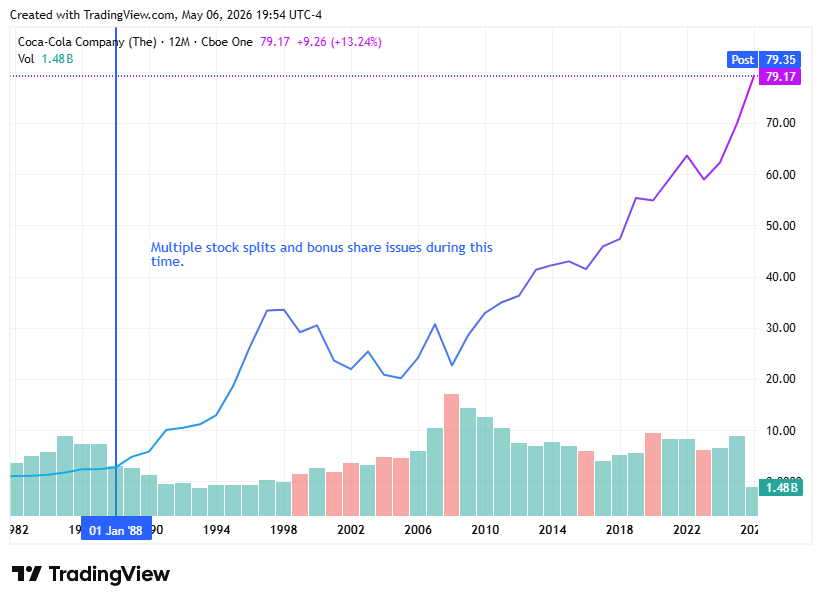
In Episode 4, we covered how regular people actually invest in real assets — cash, bonds, gold, real estate. We deliberately skipped one. The most talked about, most misunderstood, and arguably most powerful asset class on the list.Stocks.So let’s fix that. What are they, how do you buy them, and why do they matter for someone just trying to retire comfortably?1. Stocks and Shares — What’s the Difference?People use these words interchangeably. They’re not exactly the same thing — but the difference is small enough that you can stop worrying about it after this paragraph.A stock refers to ownership in a company in general terms. A share is one unit of that ownership.Think of it this way. Your friend opens a bakery. She divides ownership into 10,000 equal pieces. Ownership in that bakery — that’s the stock. Each individual piece she’s selling for ₹100? That’s a share.You buy 10 shares. You now own 0.1% of the bakery.If the bakery does well and someone offers her ₹1 crore for the whole business, your 0.1% is worth ₹10,000 — ten times what you paid. If she makes a profit and shares it with her co-owners at year end, you get 0.1% of those profits too. That payout is called a dividend.That’s the whole thing. Buying a stock is buying a piece of a real business. Not a number on a screen. A business with employees, products, customers, and cash flow.2. When Can Regular Investors Actually Buy In?Not every company is available to buy. A private company — your local restaurant, your dentist’s practice — doesn’t sell shares to the public.To buy shares in a company, it first needs to go public. The moment a company first sells its shares to the general public is called an IPO — Initial Public Offering.The company works with investment banks — Goldman Sachs, Morgan Stanley, JP Morgan — to set a price for the shares and bring them to market. Before the IPO, only institutional investors (big pension funds, hedge funds) typically get access at the offer price. By the time the stock hits the exchange on Day 1, regular investors can buy it through their brokerage account at whatever price it opens at.3. Why Would a Company Sell Pieces of Itself?Simple. Because building a real business takes real money — more than most founders have on their own.So they raise it from the public. In exchange, investors get slices of ownership. The company gets the capital to grow.This is not a modern idea. In 1602, the Dutch East India Company needed funds for dangerous spice trade voyages to Asia — routes where entire fleets could sink. No single investor wanted to bet a fortune on one ship. So they did something radical. They split the company into shares and sold them to the Dutch public. Anyone could own a piece of the voyage. When the ships came back loaded with spice, the profit was shared.That company lasted nearly 200 years and made its shareholders fabulously wealthy. Every IPO since is a descendant of that model.4. How Is This Different From Owning the Business Yourself?Honestly? It isn’t — in principle.Owning 0.1% of a giant company is structurally no different from owning 0.1% of your friend’s bakery. You’re a co-owner. The profits belong partly to you. The losses belong partly to you too.The difference is this: you are trusting someone else to run it.When you own your own business, you control the decisions. When you buy shares in a company, the CEO and the board control the decisions. You’re along for the ride.That’s not a bad thing — you’re getting access to some of the best-run businesses in the world without having to run them yourself. But it does mean one thing matters enormously before you invest: research. A bad manager, a weak product, a broken business model — the risk is yours to carry, even though you’re not in the room where decisions get made.The fraction is small. The responsibility to understand what you own is not.5. How Do Stocks Pay You?Here’s what makes stocks unique — and why they earn a separate episode.Every other asset class does one thing.Bonds pay you income. Fixed, regular interest. But they don’t grow in value.Gold holds its value against inflation. But it doesn’t pay you anything while you hold it.Stocks can do both.They can pay you dividends — a share of the company’s profits, paid out regularly, just like bond interest. And they can grow in value over time as the business grows — just like gold, but driven by real earnings rather than just supply and demand.The trade-off? They’re riskier than both. A bond issuer defaults rarely. Gold doesn’t go bankrupt. A business can fail entirely, and if it does, shareholders are the last to be paid.Higher potential. Higher risk. That’s the deal.6. What Do You Actually Need to Invest in Stocks?Two things. Just two.A brokerage account, time and gut.A brokerage account is to stocks what a bank account is to cash. It’s where your shares live. You transfer money in, place an order, and the broker executes the trade on the stock exchange. Your shares sit in your account, in your name. Opening one is straightforward — a few documents, a linked bank account, and you’re in.That’s the easy part.The harder part — the one most people dramatically underestimate — is time. Not skill. Not luck. Not a finance degree. Time.If you’re wondering why gut matters while picking the right business and the right moment — I wrote about exactly that in this article. Worth a read before you make your first move.But first — let’s show you what patience actually looks like with real money.7. What a Good Investment Can Actually Fetch YouIn 1988, Warren Buffett started buying shares of Coca-Cola. At the time, it was considered a boring, slow, predictable business. Soft drinks. Vending machines. Nothing glamorous.You can look at what the stock was trading at back then.From 1988 to today, Coca-Cola’s share price has grown by approximately 7,830%. A $500 investment in Coca-Cola in 1988 would be worth roughly —$39,650 (Thirty-Nine Thousand, Six Hundred and Fifty Dollars)That number does not include dividends. Coca-Cola has paid a growing dividend to its shareholders every single year for decades — real money, paid quietly, year after year, to people who simply held on. Calculating the exact total dividend income across nearly 40 years is genuinely complex, but it would push that final number meaningfully higher.The point isn’t the exact number. The point is this — a good business, bought at a fair price, and left alone for long enough, can generate returns that feel almost unreasonable. That’s not magic. That’s compounding — returns earning returns, year after year, until the math starts working harder than you ever could.8. The Risks — And Why the Next Episode MattersStocks are not foolproof.A bad business will destroy your capital. Enron. Lehman Brothers. Kingfisher Airlines. These weren’t unknown companies — they had brand names, thousands of employees, and confident press releases. They still collapsed. Shareholders lost everything.And here’s the part that catches even experienced investors off guard — a good business bought at the wrong price is still a bad investment. If you overpay for even the best company in the world, the returns can be mediocre for years.The question of which business to buy, and when, and at what price — that’s where the real work begins.In Episode 6, we’ll walk through how an ordinary investor reads a company. What to look at and how to start making decisions like a business owner, not a gambler.DISCLAIMER: I am not a financial advisor. This is for educational purposes only. Always do your own research and speak with a certified financial professional before making investment decisions.Thanks for reading! This post is public so feel free to share it.This Substack is reader-supported. To receive new posts and support my work, consider becoming a free or paid subscriber. Get full access to The Unlearned Investor at unlearnedinvestor.substack.com/subscribe
Embed this episode
NOW PLAYING
Fundamentals of Investing — Episode 5 — Stocks
No transcript for this episode yet
Similar Episodes
No similar episodes found.
Similar Podcasts
No similar podcasts found.