
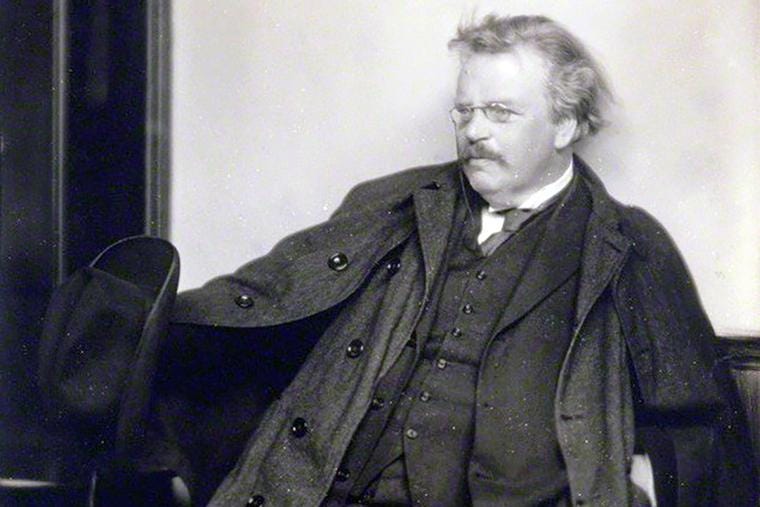
Welcome back to the Daily poem, a podcast from Goldbury Studios. I'm Sean Johnson and today is Friday, June 27th, 2025. Today's poem is by G.K. Chesterton and it's called The Secret People.
If you're listening to this episode on the day it releases, then that means I am still in the UK along with the other hosts of the Clostaries podcast and with any luck I am currently on board a train traveling south from Scotland to London. I chose this poem then because it would be in keeping with the theme of the general moment. It is Chesterton's, him to the yeoman in celebration of the English every man. It's fairly long, I'll read it just once, and I'm fairly certain it can speak for itself.
So here is The Secret People. Smile at us. Pay us, pass us. But do not quite forget, for we are the people of England that never have spoken yet.
There is many a fat farmer that drinks less cheerfully. There's many a free French peasant who is richer and sadder than we. There are no folk in the whole world so helpless or so wise. There is hunger in our bellies, there is laughter in our eyes.
You laugh at us and love us. Both mugs and eyes are wet. Only you do not know us, for we have not spoken yet. The fine French kings came over in a flutter of flags and dames.
We like their smiles and battles, but we never could say their names. The blood ran red to Bosworth, and the high French lords went down. There was not but a naked people under a naked crown. In the eyes of the king's servants turned terribly every way, and the gold of the king's servants rose higher every day.
They burnt the homes of the shaven men that had been quaint and kind. Till there was no bed in a monk's house nor food that man could find. The ends of God were no man paid that were the wall of the weak. The king's servants ate them all, and still we did not speak.
In the face of the king's servants grew greater than the king. He tricked them, and they trapped him and stood around him in a ring. The new grave lords closed round him that had eaten the Addy's fruits. In the men of the new religion were their bibles and their boots.
We saw their shoulders moving to menace or discuss, and some were pure and some were vile, but none took heed of us. We saw the king as they killed him, and his face was proud and pale, and a few men talked of freedom while England talked of hail. A war that we understood not came over the world and awoke, Americans, Frenchmen, Irish. But we knew not the things they spoke.
They talked about rights and nature and peace in the people's reign, and the squires, our masters paid us fight and scorned us never again. Weak if we be forever, could none condemn us then. Women called us serfs and dredges, men knew that we were men. In foam and flame at Trafalgar, on abuela plains, we did and died like lions to keep ourselves in chains.
We lay in living ruins, firing and fearing not the strange fears faced with the Frenchmen who knew for what they fought. And the man who seemed to be more than a man we strained against and broke. And we broke our own rights with him, and still we never spoke. Our patch of glory ended.
We never heard guns again, but the squire seemed struck in the saddle. He was foolish as if in pain. He leaned on a staggering lawyer. He clutched a cringing Jew.
He was stricken. After all, he was stricken at Waterloo. Or perhaps the shades of the shaven men, who spoil is in his house, come back in shining shapes at last, to spoil his last carouse. We only know the last sad squires rode slowly towards the sea.
And a new people take the land, and still it is not we. They have given us into the hand of new unhappy lords. Lords without anger or honor, who dare not carry their swords. They fight by shuffling papers.
They have bright dead alien eyes. They look at our labor and laughter as a tired man looks at flies. And the load of their loveless pity is worse than the ancient wrongs. Their doors are shut in the evening, and they know no songs.
We hear men speaking for us, but have new laws strong and sweet. Yet is there no man speaketh as we speak in the street? It may be we shall rise the last as Frenchmen rose the first. Our wrath come after Russia's wrath, and our wrath be the worst.
It may be we are meant to mark with our riot and our rest, God's scorn for all men governing. It may be beer is best. But we are the people of England, and we have not spoken yet. Smile at us, pay us, pass us, but do not quite forget.
This has been the Daily Poem. Thanks so much for listening. We'll be back next week with more poetry for you. Till then, find us at dailypoempod.substack.com to listen, subscribe, and support the show.
And for all of us at Goldberry Studios, I'm Sean Johnson. Wishing you happy reading.