
EPISODE · Jan 14, 2026 · 1 MIN
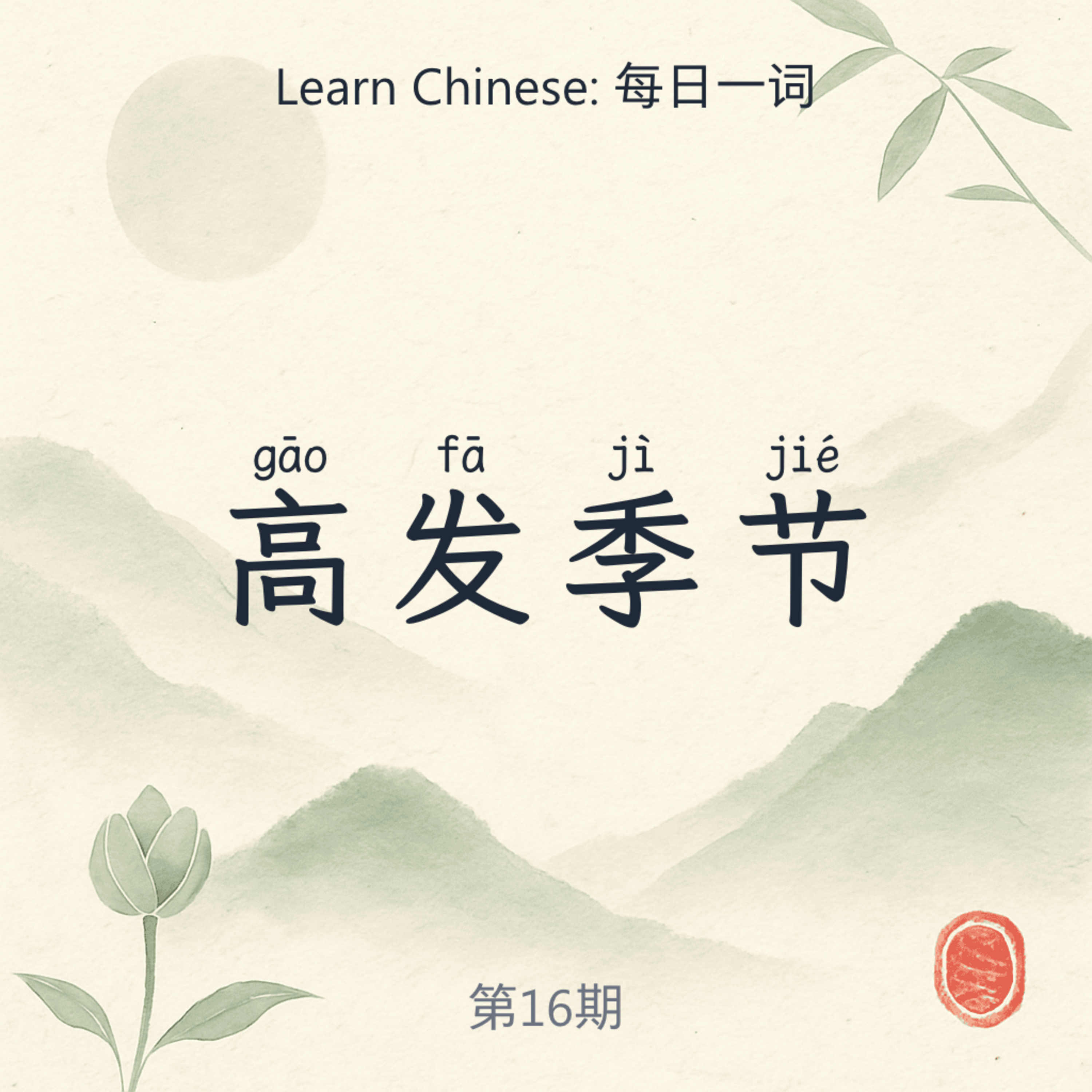
高发季节 (gāo fā jì jié)
from Chinese Word of the Day | 每日一词 · host Gallant Guo
特师的每日一词,2026年1月15日的词汇是:高 gāo 发 fā 季 jì 节 jié释义 Definition高发季节是指某种疾病或现象频繁发生的特定时间段。高 gāo 发 fā 季 jì 节 jié refers to a specific time period during which a certain disease or phenomenon occurs frequently.例句 Example近期的界面新闻中,有篇标题为《中疾控:我国流感活动已连续四周下降,整体仍处于中流行水平》的文章,作者翟瑞民是这样用这个词的:「监测数据显示,当前我国呼吸道传染病仍处于高发季节,总体呈下降趋势,流感疫情处于中流行水平。」这里说的是呼吸道疾病容易传播的时期。In a recent Jiemian News article titled 'China CDC: Influenza Activity in China Has Declined for Four Consecutive Weeks, Overall Still at Medium Epidemic Level,' author Zhai Ruimin used the term as follows: 'Monitoring data shows that respiratory infectious diseases in China are still in a high-incidence season, generally showing a downward trend, with the influenza epidemic at a medium level.' Here, it refers to the period when respiratory diseases are easily transmitted.你知道吗? Did You Know?高发季节常与特定气候或环境因素相关,比如流感在秋冬高发,花粉过敏在春季高发。类似的词还有「流行期」,但高发季节更强调季节性规律。比如「登革热的高发季节是夏季」,「流感高发季节是冬季」。记住这个结构:疾病名+高发季节,就能轻松描述各种现象的集中发生期啦!高 gāo 发 fā 季 jì 节 jié is often associated with specific climate or environmental factors; for example, influenza is prevalent in autumn and winter, while pollen allergies are common in spring. A similar term is '流行期 liú xíng qī' (epidemic period), but 高 gāo 发 fā 季 jì 节 jié emphasizes seasonal patterns more strongly. For instance, 'the high-incidence season for dengue fever is summer,' and 'the high-incidence season for flu is winter.' Remember this structure: disease name + 高 gāo 发 fā 季 jì 节 jié, and you can easily describe the concentrated occurrence period of various phenomena!
Embed this episode
Ready to play
高发季节 (gāo fā jì jié)
No transcript for this episode yet
Similar Episodes
No similar episodes found.
Similar Podcasts
No similar podcasts found.