
EPISODE · Apr 19, 2026 · 56 MIN
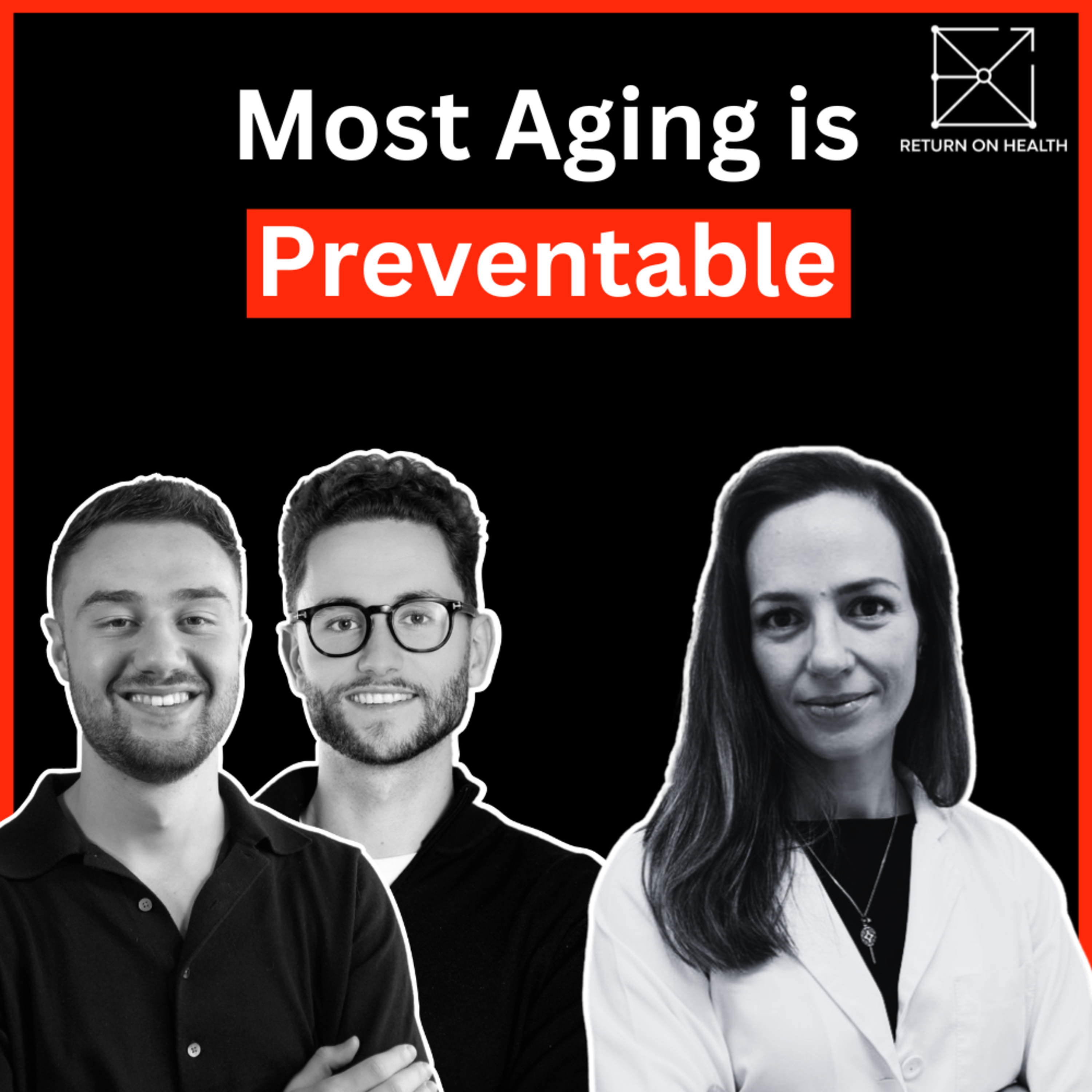
Geriatrician: Most Aging Is Preventable (But We Start Too Late)
from Return on Health · host Niko Hems and Miguel Medina
Most people think aging is something that happens later.In reality, the processes that determine how you age — and whether you stay functional — start decades earlier.In this episode of Return on Health, we sit down with Roberta Vella Azzopardi, a geriatrician and geroscientist with a PhD in cognitive frailty, to break down what aging actually looks like in clinical practice.Instead of focusing on single diseases, this conversation zooms out: Why do people lose independence? What really drives decline? And where are the biggest missed opportunities in prevention?What this episode coversWhy modern medicine often intervenes too lateWhat frailty really means — and why it matters more than ageHow loss of muscle drives metabolic and cognitive declineThe concept of peak span and why function beats lifespanWhy hearing loss is one of the biggest overlooked dementia risk factorsThe massive gap in menopause and women’s health careWhat actually works vs. what’s just hype in longevityKey takeawaysFrailty is best understood as loss of physiological reserves.When those reserves drop below a certain threshold, even small stressors can lead to long-term decline.This is why two people at the same age can look completely different clinically — one independent, one dependent.A major driver of this process is muscle loss.Muscle is not just about movement. It directly affects metabolic health, insulin sensitivity, and even brain function. The good news: even later in life, resistance training and sufficient protein intake can still improve outcomes.One of the most underestimated risk factors discussed in this episode is hearing loss.It contributes to cognitive decline through increased cognitive load, social isolation, and shared vascular mechanisms — yet remains widely underdiagnosed and undertreated. Another critical blind spot is women’s health, especially around menopause.Many symptoms are treated in isolation instead of addressing underlying hormonal changes, leading to years of missed intervention opportunities.Timestamps(00:00) Introduction & Roberta’s background(04:30) Frailty explained: vulnerability vs. age(11:00) Why prevention starts decades earlier(16:50) Reversing decline: muscle, protein, training(21:00) Peak span vs. lifespan(28:30) Menopause and missed diagnoses(36:30) Dementia prevention & modifiable risks(37:00) Hearing loss and cognitive decline (50:00) Busting common aging myths(55:00) Lightning round insightsTakeawaysStart investing in your health early — not when problems appearMaintain muscle mass through resistance training and protein intakeDon’t ignore hearing health — it directly impacts brain healthLook at root causes, not isolated symptomsPrevention is not one intervention — it’s a systemRoberta:https://www.linkedin.com/in/roberta-vella-azzopardi-md-phd-8235878a/Return on Health:https://returnonhealth.de/Niko:https://www.linkedin.com/in/niko-hems/https://www.instagram.com/niko_hemshttps://nikohems.de/Miguel:https://www.linkedin.com/in/miguel-medina-stanivukovic-857b9720b/https://www.instagram.com/miguelmedinastanivukovic/?hl=en
What this episode covers
Most people think aging is something that happens later.In reality, the processes that determine how you age — and whether you stay functional — start decades earlier.In this episode of Return on Health, we sit down with Roberta Vella Azzopardi, a geriatrician and geroscientist with a PhD in cognitive frailty, to break down what aging actually looks like in clinical practice.Instead of focusing on single diseases, this conversation zooms out: Why do people lose independence? What really drives decline? And where are the biggest missed opportunities in prevention?What this episode coversWhy modern medicine often intervenes too lateWhat frailty really means — and why it matters more than ageHow loss of muscle drives metabolic and cognitive declineThe concept of peak span and why function beats lifespanWhy hearing loss is one of the biggest overlooked dementia risk factorsThe massive gap in menopause and women’s health careWhat actually works vs. what’s just hype in longevityKey takeawaysFrailty is best understood as loss of physiological reserves.When those reserves drop below a certain threshold, even small stressors can lead to long-term decline.This is why two people at the same age can look completely different clinically — one independent, one dependent.A major driver of this process is muscle loss.Muscle is not just about movement. It directly affects metabolic health, insulin sensitivity, and even brain function. The good news: even later in life, resistance training and sufficient protein intake can still improve outcomes.One of the most underestimated risk factors discussed in this episode is hearing loss.It contributes to cognitive decline through increased cognitive load, social isolation, and shared vascular mechanisms — yet remains widely underdiagnosed and undertreated. Another critical blind spot is women’s health, especially around menopause.Many symptoms are treated in isolation instead of addressing underlying hormonal changes, leading to years of missed intervention opportunities.Timestamps(00:00) Introduction & Roberta’s background(04:30) Frailty explained: vulnerability vs. age(11:00) Why prevention starts decades earlier(16:50) Reversing decline: muscle, protein, training(21:00) Peak span vs. lifespan(28:30) Menopause and missed diagnoses(36:30) Dementia prevention & modifiable risks(37:00) Hearing loss and cognitive decline (50:00) Busting common aging myths(55:00) Lightning round insightsTakeawaysStart investing in your health early — not when problems appearMaintain muscle mass through resistance training and protein intakeDon’t ignore hearing health — it directly impacts brain healthLook at root causes, not isolated symptomsPrevention is not one intervention — it’s a systemRoberta:https://www.linkedin.com/in/roberta-vella-azzopardi-md-phd-8235878a/Return on Health:https://returnonhealth.de/Niko:https://www.linkedin.com/in/niko-hems/https://www.instagram.com/niko_hemshttps://nikohems.de/Miguel:https://www.linkedin.com/in/miguel-medina-stanivukovic-857b9720b/https://www.instagram.com/miguelmedinastanivukovic/?hl=en
NOW PLAYING
Geriatrician: Most Aging Is Preventable (But We Start Too Late)
No transcript for this episode yet
Similar Episodes
Mar 19, 2026 ·34m
Feb 18, 2026 ·11m
Feb 11, 2026 ·45m
Nov 12, 2025 ·35m
Oct 17, 2025 ·40m