
EPISODE · Jun 9, 2026 · 1H
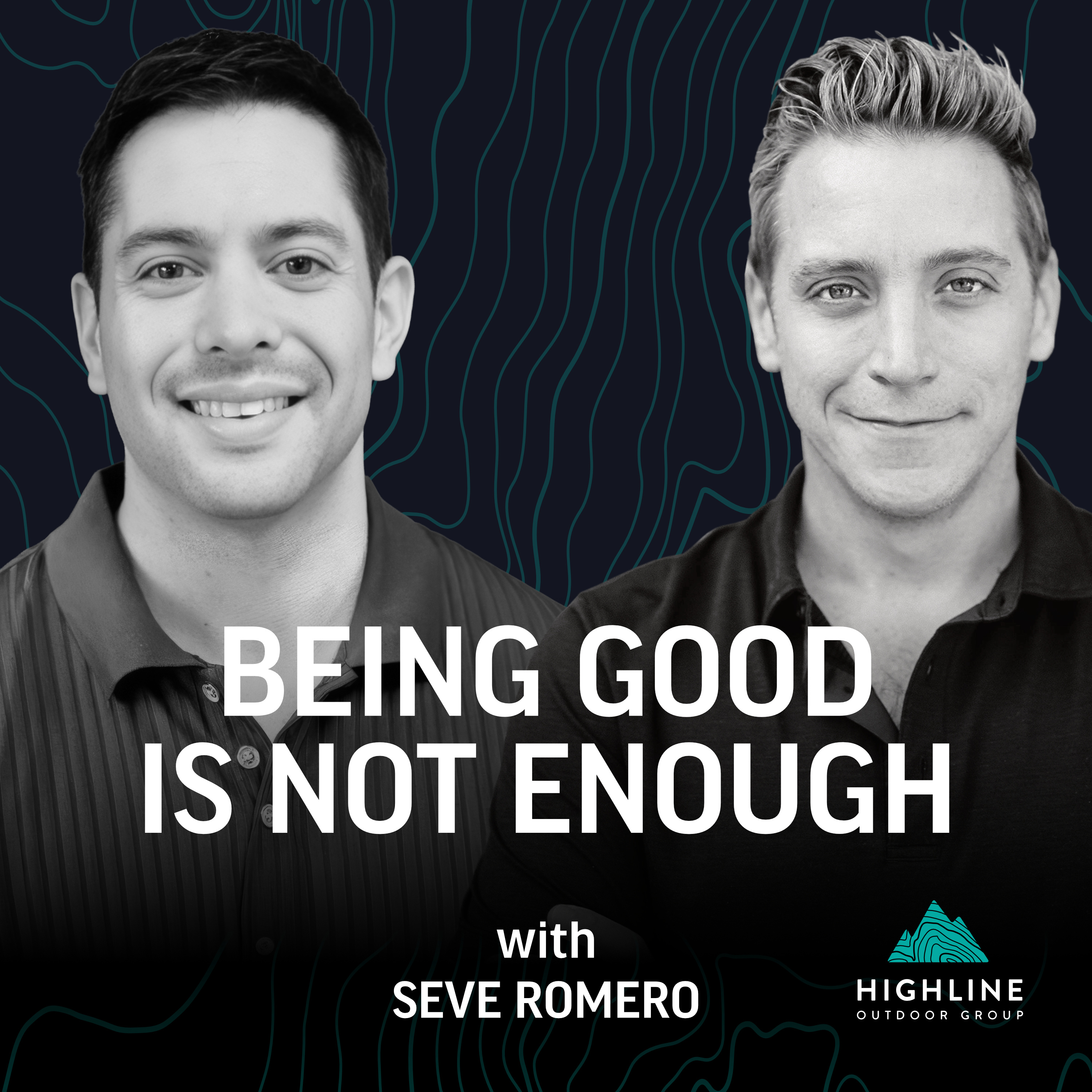
Good at Your Job Isn't Enough, with Seve Romero
from Outdoor Industry Executive Voices · host Highline Outdoor Group | Tony O'Neill
Seve Romero spent his entire career inside one organization. He started at 17 as a retail sales associate at Finish Line and worked his way up to Senior Vice President of HR for Finish Line and JD Sports. That's a long time in one place, and he'll be the first to tell you it never felt that way.The athlete mindset comes up early, and it shapes a lot. He doesn't see himself as an HR leader:"I don't look at myself as an HR leader or professional. I look at myself as a business leader, and what I try to do is obsess with every little detail about the business, even things that by and large in my day to day aren't at all HR responsibilities."His path into HR was an accident. He was expecting a product merchandising internship and ended up in talent acquisition instead. It clicked immediately: to find the right people for a business, you first have to understand the business.The single-company career is a big part of what we cover. Through acquisitions in both directions, Seve has worked inside environments that felt nothing like each other. While it's technically been one company, it's felt like ten. The biggest lesson from those transitions: you can't take a playbook from one environment and assume it works in the next.He's finishing his MBA at Butler University, which he started at around 31, not for a promotion but because he genuinely wanted to go deeper into business. His advice for anyone considering continued education: get honest about your reason first.The leadership development conversation is one of the strongest parts of the episode. Seve shares a story about a CFO who stepped into a general management role and was so skilled at consciously evolving how he led that, as he puts it, "who I was in this role, I need to be somebody different in this role." He also gets into what stretch assignments actually require, including making it safe for people to struggle and then stepping back to let them find their own way.The question of how HR leaders get to a point where they genuinely shape business strategy comes up too. His view: you have to hold both things at once, and when employee interests and business needs don't align, the skill is being transparent about why.Near the end, Seve shares that he's moving to the UK for a global talent development role. His own advice kicked in:"I always tell people, especially early in career, just say yes. Somebody asks you to go do something, you can always go back to what you did before, but you may not always have that opportunity."He closes with a thought worth sitting with:"Being really, really good at your job doesn't necessarily mean you're going to be really, really good at your next job."From there, the conversation turns to humility as a genuine growth tool: getting comfortable not having the answer, and why most people avoid doing exactly that.Chapters:00:00 Introduction01:59 Athlete Mindset at Work05:30 Falling Into Talent Acquisition09:54 Career Bets and Big Moves13:02 One Company Many Chapters18:24 MBA for Real Growth21:37 How Leaders Develop26:24 Stretch Roles and Safe Failure30:53 HR Serving People and Business35:06 Leading Under Pressure39:33 UK Move and Team Growth45:18 Risk Taking With Intention49:28 Advice for Rising Leaders55:24 Pride and What Comes Next59:30 Closing Thoughts
What this episode covers
Seve Romero spent his entire career inside one organization. He started at 17 as a retail sales associate at Finish Line and worked his way up to Senior Vice President of HR for Finish Line and JD Sports. That's a long time in one place, and he'll be the first to tell you it never felt that way.The athlete mindset comes up early, and it shapes a lot. He doesn't see himself as an HR leader:"I don't look at myself as an HR leader or professional. I look at myself as a business leader, and what I try to do is obsess with every little detail about the business, even things that by and large in my day to day aren't at all HR responsibilities."His path into HR was an accident. He was expecting a product merchandising internship and ended up in talent acquisition instead. It clicked immediately: to find the right people for a business, you first have to understand the business.The single-company career is a big part of what we cover. Through acquisitions in both directions, Seve has worked inside environments that felt nothing like each other. While it's technically been one company, it's felt like ten. The biggest lesson from those transitions: you can't take a playbook from one environment and assume it works in the next.He's finishing his MBA at Butler University, which he started at around 31, not for a promotion but because he genuinely wanted to go deeper into business. His advice for anyone considering continued education: get honest about your reason first.The leadership development conversation is one of the strongest parts of the episode. Seve shares a story about a CFO who stepped into a general management role and was so skilled at consciously evolving how he led that, as he puts it, "who I was in this role, I need to be somebody different in this role." He also gets into what stretch assignments actually require, including making it safe for people to struggle and then stepping back to let them find their own way.The question of how HR leaders get to a point where they genuinely shape business strategy comes up too. His view: you have to hold both things at once, and when employee interests and business needs don't align, the skill is being transparent about why.Near the end, Seve shares that he's moving to the UK for a global talent development role. His own advice kicked in:"I always tell people, especially early in career, just say yes. Somebody asks you to go do something, you can always go back to what you did before, but you may not always have that opportunity."He closes with a thought worth sitting with:"Being really, really good at your job doesn't necessarily mean you're going to be really, really good at your next job."From there, the conversation turns to humility as a genuine growth tool: getting comfortable not having the answer, and why most people avoid doing exactly that.Chapters:00:00 Introduction01:59 Athlete Mindset at Work05:30 Falling Into Talent Acquisition09:54 Career Bets and Big Moves13:02 One Company Many Chapters18:24 MBA for Real Growth21:37 How Leaders Develop26:24 Stretch Roles and Safe Failure30:53 HR Serving People and Business35:06 Leading Under Pressure39:33 UK Move and Team Growth45:18 Risk Taking With Intention49:28 Advice for Rising Leaders55:24 Pride and What Comes Next59:30 Closing Thoughts
NOW PLAYING
Good at Your Job Isn't Enough, with Seve Romero
No transcript for this episode yet
Similar Episodes
No similar episodes found.