
EPISODE · Nov 21, 2024 · 13 MIN
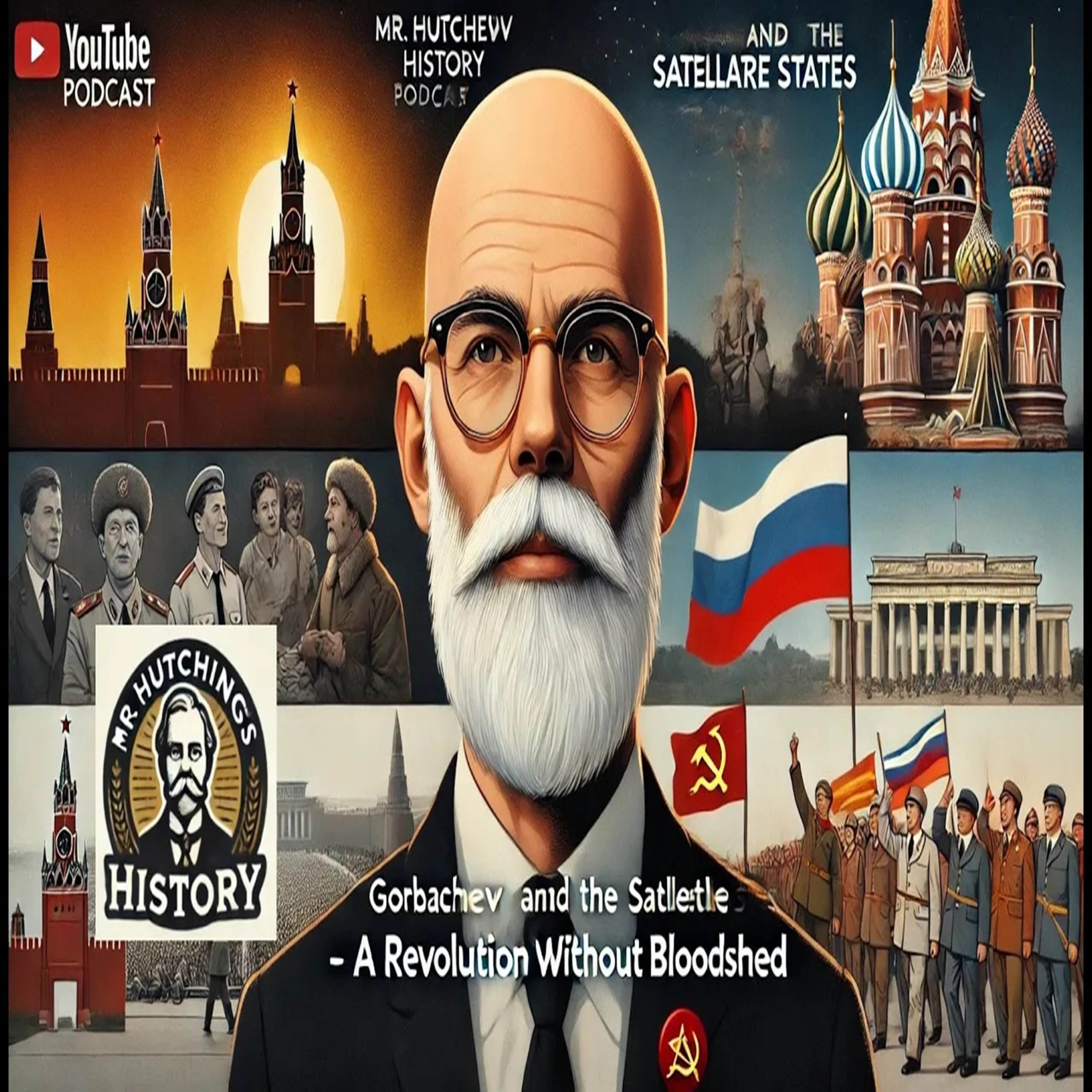
Gorbachev and the Satellite States – A Revolution Without Bloodshed
from Mr. Hutchings History · host Produced, created, and written by Harold M. Hutchings
Welcome to Mr. Hutchings History, where we explore transformative moments in global history. In today’s episode, we delve into Mikhail Gorbachev's groundbreaking decisions regarding Soviet intervention in Eastern Europe. His abandonment of the Brezhnev Doctrine allowed for peaceful revolutions in 1989, leading to the collapse of communist regimes across the region without the violence that had marked previous uprisings.End of the Brezhnev Doctrine: Gorbachev’s refusal to intervene militarily in satellite states allowed countries like Poland, Hungary, and East Germany to chart their own paths toward democracy.The Peaceful 1989 Revolutions: Gorbachev’s policies, particularly glasnost and perestroika, encouraged grassroots movements, including Solidarity in Poland, that led to free elections and regime change.Key Satellite States: We examine the independence struggles in Poland, Hungary, and East Germany, culminating in the fall of the Berlin Wall.Gorbachev’s Legacy: His decision to halt Soviet military support ultimately reshaped Eastern Europe, accelerating the end of Soviet control.Historiographical Debate: We explore different historical interpretations of Gorbachev’s actions, considering both economic and ideological factors.#Paper2WorldHistory #ColdWar #SovietUnion #Gorbachev #BrezhnevDoctrine #EasternEurope #1989Revolutions #Glasnost #Perestroika #Solidarity #BerlinWall #SovietCollapse #EndOfTheColdWar #IBHistory #SuperpowerTensionsWorks CitedBrown, Archie. The Gorbachev Factor. Oxford UP, 1997.Gaddis, John Lewis. The Cold War: A New History. Penguin, 2005.Judt, Tony. Postwar: A History of Europe Since 1945. Penguin, 2005.Reynolds, David. Summits: Six Meetings That Shaped the Twentieth Century. Allen Lane, 2007.Chapters(0:00) Introduction: The Fall of the Iron CurtainHow did the Soviet Union peacefully lose control over Eastern Europe in 1989?(0:26) The Soviet Grip on Eastern EuropeFor decades, the USSR maintained power through the Brezhnev Doctrine.(1:07) Gorbachev’s Rise and the End of Soviet InterventionWhen Gorbachev abandoned the Brezhnev Doctrine, everything changed.(2:03) The Impact of Gorbachev’s ReformsGlasnost and perestroika were meant to strengthen the system—but they did the opposite.(3:06) Gorbachev’s UN Speech: A Turning PointIn 1988, Gorbachev publicly announced that the USSR would no longer intervene militarily.(3:52) Poland: The Solidarity Movement Leads the WayLed by Lech Wałęsa, Poland’s movement forced the government to allow free elections.(4:47) Hungary: Opening the BordersHungary’s decision to open its border with Austria created an escape route for East Germans.(5:26) East Germany: The Fall of the Berlin WallAs pressure mounted, the East German government crumbled, leading to the fall of the Wall.(6:42) Why Did the Revolutions Stay Peaceful?With no Soviet military intervention, regimes collapsed without large-scale violence.(7:30) The Role of the Soviet EconomyThe USSR could no longer afford to support its satellite states.(8:12) How Gorbachev’s Reforms BackfiredGlasnost encouraged criticism, while perestroika led to economic instability.(9:01) A Debate Among HistoriansWas Gorbachev the key figure in ending the Cold War, or was collapse inevitable?(10:18) Lessons from 1989: The Power of Peaceful ChangeThe revolutions showed that even powerful systems can collapse when people demand change.(11:10) What Can We Learn from History?What if today’s leaders embraced dialogue over force?(12:03) Conclusion: Keep Exploring HistoryThe past holds valuable lessons for the future—let’s keep questioning and learning.
What this episode covers
Welcome to Mr. Hutchings History, where we explore transformative moments in global history. In today’s episode, we delve into Mikhail Gorbachev's groundbreaking decisions regarding Soviet intervention in Eastern Europe. His abandonment of the Brezhnev Doctrine allowed for peaceful revolutions in 1989, leading to the collapse of communist regimes across the region without the violence that had marked previous uprisings.End of the Brezhnev Doctrine: Gorbachev’s refusal to intervene militarily in satellite states allowed countries like Poland, Hungary, and East Germany to chart their own paths toward democracy.The Peaceful 1989 Revolutions: Gorbachev’s policies, particularly glasnost and perestroika, encouraged grassroots movements, including Solidarity in Poland, that led to free elections and regime change.Key Satellite States: We examine the independence struggles in Poland, Hungary, and East Germany, culminating in the fall of the Berlin Wall.Gorbachev’s Legacy: His decision to halt Soviet military support ultimately reshaped Eastern Europe, accelerating the end of Soviet control.Historiographical Debate: We explore different historical interpretations of Gorbachev’s actions, considering both economic and ideological factors.#Paper2WorldHistory #ColdWar #SovietUnion #Gorbachev #BrezhnevDoctrine #EasternEurope #1989Revolutions #Glasnost #Perestroika #Solidarity #BerlinWall #SovietCollapse #EndOfTheColdWar #IBHistory #SuperpowerTensionsWorks CitedBrown, Archie. The Gorbachev Factor. Oxford UP, 1997.Gaddis, John Lewis. The Cold War: A New History. Penguin, 2005.Judt, Tony. Postwar: A History of Europe Since 1945. Penguin, 2005.Reynolds, David. Summits: Six Meetings That Shaped the Twentieth Century. Allen Lane, 2007.Chapters(0:00) Introduction: The Fall of the Iron CurtainHow did the Soviet Union peacefully lose control over Eastern Europe in 1989?(0:26) The Soviet Grip on Eastern EuropeFor decades, the USSR maintained power through the Brezhnev Doctrine.(1:07) Gorbachev’s Rise and the End of Soviet InterventionWhen Gorbachev abandoned the Brezhnev Doctrine, everything changed.(2:03) The Impact of Gorbachev’s ReformsGlasnost and perestroika were meant to strengthen the system—but they did the opposite.(3:06) Gorbachev’s UN Speech: A Turning PointIn 1988, Gorbachev publicly announced that the USSR would no longer intervene militarily.(3:52) Poland: The Solidarity Movement Leads the WayLed by Lech Wałęsa, Poland’s movement forced the government to allow free elections.(4:47) Hungary: Opening the BordersHungary’s decision to open its border with Austria created an escape route for East Germans.(5:26) East Germany: The Fall of the Berlin WallAs pressure mounted, the East German government crumbled, leading to the fall of the Wall.(6:42) Why Did the Revolutions Stay Peaceful?With no Soviet military intervention, regimes collapsed without large-scale violence.(7:30) The Role of the Soviet EconomyThe USSR could no longer afford to support its satellite states.(8:12) How Gorbachev’s Reforms BackfiredGlasnost encouraged criticism, while perestroika led to economic instability.(9:01) A Debate Among HistoriansWas Gorbachev the key figure in ending the Cold War, or was collapse inevitable?(10:18) Lessons from 1989: The Power of Peaceful ChangeThe revolutions showed that even powerful systems can collapse when people demand change.(11:10) What Can We Learn from History?What if today’s leaders embraced dialogue over force?(12:03) Conclusion: Keep Exploring HistoryThe past holds valuable lessons for the future—let’s keep questioning and learning.
NOW PLAYING
Gorbachev and the Satellite States – A Revolution Without Bloodshed
No transcript for this episode yet
Similar Episodes
Dec 24, 2024 ·48m
Nov 16, 2024 ·23m
Oct 27, 2024 ·41m
Oct 27, 2024 ·26m
Oct 27, 2024 ·37m
Oct 27, 2024 ·35m