EPISODE · Apr 12, 2026 · 1H 5M
GPH 100: Population Screening
from Clinical Deep Dives · host Dr Manaan Kar Ray
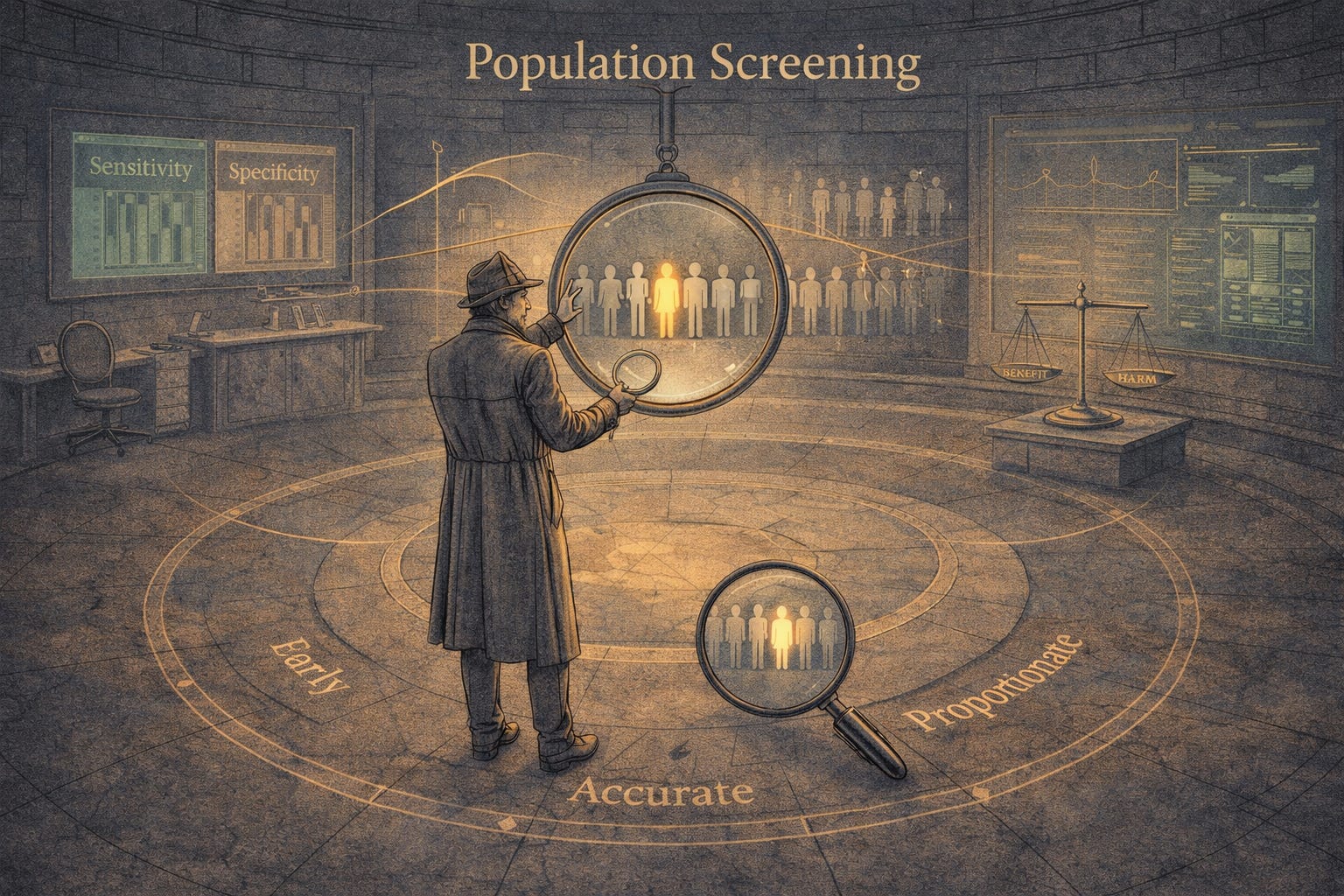
Population screening aims to detect disease before symptoms arise, shifting intervention earlier in the disease pathway. However, screening is not inherently beneficial; it requires careful evaluation of evidence, test accuracy, disease prevalence, and potential harms.This chapter examines principles of screening, including sensitivity, specificity, predictive values, overdiagnosis, lead-time bias, and cost-effectiveness. It reviews established screening programmes such as breast, cervical, and colorectal cancer, as well as emerging technologies.Screening is framed as a calibrated intervention - powerful when appropriately applied, harmful when misused. Public health must balance early detection with ethical stewardship, ensuring programmes are evidence-based, equitable, and proportionate.Detection without discernment risks unintended consequence.Key Takeaways* Screening targets asymptomatic populations to detect early disease.* Test performance depends on sensitivity, specificity, and prevalence.* Overdiagnosis and false positives carry psychological and clinical consequences.* Screening must meet established criteria before implementation.* Equity and access are central to screening effectiveness.* Ongoing evaluation is essential for programme sustainability.* Screening is prevention only when benefit outweighs harm. This is a public episode. If you'd like to discuss this with other subscribers or get access to bonus episodes, visit drmanaankarray.substack.com/subscribe
NOW PLAYING
GPH 100: Population Screening
No transcript for this episode yet
Similar Episodes
No similar episodes found.