EPISODE · Apr 18, 2026 · 56 MIN
GPH 106: Emergency Public Health and Humanitarian Assistance
from Clinical Deep Dives · host Dr Manaan Kar Ray
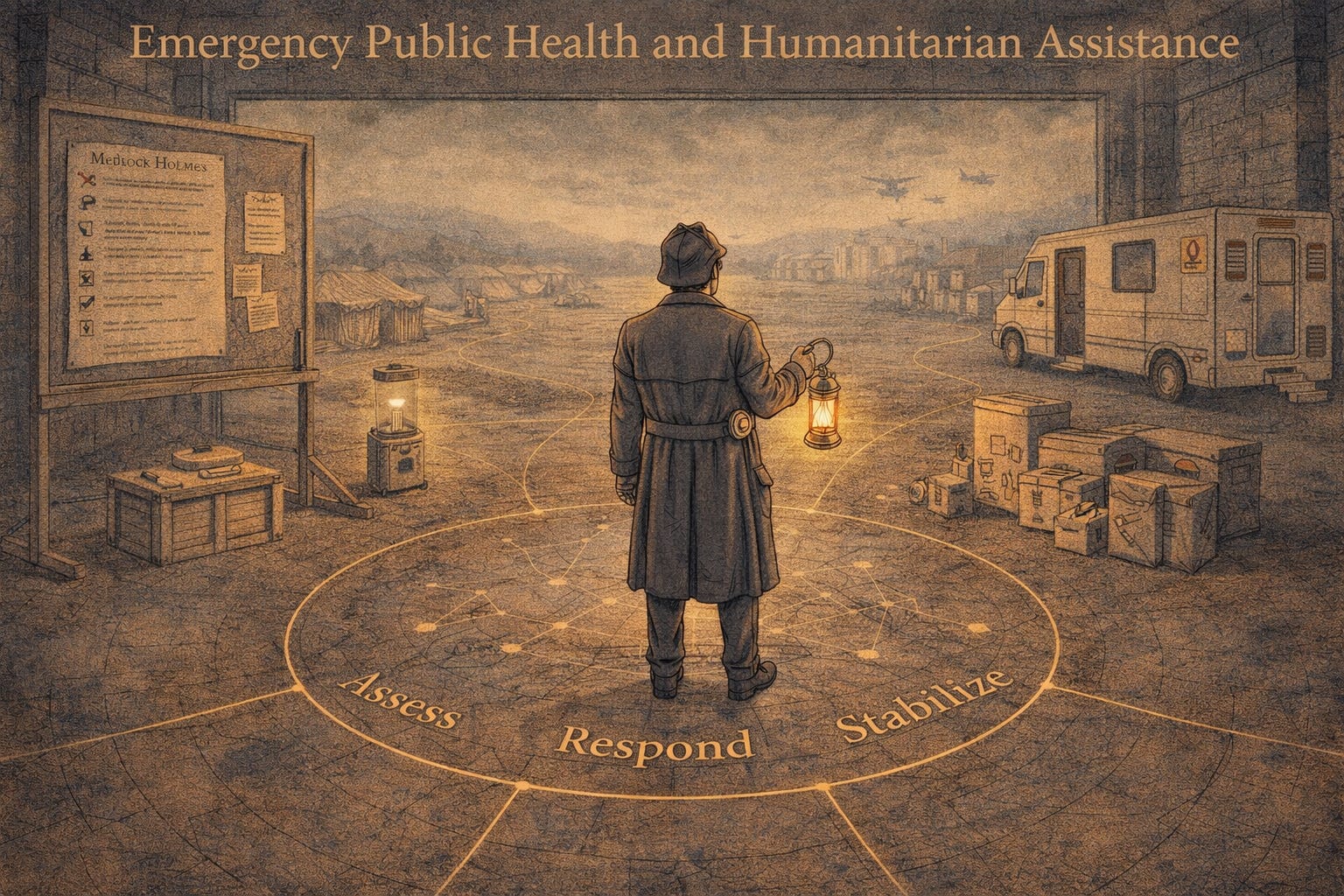
Emergencies - whether natural disasters, armed conflict, epidemics, or sudden displacement - disrupt infrastructure, overwhelm health systems, and expose populations to acute risk. Public health in emergencies requires speed, coordination, and ethical clarity.This chapter explores rapid health needs assessment, emergency surveillance, outbreak control, water and sanitation provision, food security, shelter, vaccination campaigns, and coordination across agencies. It examines humanitarian principles, cluster coordination models, and the interface between national authorities and international responders.Emergency public health is not improvisation; it is organised readiness. Prepared systems, trained personnel, and clear governance structures determine whether crises escalate or stabilise.Response capacity is a measure of system strength.Key Takeaways* Emergencies disrupt infrastructure and increase health vulnerability.* Rapid health needs assessment guides prioritisation.* Surveillance and outbreak control are critical in crisis settings.* Water, sanitation, shelter, and nutrition are core public health functions in emergencies.* Coordination across agencies improves efficiency and equity.* Humanitarian principles guide ethical response.* Preparedness determines resilience. This is a public episode. If you'd like to discuss this with other subscribers or get access to bonus episodes, visit drmanaankarray.substack.com/subscribe
NOW PLAYING
GPH 106: Emergency Public Health and Humanitarian Assistance
No transcript for this episode yet
Similar Episodes
No similar episodes found.