
EPISODE · Sep 2, 2021 · 57 MIN
Gramsci's Revolution (Gramsci ka Inquilab)
from Awaarelaal Philosophy · host Shehzor
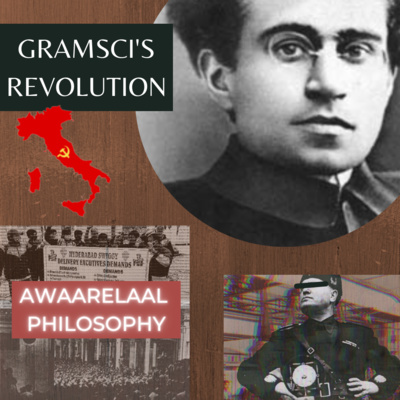
Support me on Patreon: https://www.patreon.com/user?u=56853820&fan_landing=true Support me on Buy me a Coffee: https://www.buymeacoffee.com/shehzor Follow me on Instagram: @hemlockhating_goth We often wonder how people who are obviously such horrible leaders can stay in power so well. In the pandemic we have seen the disastrous policies of right-wing parties, that have caused the deaths of millions. And yet, many people from all walks of life stay devoted to these parties and leaders and keep them in power. How do systems like capitalism that constantly run into crisis keep seeming like the most "realistic"? What allows this toxic culture of overwork, exploitation, and burnout to survive in spite of everyone hating it? What will it take to break this cultural fixation and allow us to imagine new futures? Marxists are generally well regarded for their strong analysis of economic conditions and crises. But for questions of culture, many relegate them to the "superstructure", and argue that the economic "base" must be dealt with first, and the cultural problems will fall apart on their own. For a long time, the trend of "economism" in Marxism has held back the full potential of the revolutionary ideology. Antonio Gramsci was one of the most important thinkers to challenge this fixation. He introduced the concepts of "cultural hegemony" and "historical bloc" that prioritised revolutionary consciousness and people's engagement with conditions, rather than an abstract obsession with conditions and crises themselves. In this episode of Awaarelaal Philosophy, we explore the life of this revolutionary thinker, a brief history of Italy, and some of the most important concepts in his thought. We also engage with some of the ways in which society has changed since Gramsci's time, and the implications that it has for us today. Topics discussed: 1) Brief cultural history of Italy 2) Gramsci's early life 3) Russian Revolution or "The Revolution Against Marx" 4) Discipline 5) Education 6) Bordiga and Gramsci 7) Gramsci and Ambedkar on Social Contradictions and Revolution 8) Fascism 9) Hegemony 10) Historical bloc 11) War of Position and War of Manoeuvre 12) Machiavelli's Prince 13) Fordism and Post-Fordism 14) Intellectual 15) Gramsci's Death and the Fall of Fascism 16) The Rise of Fascism and Challenges Today Gramsci's Writings Online: https://www.marxists.org/archive/gramsci/ Recommended Books: The Antonio Gramsci Reader, edited by David Forgacs (Each chapter deals with a specific topic, like education, or hegemony, and you need can go jump into any section you are interested in the most) Prison Notebooks, in 3 volumes, published by Columbia University Press The Political Philosophies of Antonio Gramsci and B.R. Ambedkar, edited by Cosimo Zene
What this episode covers
Support me on Patreon: https://www.patreon.com/user?u=56853820&fan_landing=true Support me on Buy me a Coffee: https://www.buymeacoffee.com/shehzor Follow me on Instagram: @hemlockhating_goth We often wonder how people who are obviously such horrible leaders can stay in power so well. In the pandemic we have seen the disastrous policies of right-wing parties, that have caused the deaths of millions. And yet, many people from all walks of life stay devoted to these parties and leaders and keep them in power. How do systems like capitalism that constantly run into crisis keep seeming like the most "realistic"? What allows this toxic culture of overwork, exploitation, and burnout to survive in spite of everyone hating it? What will it take to break this cultural fixation and allow us to imagine new futures? Marxists are generally well regarded for their strong analysis of economic conditions and crises. But for questions of culture, many relegate them to the "superstructure", and argue that the economic "base" must be dealt with first, and the cultural problems will fall apart on their own. For a long time, the trend of "economism" in Marxism has held back the full potential of the revolutionary ideology. Antonio Gramsci was one of the most important thinkers to challenge this fixation. He introduced the concepts of "cultural hegemony" and "historical bloc" that prioritised revolutionary consciousness and people's engagement with conditions, rather than an abstract obsession with conditions and crises themselves. In this episode of Awaarelaal Philosophy, we explore the life of this revolutionary thinker, a brief history of Italy, and some of the most important concepts in his thought. We also engage with some of the ways in which society has changed since Gramsci's time, and the implications that it has for us today. Topics discussed: 1) Brief cultural history of Italy 2) Gramsci's early life 3) Russian Revolution or "The Revolution Against Marx" 4) Discipline 5) Education 6) Bordiga and Gramsci 7) Gramsci and Ambedkar on Social Contradictions and Revolution 8) Fascism 9) Hegemony 10) Historical bloc 11) War of Position and War of Manoeuvre 12) Machiavelli's Prince 13) Fordism and Post-Fordism 14) Intellectual 15) Gramsci's Death and the Fall of Fascism 16) The Rise of Fascism and Challenges Today Gramsci's Writings Online: https://www.marxists.org/archive/gramsci/ Recommended Books: The Antonio Gramsci Reader, edited by David Forgacs (Each chapter deals with a specific topic, like education, or hegemony, and you need can go jump into any section you are interested in the most) Prison Notebooks, in 3 volumes, published by Columbia University Press The Political Philosophies of Antonio Gramsci and B.R. Ambedkar, edited by Cosimo Zene
NOW PLAYING
Gramsci's Revolution (Gramsci ka Inquilab)
No transcript for this episode yet
Similar Episodes
May 14, 2026 ·36m
May 14, 2026 ·9m
May 13, 2026 ·33m