
EPISODE · Jun 18, 2026 · 3 MIN
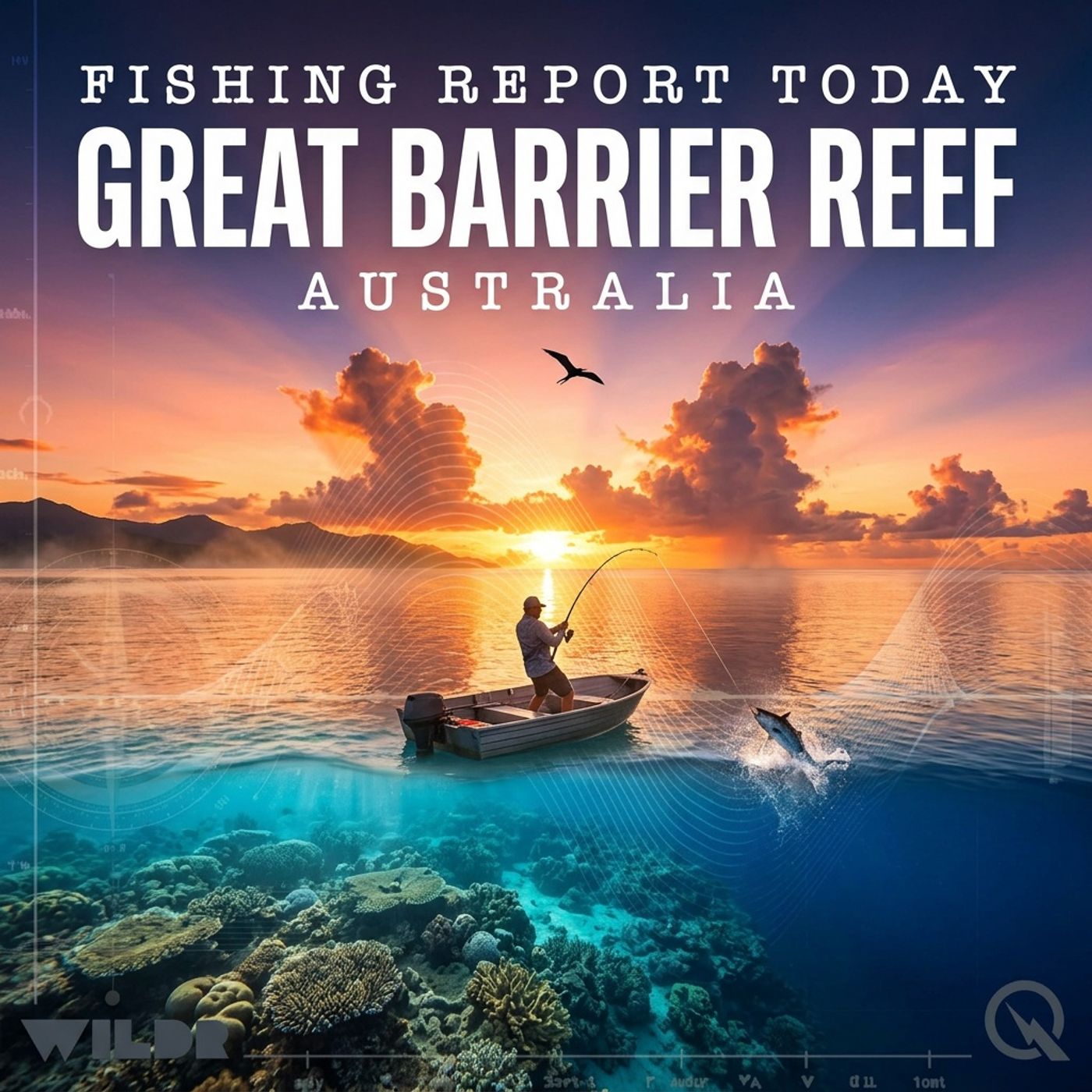
Great Barrier Reef Fishing Report: Spring Bite, Pelagics Firing, and Reef Trout Stacked on the Afternoon Push
from Great Barrier Reef, Australia Fishing Report Today · host Inception Point AI
Name’s Artificial Lure, checking in with your Great Barrier Reef fishing report for this arvo. Up off Cairns, Townsville and the Whitsundays, we’ve had a classic dry‑season pattern: light south‑easterlies early, freshening to 15–20 knots by mid‑day, then easing again late. Skies are mostly clear with just a bit of coastal cloud and a modest swell on the outer edge. Water temps are sitting in the mid‑20s Celsius, clear blue on the shelf, greener inshore around the rivers and beaches. Tides on the reef today are running a **moderate neap‑to‑mid cycle**: a small predawn high, dropping to a late‑morning low, then a solid afternoon push bringing good run on the pressure points. The better bite windows have lined up with that dawn glass‑off and the mid‑afternoon flood when the current starts to stand up on the points and bommies. Sunrise has been early, just after 6 a.m. along the coast, with sunset not long after 5 p.m., giving you a tight low‑light window that’s been fishing very well. Pelagic activity has been strong on the outer reef edges and current lines. Spanish mackerel, longtail tuna and the odd mahi have been busting up bait on the pressure faces and along colour changes. Trolled deep‑diving hardbodies in natural pilchard and garfish patterns, 160–200 mm, have been the standout for the Spaniards, along with metal slices spun back through the bust‑ups for tuna. A few boats running skipping gar and rigged wolf herring have reported multiple strikes once that tide started to build. Reef fishing has been very tidy. Good numbers of **coral trout**, sweetlip and spangled emperor have come off the tops and down current edges of smaller bommies in 15–30 metres. Best results have come from lightly weighted pilchards and fresh strip baits drifted back into the pressure zone, as well as soft plastics in the 5–7 inch range, paddle tails in coral trout colours – think gold, coral and pearl. A lot of crews are doing well by fishing just after daybreak, then again on that late‑afternoon push, leaving the bright middle of the day for longer moves and sounder work. In closer, around the islands and headlands, there’s been good mixed action on **trevally, queenfish and small GTs**. Surface stickbaits and poppers worked around bait schools on the turn of the tide have produced some explosive hits. Lightly weighted live baits – yakkas and herring – slow‑trolled around the pressure points have been accounting for the bigger fish. For bait, it’s hard to beat **fresh local**: pilchards, squid, cut mullet and live fusiliers or yakkas if you can jig them up. Those targeting trout and emperor are having success with fresh squid and live baits pinned just off the reef edge. Lure fishos should pack deep divers in mackerel patterns, 40–80 g chromed metals for tuna, and a selection of 5–7 inch soft plastics on 3/8 to 1 oz heads for working the contours. A couple of hot spots to circle on the chart: - The **outer reef pressure edges off Cairns and Port Douglas**, where the main current hits the front face of the reef, have been very consistent for Spaniards at first light and coral trout deeper down once the sun’s up. - The **inshore shoals and island drop‑offs off the Whitsundays**, especially where you’ve got current wrapping around a point and pushing bait up, have held solid numbers of trout, sweetlip and roaming trevally on the tide changes. Fish smart: watch your sounder, time your moves around the tide, and don’t be afraid to shift if the reef you’re on goes quiet for more than half an hour in prime time. Thanks for tuning in, and don’t forget to subscribe so you never miss the next report. This has been a quiet please production, for more check out quiet please dot ai. Great deals on fishing gear https://amzn.to/44gt1Pn
What this episode covers
Name’s Artificial Lure, checking in with your Great Barrier Reef fishing report for this arvo. Up off Cairns, Townsville and the Whitsundays, we’ve had a classic dry‑season pattern: light south‑easterlies early, freshening to 15–20 knots by mid‑day, then easing again late. Skies are mostly clear with just a bit of coastal cloud and a modest swell on the outer edge. Water temps are sitting in the mid‑20s Celsius, clear blue on the shelf, greener inshore around the rivers and beaches. Tides on the reef today are running a **moderate neap‑to‑mid cycle**: a small predawn high, dropping to a late‑morning low, then a solid afternoon push bringing good run on the pressure points. The better bite windows have lined up with that dawn glass‑off and the mid‑afternoon flood when the current starts to stand up on the points and bommies. Sunrise has been early, just after 6 a.m. along the coast, with sunset not long after 5 p.m., giving you a tight low‑light window that’s been fishing very well. Pelagic activity has been strong on the outer reef edges and current lines. Spanish mackerel, longtail tuna and the odd mahi have been busting up bait on the pressure faces and along colour changes. Trolled deep‑diving hardbodies in natural pilchard and garfish patterns, 160–200 mm, have been the standout for the Spaniards, along with metal slices spun back through the bust‑ups for tuna. A few boats running skipping gar and rigged wolf herring have reported multiple strikes once that tide started to build. Reef fishing has been very tidy. Good numbers of **coral trout**, sweetlip and spangled emperor have come off the tops and down current edges of smaller bommies in 15–30 metres. Best results have come from lightly weighted pilchards and fresh strip baits drifted back into the pressure zone, as well as soft plastics in the 5–7 inch range, paddle tails in coral trout colours – think gold, coral and pearl. A lot of crews are doing well by fishing just after daybreak, then again on that late‑afternoon push, leaving the bright middle of the day for longer moves and sounder work. In closer, around the islands and headlands, there’s been good mixed action on **trevally, queenfish and small GTs**. Surface stickbaits and poppers worked around bait schools on the turn of the tide have produced some explosive hits. Lightly weighted live baits – yakkas and herring – slow‑trolled around the pressure points have been accounting for the bigger fish. For bait, it’s hard to beat **fresh local**: pilchards, squid, cut mullet and live fusiliers or yakkas if you can jig them up. Those targeting trout and emperor are having success with fresh squid and live baits pinned just off the reef edge. Lure fishos should pack deep divers in mackerel patterns, 40–80 g chromed metals for tuna, and a selection of 5–7 inch soft plastics on 3/8 to 1 oz heads for working the contours. A couple of hot spots to circle on the chart: - The **outer reef pressure edges off Cairns and Port Douglas**, where the main current hits the front face of the reef, have been very consistent for Spaniards at first light and coral trout deeper down once the sun’s up. - The **inshore shoals and island drop‑offs off the Whitsundays**, especially where you’ve got current wrapping around a point and pushing bait up, have held solid numbers of trout, sweetlip and roaming trevally on the tide changes. Fish smart: watch your sounder, time your moves around the tide, and don’t be afraid to shift if the reef you’re on goes quiet for more than half an hour in prime time. Thanks for tuning in, and don’t forget to subscribe so you never miss the next report. This has been a quiet please production, for more check out quiet please dot ai. Great deals on fishing gear https://amzn.to/44gt1Pn
NOW PLAYING
Great Barrier Reef Fishing Report: Spring Bite, Pelagics Firing, and Reef Trout Stacked on the Afternoon Push
No transcript for this episode yet
Similar Episodes
No similar episodes found.
Similar Podcasts
No similar podcasts found.