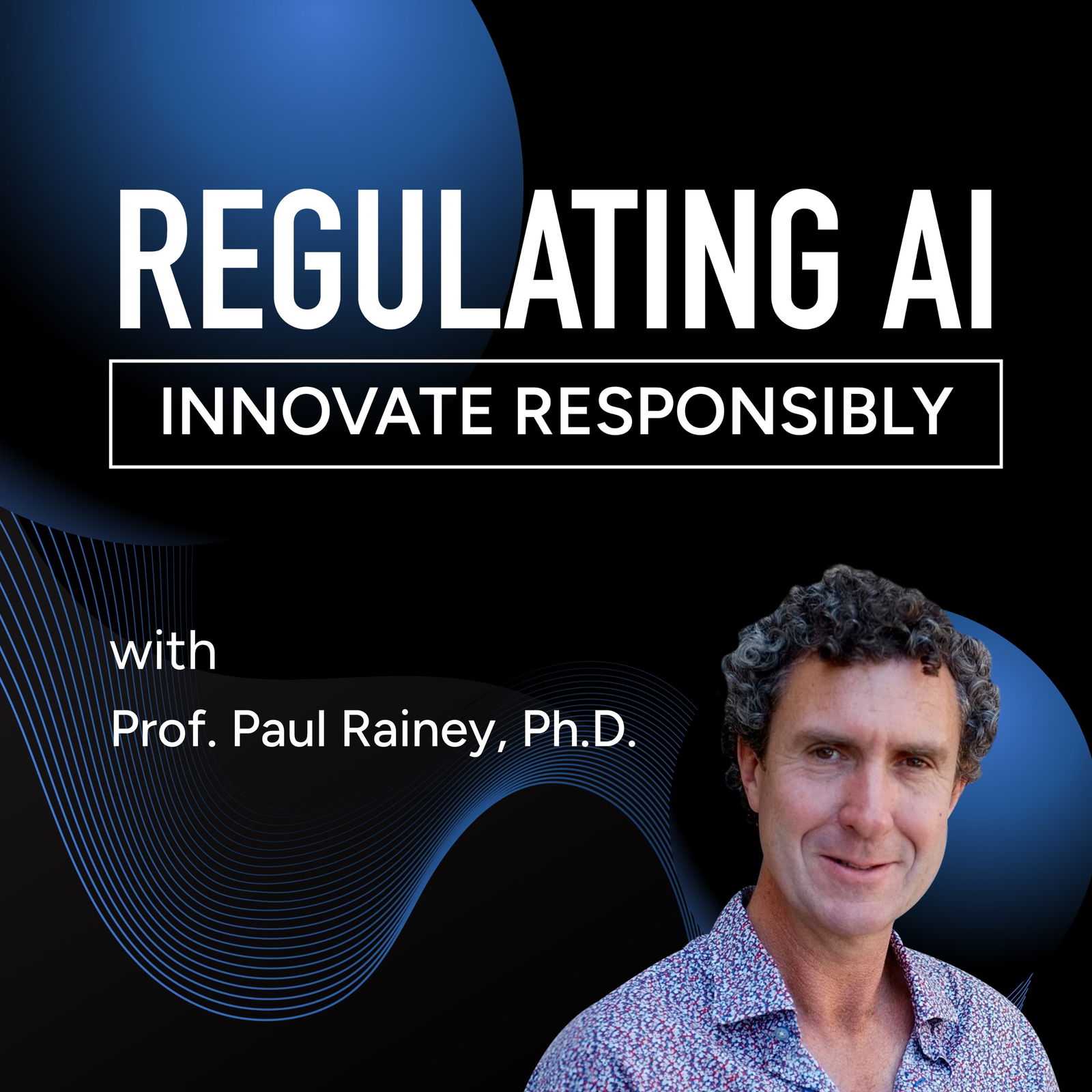
Harnessing Evolutionary Principles To Guide AI Development with Professor Paul Rainey
from RegulatingAI Podcast: Innovate Responsibly Hosted by Sanjay Puri
On this episode, I’m joined by Professor Paul Rainey to discuss the evolutionary principles applicable to AI development and the potential risks of self-replicating AI systems. Paul is Director of the Department of Microbial Population Biology at the Max Planck Institute for Evolutionary Biology in Plön; Professor at ESPCI in Paris; Fellow of the Royal Society of New Zealand; a Member of EMBO & European Academy of Microbiology; and Honorary Professor at Christian Albrechts University in Kiel. Key Takeaways: (00:04) Evolutionary transitions form higher-level structures. (00:06) Eukaryotic cells parallel future AI-human interactions. (00:08) Major evolutionary transitions inform AI-human interactions. (00:11) Algorithms can evolve with variation, replication and heredity. (00:13) Natural selection drives complexity. (00:18) AI adapts to selective pressures unpredictably. (00:21) Humans risk losing autonomy to AI. (00:25) Societal engagement is needed before developing self-replicating AIs. (00:30) The challenge of controlling self-replicating systems. (00:33) Interdisciplinary collaboration is crucial for AI challenges. Resources Mentioned: Max Planck Institute for Evolutionary Biology Professor Paul Rainey - Max Planck Institute Max Planck Research Magazine - Issue 3/2023 Paul Rainey’s article in The Royal Society Publishing Thanks for listening to the Regulating AI: Innovate Responsibly podcast. If you enjoyed this episode, please leave a 5-star review to help get the word out about the show. And be sure to subscribe so you never miss another insightful conversation. #AIRegulation #AISafety #AIStandard
Embed this episode
No transcript yet.