
EPISODE · Jun 11, 2025 · 59 MIN
Hilal Ahmed & Harsh Mander: Indian Muslims' marginalisation and the myth of appeasement
from Himal Southasian Podcast Channel · host Himal Southasian Podcast Channel
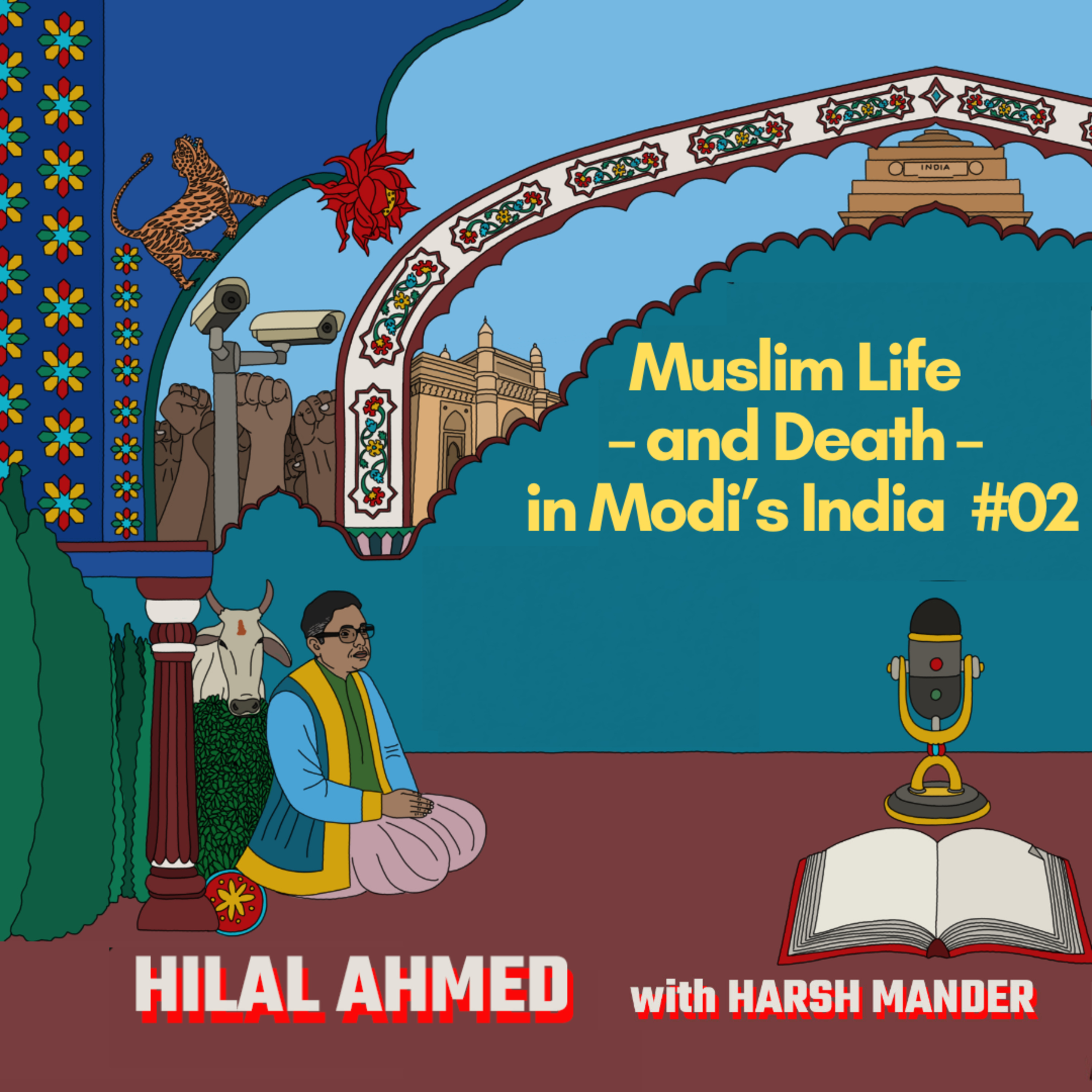
In this episode, the academic and writer Hilal Ahmed speaks to Harsh Mander about his positionality as a practising Muslim and as a scholar looking at Muslim lives and the Muslim experience. Ahmed recalls growing up in the 1990s when the idealism of a secular India had all but faded in the wake of the demolition of the Babri Masjid in Ayodhya. He remembers that when I was in the school in 80s and 90s, he and other Muslim students faced the same sort of abuse one hears today – being called Pakistani. “The hate was already there but it was hidden,” he says. Comparing that to the present day, he makes the case that the BJP has legitimised anti-Muslim hate and given a particular language.Ahmed talks about crises within Muslim communities in India – of the breaking down of families, the lack of social support, the drop-offs in education and more. Yet, the real problem Muslims face is that India’s entire political class has co-opted, or is on its way to co-opting, Hindutva as the dominant narrative in politics. You can find the full Video on YouTube: https://youtu.be/QnPABZ-LUUwGlossary:NITI Aayog: The top policy think tank of the government of IndiaSachar committee: A high-level committee headed by Justice Rajendra Sachar and constituted in 2005 by Manmohan Singh, India’s prime minister at the time, to examine the social, economic and educational status of Muslims in the countryKaka Kalelkar commission: India’s first backward classes commission established in 1953 to determine criteria for socially and educationally backward groups.SC, ST, OBC: Scheduled Caste, Scheduled Tribes, Other Backward Classes are demographic categories in India of groups that have been historically discriminated against and marginalised, and therefore identified for affirmative action.Hela caste: The Hela Mehtar are Muslim converts of the Hindu Hela caste and have been categorised as an Other Backward Class (OBC) Bhangi or Valmiki: A Dalit community categorised as a Scheduled Caste group in IndiaTriple-talaq: In 2019, India’s government criminalised triple-talaq – the practice which allowed a Muslim man to divorce his wife by saying “talaq” three times – making it a non-bailable offence with three years imprisonment. A major criticism of the move was that criminalising the civil law was a way of targeting the Muslim communityHimal Southasian is Southasia’s first and only regional news and analysis magazine. Stretching from Afghanistan to Burma, from Tibet to the Maldives, this region of more than 1.4 billion people shares great swathes of interlocking geography, culture and history. Yet today neighbouring countries can barely talk to one another, much less speak in a common voice. For three decades, Himal Southasian has strived to define, nurture, and amplify that voice. Read more: https://www.himalmag.com/Support our independent journalism and become a Patron of Himal: https://www.himalmag.com/support-himalFind us on: https://twitter.com/Himalistanhttps://www.facebook.com/himal.southasianhttps://www.instagram.com/himalistan/
What this episode covers
In this episode, the academic and writer Hilal Ahmed speaks to Harsh Mander about his positionality as a practising Muslim and as a scholar looking at Muslim lives and the Muslim experience. Ahmed recalls growing up in the 1990s when the idealism of a secular India had all but faded in the wake of the demolition of the Babri Masjid in Ayodhya. He remembers that when I was in the school in 80s and 90s, he and other Muslim students faced the same sort of abuse one hears today – being called Pakistani. “The hate was already there but it was hidden,” he says. Comparing that to the present day, he makes the case that the BJP has legitimised anti-Muslim hate and given a particular language.Ahmed talks about crises within Muslim communities in India – of the breaking down of families, the lack of social support, the drop-offs in education and more. Yet, the real problem Muslims face is that India’s entire political class has co-opted, or is on its way to co-opting, Hindutva as the dominant narrative in politics. You can find the full Video on YouTube: https://youtu.be/QnPABZ-LUUwGlossary:NITI Aayog: The top policy think tank of the government of IndiaSachar committee: A high-level committee headed by Justice Rajendra Sachar and constituted in 2005 by Manmohan Singh, India’s prime minister at the time, to examine the social, economic and educational status of Muslims in the countryKaka Kalelkar commission: India’s first backward classes commission established in 1953 to determine criteria for socially and educationally backward groups.SC, ST, OBC: Scheduled Caste, Scheduled Tribes, Other Backward Classes are demographic categories in India of groups that have been historically discriminated against and marginalised, and therefore identified for affirmative action.Hela caste: The Hela Mehtar are Muslim converts of the Hindu Hela caste and have been categorised as an Other Backward Class (OBC) Bhangi or Valmiki: A Dalit community categorised as a Scheduled Caste group in IndiaTriple-talaq: In 2019, India’s government criminalised triple-talaq – the practice which allowed a Muslim man to divorce his wife by saying “talaq” three times – making it a non-bailable offence with three years imprisonment. A major criticism of the move was that criminalising the civil law was a way of targeting the Muslim communityHimal Southasian is Southasia’s first and only regional news and analysis magazine. Stretching from Afghanistan to Burma, from Tibet to the Maldives, this region of more than 1.4 billion people shares great swathes of interlocking geography, culture and history. Yet today neighbouring countries can barely talk to one another, much less speak in a common voice. For three decades, Himal Southasian has strived to define, nurture, and amplify that voice. Read more: https://www.himalmag.com/Support our independent journalism and become a Patron of Himal: https://www.himalmag.com/support-himalFind us on: https://twitter.com/Himalistanhttps://www.facebook.com/himal.southasianhttps://www.instagram.com/himalistan/
NOW PLAYING
Hilal Ahmed & Harsh Mander: Indian Muslims' marginalisation and the myth of appeasement
No transcript for this episode yet
Similar Episodes
No similar episodes found.
Similar Podcasts
No similar podcasts found.