
EPISODE · Jan 4, 2017 · 24 MIN
History of Smokey Bear
from Public Access America · host Public Access America
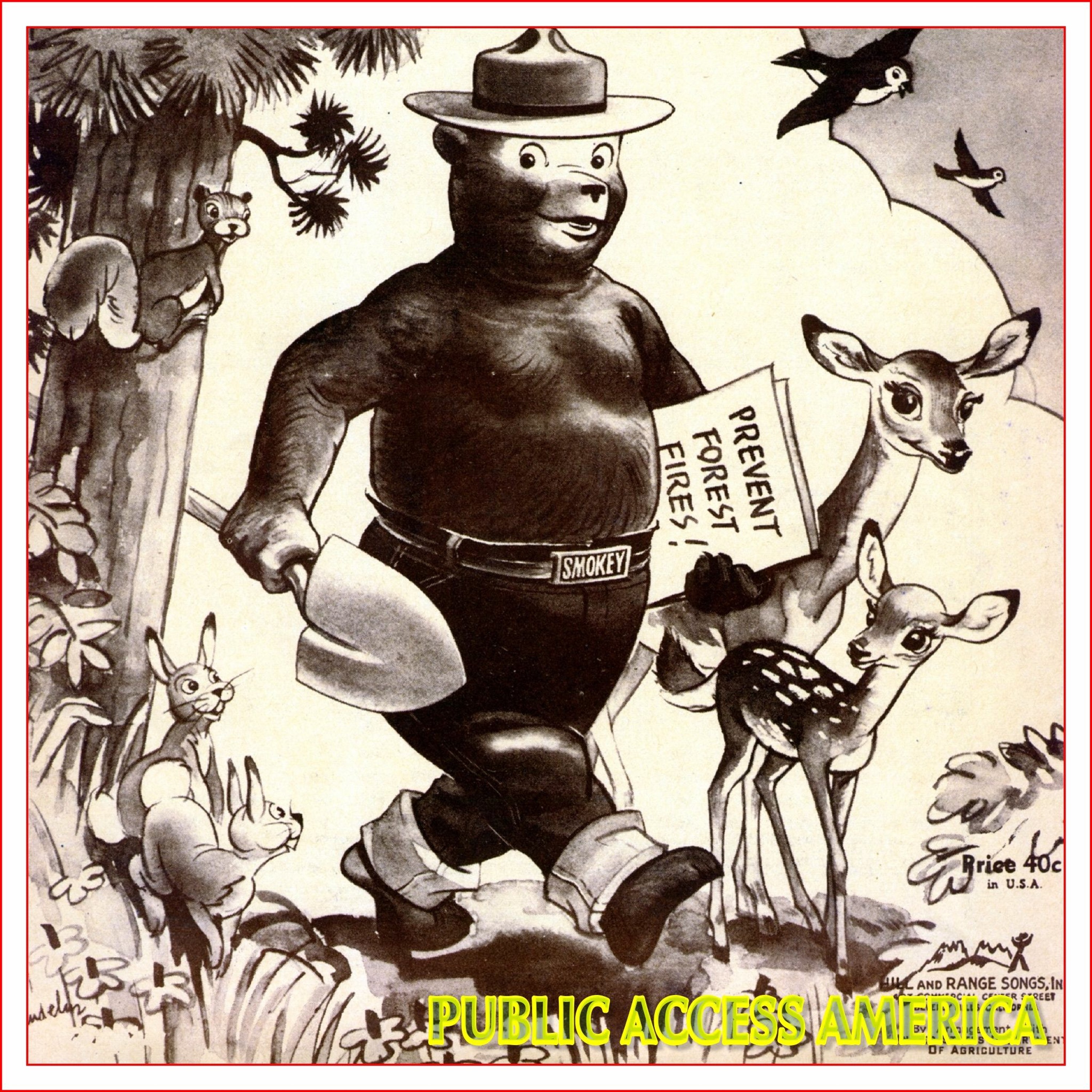
History of Smokey Bear The guardian of our forest has been a part of the American scene for so many years it is hard for most of us to remember when he first appeared. Dressed in a ranger's hat, belted blue jeans, and carrying a shovel, he has been the recognized wildfire prevention symbol since 1944. Today, Smokey Bear is a highly recognized advertising symbol and is protected by Federal law (PL 82-359, as amended by PL 92- 318). He even has his own private zip code 20252. To understand how Smokey Bear became associated with wildfire prevention, we must go back to World War II. On December 7, 1941, Japanese planes attacked Pearl Harbor. The following spring, in 1942, a Japanese submarine surfaced near the coast of Southern California and fired a salvo of shells that exploded on an oil field near Santa Barbara, very close to the Los Padres National Forest. Americans throughout the country were shocked by the news the war had now been brought directly to the American mainland. There was also fear that enemy incendiary shells exploding in the forests along the Pacific Coast could easily set off numerous raging forest fires in addition to those already being caused by people. Protection of these forests from uncontrolled fire became a matter of national importance, and a new idea was born. If people could be urged to be more careful, perhaps some of the fires could be prevented. Forest fires caused by people were nothing new. For many years, the Nation had known that forest fires presented a serious threat. As early as 1902, there was a standard General Land Office forest fire warning poster that gave some guidelines for keeping fires under control. In 1939, a poster showing a forest ranger who looked like Uncle Sam pointing to a raging forest fire stated "Your Forest-Your Fault-Your Loss.” Statistics showed that nine out of ten of the fires were person-caused and, thus, preventable. With this in mind, in 1942 the Forest Service organized the Cooperative Forest Fire Prevention (CFFP) Program with the help of the Wartime Advertising Council and the Association of State Foresters (now known as the National Association of State Foresters). The Wartime Advertising Council was composed of people experienced in the business of advertising who donated their talent to the U.S. Government to get important messages to the people. Posters and slogans were created through the Wartime Advertising Council, including “Forest Fires Aid the Enemy," and "Our Carelessness, Their Secret Weapon." By using catchy phrases, colorful posters and other fire prevention messages, the CFFP Program encouraged people to prevent accidental fires and help with the War. Source Link https://archive.org/details/gov.nwcg.nfes.2882.3 Copyright link https://creativecommons.org/publicdomain/zero/1.0/ Information link http://sdda.sd.gov/legacydocs/forestry/educational-information/pdf/history-of-smokeybear.pdfAdvertising Inquiries: https://redcircle.com/brandsPrivacy & Opt-Out: https://redcircle.com/privacy
Embed this episode
NOW PLAYING
History of Smokey Bear
No transcript for this episode yet
Similar Episodes
No similar episodes found.