
EPISODE · Apr 23, 2024 · 4 MIN
“How Does The Aneurysmal Bone Cyst Differ From Similar Lesions?”
from Dr. Gallagher's Podcast · host Brendan Gallagher, DDS
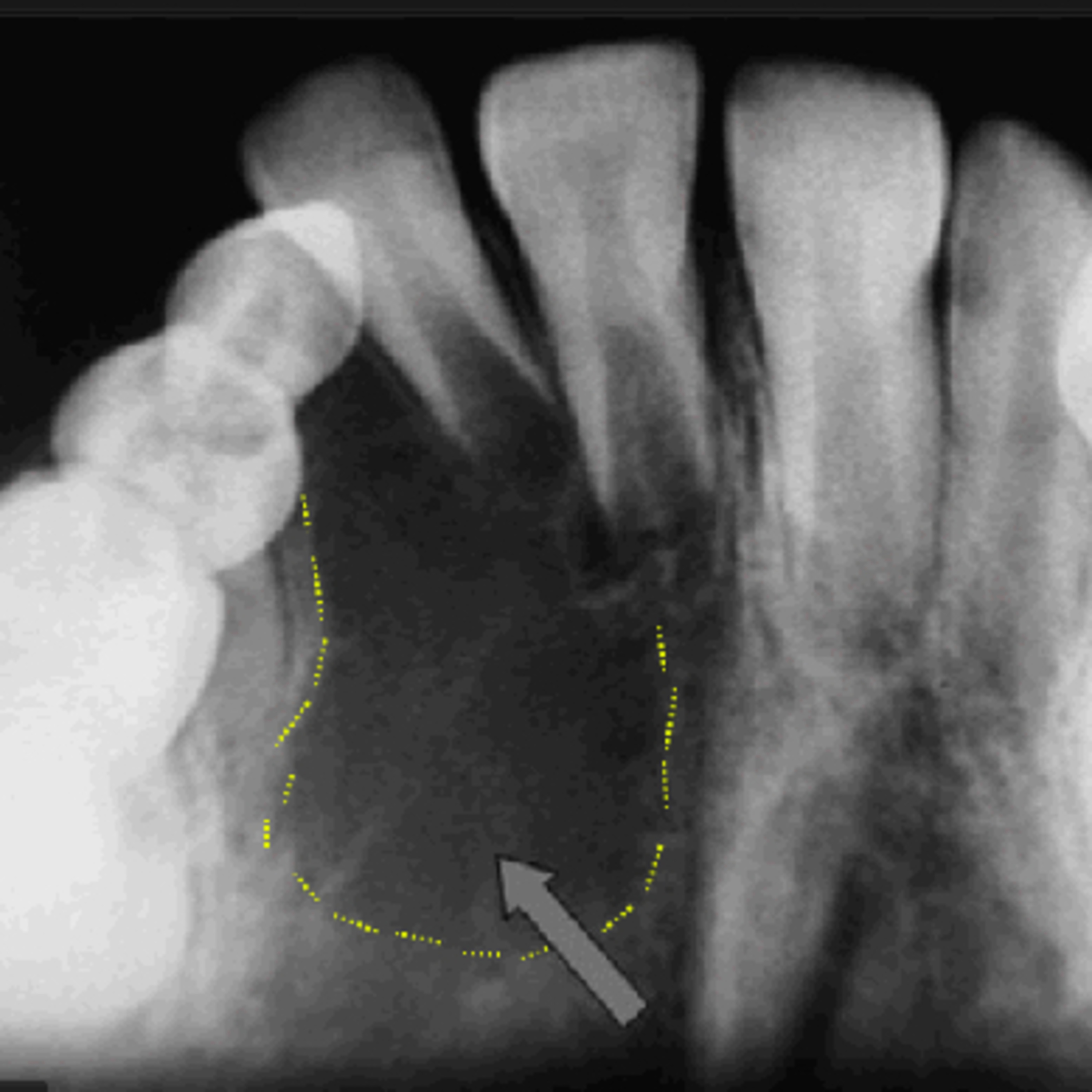
4.23.24 #podcast #podcasts #dentalpodcast #dentalpodcasts #doctorgallagherpodcast #doctorgallagherspodcast Quick Review #127 - #pathology #oralpathology #doctorgallagher #oralsurgery #oralsurgeon #dentist #dentistry #dental Aneurysmal Bone Cyst (ABC) • Clinical Characteristics: - Occurs predominantly in children and young adults. - Rapid, painless swelling; may become painful if there is impingement on nerves or other structures. - Commonly affects the long bones and vertebrae, but also seen in the jaws. • Radiographic Findings: - Exhibits a "soap bubble" or "honeycomb" appearance, radiolucent. - Expansile, multilocular lesion with well-defined borders. - Can cause thinning of the cortex, showing ballooning of the bone. • Histological Features: - Multiple blood-filled cystic spaces without endothelial lining. - Fibrous septa containing multinucleated giant cells, osteoid, and reactive woven bone. - Occasionally shows areas of solid fibrous proliferation. Differential Diagnoses and Differentiating Features: 1. Ameloblastoma - Clinical: Typically slower growing; occurs mainly in adults. - Radiographic: “Honeycombed" or "soap bubble" radiolucencies, but more localized and defined; does not typically cause the same degree of expansile distortion. - Histological: Consists of odontogenic epithelial cells arranged in palisaded columns with reverse polarity; lacks blood-filled cystic spaces. 2. Odontogenic Keratocyst (OKC) - Clinical: Can be aggressive; high recurrence rate. - Radiographic: Presents as a unilocular or multilocular radiolucency; scalloping around the roots of teeth. - Histological: Lined by thin, parakeratinized epithelium; contains keratin debris; no giant cells or blood-filled spaces. 3. Traumatic Bone Cyst (TBC) - Clinical: Often asymptomatic; discovered incidentally. - Radiographic: A unilocular radiolucency without a sclerotic border, often scalloping between the roots. - Histological: An empty cavity or one with serous fluid; lacks an epithelial or cellular lining; no solid tissue components. 4. Giant Cell Granuloma (GCG) - Clinical: More common in younger individuals; may present with pain or swelling. - Radiographic: Radiolucent lesion, can be unilocular or multilocular; lacks the expansile feature seen in ABCs. - Histological: Contains multinucleated giant cells in a background of fibrous stroma; reactive bone present but lacks blood-filled spaces typical of ABC. References: 1. Exodontia.info. (n.d.). Aneurysmal Bone Cyst. Retrieved April 22, 2024, from https://lnkd.in/dH835BTA 2. Motamedi, M. H. K., & Yazdi, E. (2012). Aneurysmal bone cyst of the jaws: Analysis of 11 cases. Journal of Oral and Maxillofacial Surgery, Medicine, and Pathology, 24(3), 175-178. doi:10.1016/j.ajoms.2011.08.002 3. Neville, B. W., Damm, D. D., Allen, C. M., & Bouquot, J. E. (2016). Oral and Maxillofacial Pathology (4th ed.). St. Louis, MO: Elsevier. 4. ChatGPT. 2024.
What this episode covers
4.23.24 #podcast #podcasts #dentalpodcast #dentalpodcasts #doctorgallagherpodcast #doctorgallagherspodcast Quick Review #127 - #pathology #oralpathology #doctorgallagher #oralsurgery #oralsurgeon #dentist #dentistry #dental Aneurysmal Bone Cyst (ABC) • Clinical Characteristics: - Occurs predominantly in children and young adults. - Rapid, painless swelling; may become painful if there is impingement on nerves or other structures. - Commonly affects the long bones and vertebrae, but also seen in the jaws. • Radiographic Findings: - Exhibits a "soap bubble" or "honeycomb" appearance, radiolucent. - Expansile, multilocular lesion with well-defined borders. - Can cause thinning of the cortex, showing ballooning of the bone. • Histological Features: - Multiple blood-filled cystic spaces without endothelial lining. - Fibrous septa containing multinucleated giant cells, osteoid, and reactive woven bone. - Occasionally shows areas of solid fibrous proliferation. Differential Diagnoses and Differentiating Features: 1. Ameloblastoma - Clinical: Typically slower growing; occurs mainly in adults. - Radiographic: “Honeycombed" or "soap bubble" radiolucencies, but more localized and defined; does not typically cause the same degree of expansile distortion. - Histological: Consists of odontogenic epithelial cells arranged in palisaded columns with reverse polarity; lacks blood-filled cystic spaces. 2. Odontogenic Keratocyst (OKC) - Clinical: Can be aggressive; high recurrence rate. - Radiographic: Presents as a unilocular or multilocular radiolucency; scalloping around the roots of teeth. - Histological: Lined by thin, parakeratinized epithelium; contains keratin debris; no giant cells or blood-filled spaces. 3. Traumatic Bone Cyst (TBC) - Clinical: Often asymptomatic; discovered incidentally. - Radiographic: A unilocular radiolucency without a sclerotic border, often scalloping between the roots. - Histological: An empty cavity or one with serous fluid; lacks an epithelial or cellular lining; no solid tissue components. 4. Giant Cell Granuloma (GCG) - Clinical: More common in younger individuals; may present with pain or swelling. - Radiographic: Radiolucent lesion, can be unilocular or multilocular; lacks the expansile feature seen in ABCs. - Histological: Contains multinucleated giant cells in a background of fibrous stroma; reactive bone present but lacks blood-filled spaces typical of ABC. References: 1. Exodontia.info. (n.d.). Aneurysmal Bone Cyst. Retrieved April 22, 2024, from https://lnkd.in/dH835BTA 2. Motamedi, M. H. K., & Yazdi, E. (2012). Aneurysmal bone cyst of the jaws: Analysis of 11 cases. Journal of Oral and Maxillofacial Surgery, Medicine, and Pathology, 24(3), 175-178. doi:10.1016/j.ajoms.2011.08.002 3. Neville, B. W., Damm, D. D., Allen, C. M., & Bouquot, J. E. (2016). Oral and Maxillofacial Pathology (4th ed.). St. Louis, MO: Elsevier. 4. ChatGPT. 2024.
NOW PLAYING
“How Does The Aneurysmal Bone Cyst Differ From Similar Lesions?”
No transcript for this episode yet
Similar Episodes
Dec 5, 2025 ·50m
Oct 9, 2025 ·33m
Oct 3, 2025 ·40m
Sep 11, 2025 ·31m
Aug 27, 2025 ·39m
Aug 18, 2025 ·54m