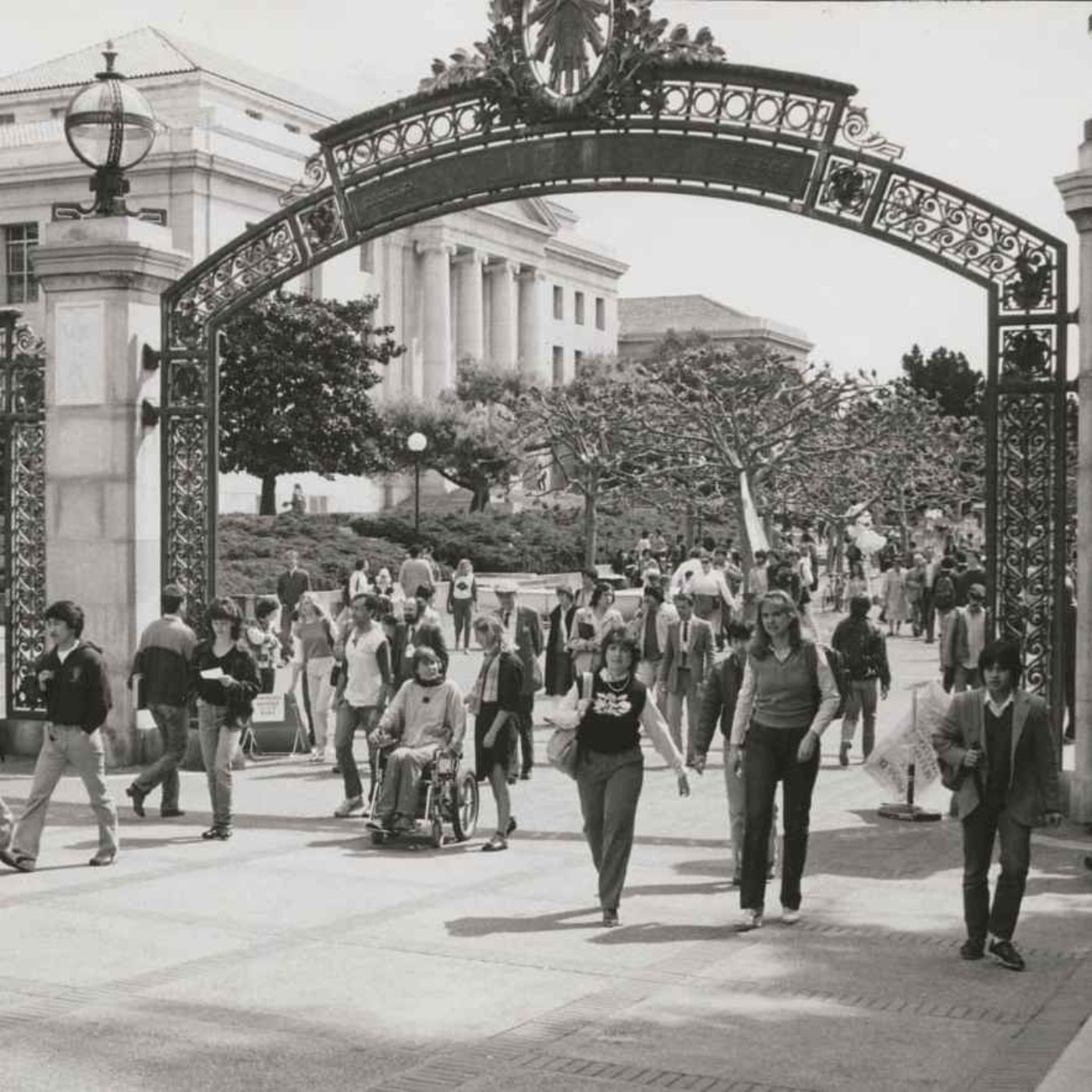
How the American university’s success led to its modern challenges episode artwork

EPISODE · May 1, 2026 · 1H 4M

How the American university’s success led to its modern challenges

from Berkeley Talks

While preparing his lectures for UC Berkeley, Princeton University President Christopher Eisgruber spent hours poring over the memoirs and writings of former University of California President Clark Kerr, seeking wisdom from the architect of California’s 1960 Master Plan for Higher Education.Reflecting on this research, Eisgruber notes that he found more than just strategy; he found a personal connection. "I have been impressed by Kerr's wit, wisdom and decency,” he says, “and I have come to feel not only admiration but affection for him.”In his first of two lectures at Berkeley in February, Eisgruber draws on Kerr’s 1963 “hinge of history” idea to explain why American research universities are especially vulnerable to political and social attacks today.Kerr believed there was a turning point in the mid-20th century where the role of universities shifted from the periphery of society to its center as primary engines of economic and social growth. Eisgruber contends that this newfound prominence made them higher-stakes targets for public and political frustration. He points to three post-1960s shifts — rising student debt, accelerating competition and universities’ high profile in national debates over racial justice — as forces that have "compromised the political base that can help to protect higher education in moments of crisis.”Still, Eisgruber remains optimistic about the resilience of the American research university. He highlights the sector's ability to drive global recovery during the pandemic and its success in broadening its reach to include talent from all walks of life as proof of its enduring strength. While its shift to the center of national life has invited new pressures, he argues that the intense public focus on these institutions confirms their role as vital spaces for a diverse democracy to do its most important thinking.He suggests that the path forward lies in universities embracing this central, if contested, role by sustaining the vision Kerr championed: "a truly American university, an institution unique in world history, an institution not looking to other models but serving as a model for universities in other parts of the globe.”This talk was one of two lectures that Eisgruber gave on Feb. 24 and Feb. 26 as part of the Clark Kerr Lecture Series, co-sponsored by the Center for Studies in Higher Education, the Goldman School of Public Policy and Berkeley Law.Watch videos of both of Eisgruber’s lectures.Listen to the episode and read the transcript on UC Berkeley News (news.berkeley.edu/podcasts/berkeley-talks).Music by HoliznaCC0.Photo via The Bancroft Library archive. Hosted on Acast. See acast.com/privacy for more information.

While preparing his lectures for UC Berkeley, Princeton University President Christopher Eisgruber spent hours poring over the memoirs and writings of former University of California President Clark Kerr, seeking wisdom from the architect of California’s 1960 Master Plan for Higher Education.Reflecting on this research, Eisgruber notes that he found more than just strategy; he found a personal connection. "I have been impressed by Kerr's wit, wisdom and decency,” he says, “and I have come to feel not only admiration but affection for him.”In his first of two lectures at Berkeley in February, Eisgruber draws on Kerr’s 1963 “hinge of history” idea to explain why American research universities are especially vulnerable to political and social attacks today.Kerr believed there was a turning point in the mid-20th century where the role of universities shifted from the periphery of society to its center as primary engines of economic and social growth. Eisgruber contends that this newfound prominence made them higher-stakes targets for public and political frustration. He points to three post-1960s shifts — rising student debt, accelerating competition and universities’ high profile in national debates over racial justice — as forces that have "compromised the political base that can help to protect higher education in moments of crisis.”Still, Eisgruber remains optimistic about the resilience of the American research university. He highlights the sector's ability to drive global recovery during the pandemic and its success in broadening its reach to include talent from all walks of life as proof of its enduring strength. While its shift to the center of national life has invited new pressures, he argues that the intense public focus on these institutions confirms their role as vital spaces for a diverse democracy to do its most important thinking.He suggests that the path forward lies in universities embracing this central, if contested, role by sustaining the vision Kerr championed: "a truly American university, an institution unique in world history, an institution not looking to other models but serving as a model for universities in other parts of the globe.”This talk was one of two lectures that Eisgruber gave on Feb. 24 and Feb. 26 as part of the Clark Kerr Lecture Series, co-sponsored by the Center for Studies in Higher Education, the Goldman School of Public Policy and Berkeley Law.Watch videos of both of Eisgruber’s lectures.Listen to the episode and read the transcript on UC Berkeley News (news.berkeley.edu/podcasts/berkeley-talks).Music by HoliznaCC0.Photo via The Bancroft Library archive. Hosted on Acast. See acast.com/privacy for more information.

NOW PLAYING

How the American university’s success led to its modern challenges

0:00 1:04:01

No transcript for this episode yet

We transcribe on demand. Request one and we'll notify you when it's ready — usually under 10 minutes.

Carnivores Don't Get Sunburn - Carnivore Diet Talks Carnivores Don't Get Sunburn - Carnivore Diet Talks Welcome to “Carnivores Don’t Get Sunburn,” where we have fun and explore the carnivore diet and its transformative power. Join us as we uncover real stories from individuals who have thrived on this diet, defying convention and embracing optimal health. Plus, stay tuned for our upcoming documentary featuring diverse carnivores overcoming health challenges. Learn more at www.carnivoredietdocumentary.com.Excitingly, we’re working on an upcoming documentary where we’ll feature carnivores from various walks of life, conquering diverse health challenges. Join us on this journey and learn more at www.carnivoredietdocumentary.com.Join us in uncovering the power of the carnivore diet. Prepare to be inspired, informed, and empowered to embrace optimal health and well-being.Welcome to “Carnivores Don’t Get Sunburn: Unveiling Real Stories of the Carnivore Diet.” Stay tuned for our upcoming documentary. Discover how this lifestyle can transform lives. Learn more at www.carnivoredietdocumentary.com IT IS WHAT IT IS with SHALLZ - SHALLY ZOMORODI Shally Zomorodi What?  "It is what it is" with ShallZ – Shally ZomorodiWhen? WeeklyHow long? 35 minutesEvery week, Mother of 4, wife, morning TV news anchor and ultimate hostess, Shally Zomorodi talks about life - its up's and downs and how to stay on track in her weekly podcast, ‘It is what it is.’  Known for her high energy, infectious smile and ability to see the cup as half full Shally talks about all things in life and how to work through its challenges. From parenting, marriage, friendships, current events to how to smile when it just seems impossible ‘It is what it is’ is the perfect podcast to help inspire you to dance through the rain. Tracking Nuclear Weapons Programs Center for Strategic and International Studies The CSIS Proliferation Prevention Program talks to experts about transparency and nuclear weapons. Cover Stories with Chess Life US Chess Chess Life Editor John Hartmann talks to the authors of each month's Chess Life cover story.

Frequently Asked Questions

How long is this episode of Berkeley Talks?

This episode is 1 hour and 4 minutes long.

When was this Berkeley Talks episode published?

This episode was published on May 1, 2026.

What is this episode about?

While preparing his lectures for UC Berkeley, Princeton University President Christopher Eisgruber spent hours poring over the memoirs and writings of former University of California President Clark Kerr, seeking wisdom from the architect of...

Can I download this Berkeley Talks episode?

Yes, you can download this episode by clicking the download button on the episode player, or subscribe to the podcast in your preferred podcast app for automatic downloads.
URL copied to clipboard!