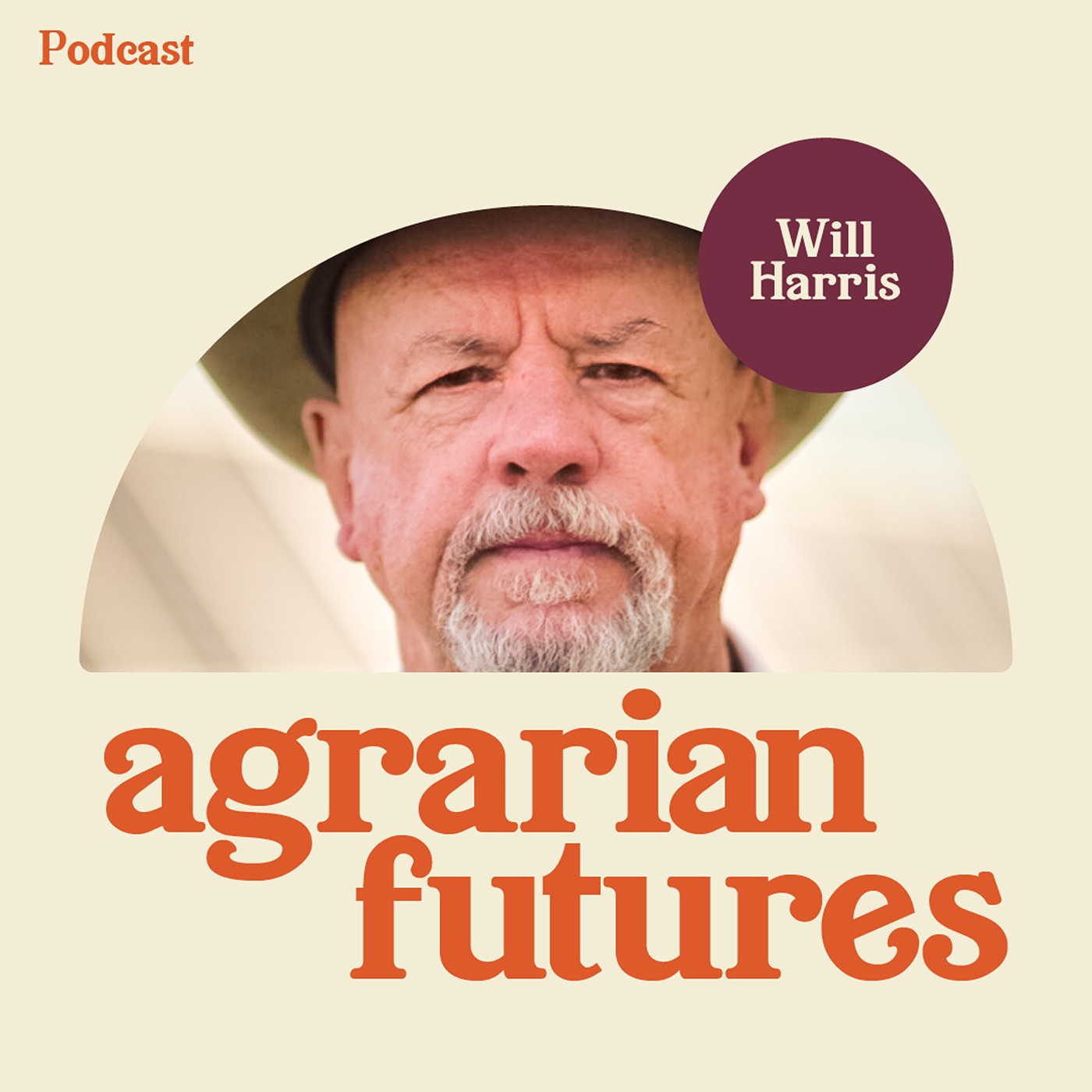
How to Leave the Industrial System Behind with Will Harris episode artwork

EPISODE · Jul 23, 2025 · 46 MIN

How to Leave the Industrial System Behind with Will Harris

from Agrarian Futures · host Agrarian Futures

Years before regenerative ag and grass-fed beef hit the spotlight, Will Harris was figuring it out on his own land.At White Oak Pastures in Bluffton, Georgia, Will spent the last few decades unwinding everything industrial agriculture taught him: the chemicals, the confinement, the commodity mindset. In its place, he’s built a vertically integrated, closed-loop system that honors the land, the animals, the people who work it, and the rural town that depends on it.White Oak Pastures is now one of the shining lights of what the future of agriculture can look like. If you’re thinking about what it takes to make regenerative ag not just real but resilient, you'll have something to learn from Will Harris.In this episode, we get into: The real costs of industrial efficiency and what it takes to opt out. Why Will restructured every aspect of his farm—from soil health to slaughter. How White Oak Pastures uses animal impact to build biology, not extract from it. The economics of rebuilding a rural economy around regenerative principles. Will’s take on corporate greenwashing, fake meat, and the soul of agriculture. And the core belief that drives it all: regeneration is about relationships, not inputs.More about Will and White Oak Pastures:Will Harris is a fourth-generation cattleman, who tends the same land that his great-grandfather settled in 1866. Born and raised at White Oak Pastures, Will left home to attend the University of Georgia's School of Agriculture, where he was trained in the industrial farming methods that had taken hold after World War II. Will graduated in 1976 and returned to Bluffton, where he and his father continued to raise cattle using pesticides, herbicides, hormones, and antibiotics. They also fed their herd a high-carbohydrate diet of corn and soy.In the mid-1990s, Will became disenchanted with the excesses of these industrialized methods. They had created a monoculture for their cattle, and, as Will says, "nature abhors a monoculture." In 1995, Will made the audacious decision to return to the farming methods his great-grandfather had used 130 years before.Since Will has successfully implemented these changes, he has been recognized all over the world as a leader in humane animal husbandry and environmental sustainability. Will is the immediate past President of the Board of Directors of Georgia Organics. He is the Beef Director of the American Grassfed Association and was selected 2011 Business Person of the year for Georgia by the Small Business Administration.Will lives in his family home on the property with his wife Yvonne. He is the proud father of three daughters, Jessi, Jenni, and Jodi. His favorite place in the world to be is out in pastures, where he likes to have a big coffee at sunrise and a 750ml glass of wine at sunset.Agrarian Futures is produced by Alexandre Miller, who also wrote our theme song. This episode was edited by Drew O’Doherty.

Years before regenerative ag and grass-fed beef hit the spotlight, Will Harris was figuring it out on his own land. At White Oak Pastures in Bluffton, Georgia, Will spent the last few decades unwinding everything industrial agriculture taught him: the chemicals, the confinement, the commodity mindset. In its place, he's built a vertically integrated, closed-loop system that honors the land, the animals, the people who work it, and the rural town that depends on it. White Oak Pastures is now one of the shining lights of what the future of agriculture can look like. If you're thinking about what it takes to make regenerative ag not just real but resilient, you'll have something to learn from Will Harris. In this episode, we get into: * The real costs of industrial efficiency and what it takes to opt out. * Why Will restructured every aspect of his farm—from soil health to slaughter. * How White Oak Pastures uses animal impact to build biology, not extract from it. * The economics of rebuilding a rural economy around regenerative principles. * Will's take on corporate greenwashing, fake meat, and the soul of agriculture. * And the core belief that drives it all: regeneration is about relationships, not inputs. More about Will and White Oak Pastures [https://whiteoakpastures.com/]: Will Harris is a fourth-generation cattleman, who tends the same land that his great-grandfather settled in 1866. Born and raised at White Oak Pastures, Will left home to attend the University of Georgia's School of Agriculture, where he was trained in the industrial farming methods that had taken hold after World War II. Will graduated in 1976 and returned to Bluffton, where he and his father continued to raise cattle using pesticides, herbicides, hormones, and antibiotics. They also fed their herd a high-carbohydrate diet of corn and soy. In the mid-1990s, Will became disenchanted with the excesses of these industrialized methods. They had created a monoculture for their cattle, and, as Will says, "nature abhors a monoculture." In 1995, Will made the audacious decision to return to the farming methods his great-grandfather had used 130 years before. Since Will has successfully implemented these changes, he has been recognized all over the world as a leader in humane animal husbandry and environmental sustainability. Will is the immediate past President of the Board of Directors of Georgia Organics. He is the Beef Director of the American Grassfed Association and was selected 2011 Business Person of the year for Georgia by the Small Business Administration. Will lives in his family home on the property with his wife Yvonne. He is the proud father of three daughters, Jessi, Jenni, and Jodi. His favorite place in the world to be is out in pastures, where he likes to have a big coffee at sunrise and a 750ml glass of wine at sunset. Agrarian Futures is produced by Alexandre Miller, who also wrote our theme song. This episode was edited by Drew O'Doherty.

NOW PLAYING

How to Leave the Industrial System Behind with Will Harris

0:00 46:06

No transcript for this episode yet

We transcribe on demand. Request one and we'll notify you when it's ready — usually under 10 minutes.

Soft, Earthen Futures Storywork Studio Soft, Earthen Futures is a podcast about imagining and crafting a more whole world. We explore what it means to stand at the threshold between what has been and what is trying to emerge, tending to that in-between space, listening for what the earth is dreaming through us, and giving those visions form. This show is for wild-hearted creatives, entrepreneurs, and visionaries. Hosted by founder, story doula, and eco-somatic depth guide, Daje Aloh. What Needs to Get Done – Right Now Its-all-here This is the moment where futures are forged. Where men rise by doing what others delay.So I ask: What needs to get done—right now? The tastylive network tastytrade The tastylive network teaches investors innovative, simple ways to trade stocks, options, and futures, take advantage of market volatility and build a successful portfolio. Tom Sosnoff leads an irreverent and playful band of floor traders who are showing America a new way to quickly find low risk, high return strategies in bullish, bearish and sideways markets. Ray Dalio Academy of Achievement Ray Dalio is the founder and owner of Bridgewater Associates, the world's largest and richest hedge fund. The firm manages approximately $130 billion in global investments for institutional clients including foreign governments and central banks, pension funds, university endowments and charitable foundations. The son of a jazz musician, Dalio began investing at the age of 12 when he bought shares of Northeast Airlines for $300, tripling his investment when the airline merged with another company. After completing his education at Long Island University and Harvard Business School, Dalio worked on the floor of the New York Stock Exchange and invested in commodity futures. In 1975, at age 26, he founded Bridgewater Associates in his two-bedroom Manhattan apartment. As the firm expanded, he wrote a 100-page essay, 'Principles,' to share his management philosophy with his employees. Dalio believes his team must be 'radically truthful and transparent' to achieve excellence. 'We need to kn

Frequently Asked Questions

How long is this episode of Agrarian Futures?

This episode is 46 minutes long.

When was this Agrarian Futures episode published?

This episode was published on July 23, 2025.

What is this episode about?

Years before regenerative ag and grass-fed beef hit the spotlight, Will Harris was figuring it out on his own land.At White Oak Pastures in Bluffton, Georgia, Will spent the last few decades unwinding everything industrial agriculture taught him:...

Can I download this Agrarian Futures episode?

Yes, you can download this episode by clicking the download button on the episode player, or subscribe to the podcast in your preferred podcast app for automatic downloads.
URL copied to clipboard!