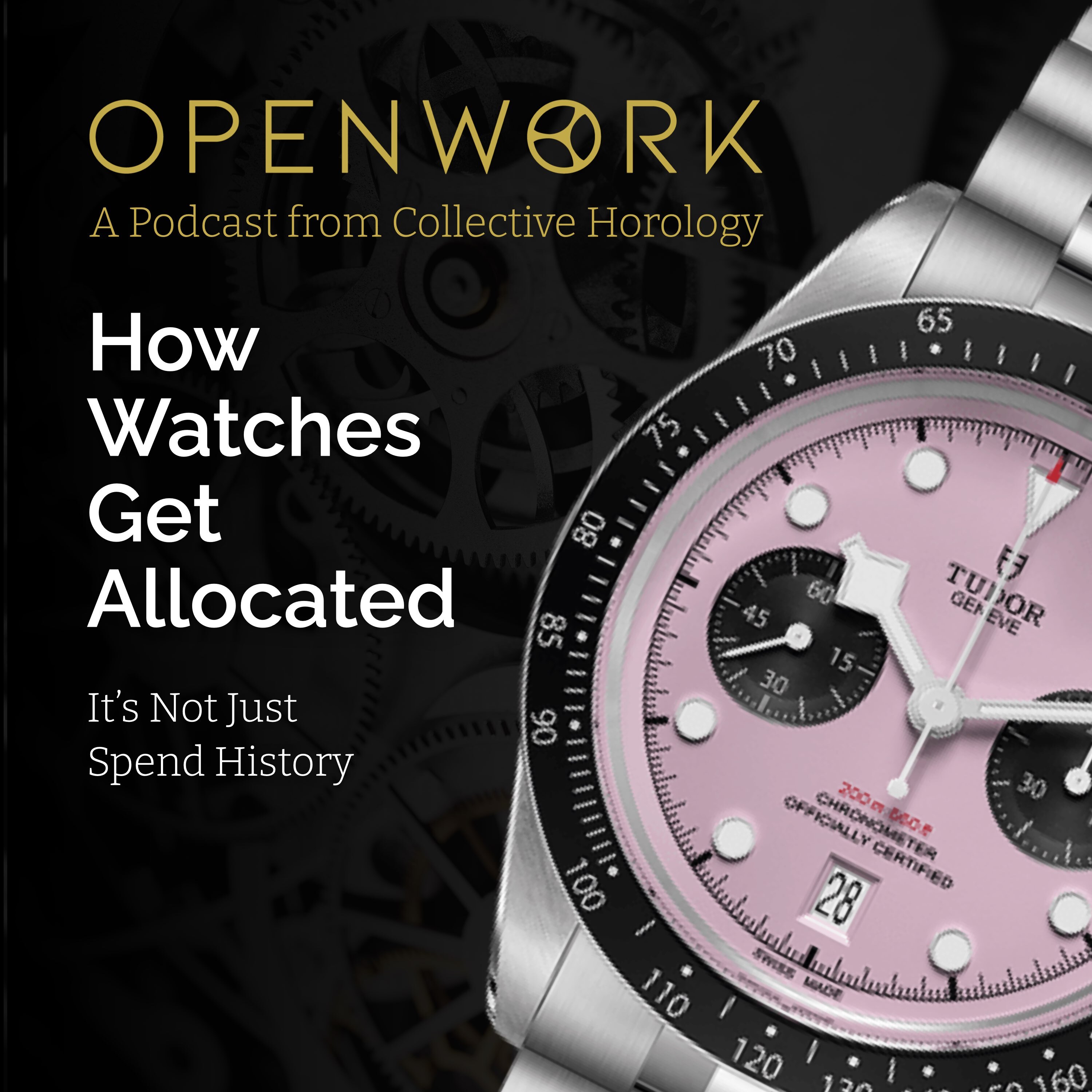
How Watches Get Allocated – It's Not Just Spend History – Episode 80 episode artwork

EPISODE · May 11, 2026 · 54 MIN

How Watches Get Allocated – It's Not Just Spend History – Episode 80

from Openwork: Inside the Watch Industry · host Collective Horology

Why do some watches always seem to go to the same people? Listener Terry wrote in with a question we hear constantly: how do brands and authorized dealers actually decide who gets the most in-demand pieces? Is it spend, celebrity, genuine interest, or something else? Gabe and Asher walk through the five allocation models that govern how hot watches move from manufacturer to wrist — closed-door allocations, customer pre-sales, first come first serve, lotteries, and order windows — and the trade-offs each one creates. The conversation starts upstream. Decisions about how many Breitling Cosmonauts or MING Starfields a given retailer receives are made long before any customer walks in the door. From there, Gabe and Asher get into the human factors most cynical takes on this stuff miss: taste fit, follow-through on prior commitments, how someone treats the staff, whether they refer other clients, and yes — purchase history, but as one input among several. They share Collective's own framework for allocating limited pieces, where 10% of a 20-piece run still means saying no to most of the people who want one, and they're honest about why none of the five models really solves the underlying problem. Also: Collective Horology's third annual Open House is Saturday, June 6 in Hollywood, with 14 independent brands in attendance — register at collectivehorology.com/openhouse. Openwork is a weekly podcast about how the watch industry actually works. An unfiltered look behind the scenes — no press releases, no hype, and no sponsored takes. Hosted by Asher Rapkin and Gabe Reilly, co-founders of Collective Horology. Available on Apple Podcasts, Spotify, YouTube Music, or wherever you get your podcasts. You can find us online at collectivehorology.com. To get in touch with suggestions, feedback or questions, email [email protected].

Why do some watches always seem to go to the same people? Listener Terry wrote in with a question we hear constantly: how do brands and authorized dealers actually decide who gets the most in-demand pieces? Is it spend, celebrity, genuine interest, or something else? Gabe and Asher walk through the five allocation models that govern how hot watches move from manufacturer to wrist — closed-door allocations, customer pre-sales, first come first serve, lotteries, and order windows — and the trade-offs each one creates. The conversation starts upstream. Decisions about how many Breitling Cosmonauts or MING Starfields a given retailer receives are made long before any customer walks in the door. From there, Gabe and Asher get into the human factors most cynical takes on this stuff miss: taste fit, follow-through on prior commitments, how someone treats the staff, whether they refer other clients, and yes — purchase history, but as one input among several. They share Collective's own framework for allocating limited pieces, where 10% of a 20-piece run still means saying no to most of the people who want one, and they're honest about why none of the five models really solves the underlying problem. Also: Collective Horology's third annual Open House is Saturday, June 6 in Hollywood, with 14 independent brands in attendance — register at collectivehorology.com/openhouse. Openwork is a weekly podcast about how the watch industry actually works. An unfiltered look behind the scenes — no press releases, no hype, and no sponsored takes. Hosted by Asher Rapkin and Gabe Reilly, co-founders of Collective Horology. Available on Apple Podcasts, Spotify, YouTube Music, or wherever you get your podcasts. You can find us online at collectivehorology.com. To get in touch with suggestions, feedback or questions, email [email protected].

NOW PLAYING

How Watches Get Allocated – It's Not Just Spend History – Episode 80

0:00 54:33

No transcript for this episode yet

We transcribe on demand. Request one and we'll notify you when it's ready — usually under 10 minutes.

No similar episodes found.

No similar podcasts found.

Frequently Asked Questions

How long is this episode of Openwork: Inside the Watch Industry?

This episode is 54 minutes long.

When was this Openwork: Inside the Watch Industry episode published?

This episode was published on May 11, 2026.

What is this episode about?

Why do some watches always seem to go to the same people? Listener Terry wrote in with a question we hear constantly: how do brands and authorized dealers actually decide who gets the most in-demand pieces? Is it spend, celebrity, genuine interest,...

Is there a transcript available for this episode?

Yes, a full transcript is available for this episode. You can read the complete transcript on the episode page.

Can I download this Openwork: Inside the Watch Industry episode?

Yes, you can download this episode by clicking the download button on the episode player, or subscribe to the podcast in your preferred podcast app for automatic downloads.
URL copied to clipboard!