PodParley PodParley

In conversation with Ross Garnaut

Ross Garnaut is in conversation on his new book, …

An episode of the Experience ANU podcast, hosted by Experience ANU, titled "In conversation with Ross Garnaut" was published on February 25, 2021 and runs 60 minutes.

February 25, 2021 ·60m · Experience ANU

0:00 / 0:00

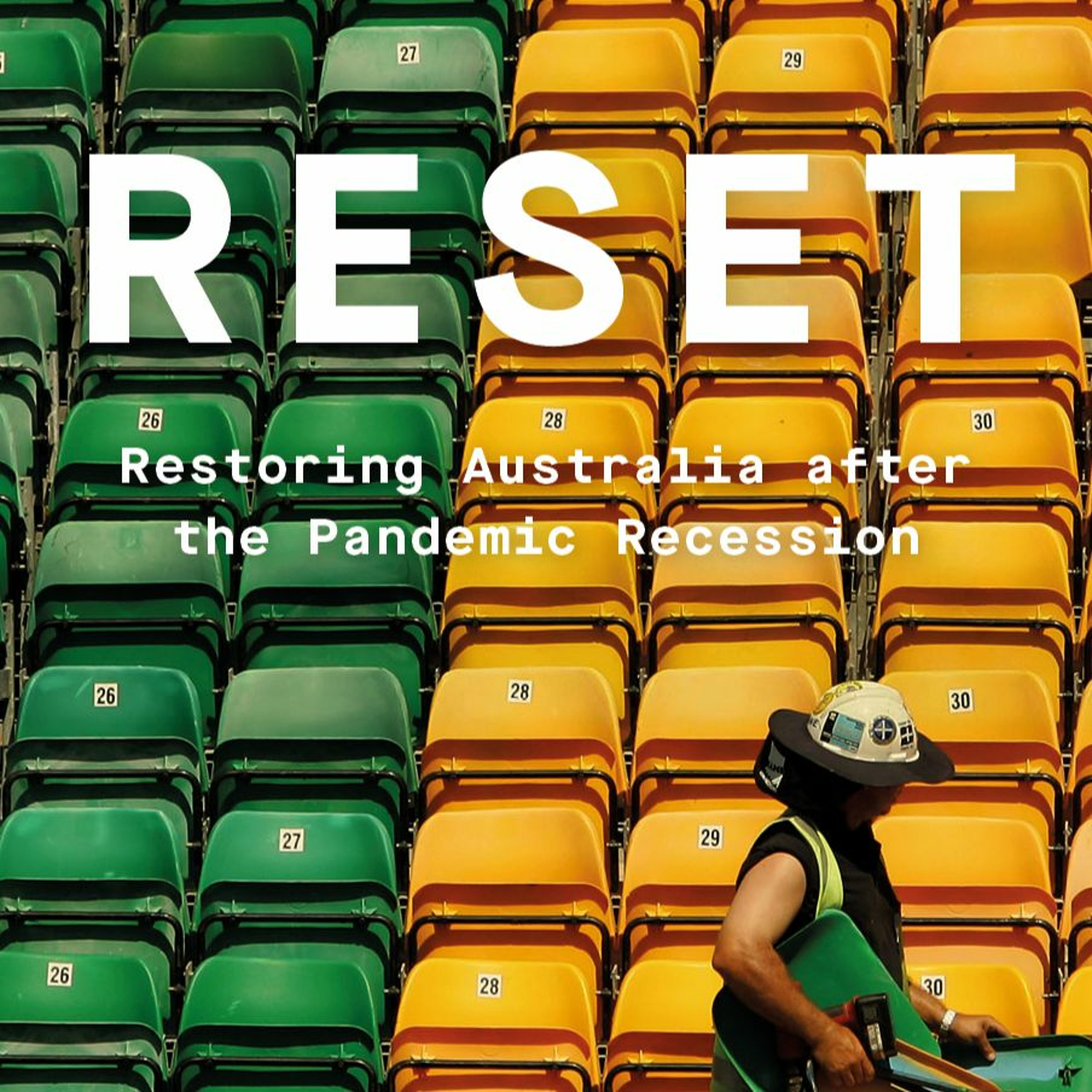
Ross Garnaut is in conversation on his new book, Reset: Restoring Australia after the Pandemic Recession, in which Garnaut shows how the COVID-19 crisis offers Australia the opportunity to reset its economy and build a successful future - and why the old approaches will not work. Garnaut develops the idea of a renewable superpower, calls for a basic income and explores what the 'decoupling' of China and America will mean for Australia. In the wake of COVID-19, the world has entered its deepest recession since the 1930s. Shocks of this magnitude throw history from its established course - either for good or evil. In 1942 - in the depths of war - the Australian government established a Department of Post-War Reconstruction to plan a future that not only restored existing strengths but also rebuilt the country for a new and better future. As we strive to overcome the coronavirus challenge, we need new, practical ideas to restore Australia. This book has them. Ross Garnaut AC is Professorial Research Fellow in Economics at the University of Melbourne. He is a Fellow of the Australian Academy of Sciences and a Distinguished Fellow of the Economic Society of Australia. He was principal economic adviser to Australian Prime Minister Bob Hawke and Australian Ambassador to China (1985-88). In 2008, he produced the Garnaut Climate Change Review for the Australian government and a follow-up review in 2011. He is the author of many books, including the bestselling Dog Days and Superpower. Dr Steven Kennedy, Secretary to the Australian Treasury since 2 September 2019, has held numerous senior positions in the public service in a 30 year career. He was the Head of Secretariat of the Garnaut Climate Change Review - Update 2011 and was awarded a Public Service Medal in 2016 for outstanding public service in the area of climate change policy. Dr Kennedy holds a PhD and a Masters in Economics from the Australian National University, and a Bachelor of Economics (First Class Honours) from the University of Sydney. Welcome and introduction delivered by Professor Brian P. Schmidt, ANU Vice-Chancellor. Vote of thanks given by Professor Helen Sullivan, Director of the Crawford School of Public Policy ANU.

Ross Garnaut is in conversation on his new book, Reset: Restoring Australia after the Pandemic Recession, in which Garnaut shows how the COVID-19 crisis offers Australia the opportunity to reset its economy and build a successful future - and why the old approaches will not work. Garnaut develops the idea of a renewable superpower, calls for a basic income and explores what the 'decoupling' of China and America will mean for Australia. In the wake of COVID-19, the world has entered its deepest recession since the 1930s. Shocks of this magnitude throw history from its established course - either for good or evil. In 1942 - in the depths of war - the Australian government established a Department of Post-War Reconstruction to plan a future that not only restored existing strengths but also rebuilt the country for a new and better future. As we strive to overcome the coronavirus challenge, we need new, practical ideas to restore Australia. This book has them. Ross Garnaut AC is Professorial Research Fellow in Economics at the University of Melbourne. He is a Fellow of the Australian Academy of Sciences and a Distinguished Fellow of the Economic Society of Australia. He was principal economic adviser to Australian Prime Minister Bob Hawke and Australian Ambassador to China (1985-88). In 2008, he produced the Garnaut Climate Change Review for the Australian government and a follow-up review in 2011. He is the author of many books, including the bestselling Dog Days and Superpower. Dr Steven Kennedy, Secretary to the Australian Treasury since 2 September 2019, has held numerous senior positions in the public service in a 30 year career. He was the Head of Secretariat of the Garnaut Climate Change Review - Update 2011 and was awarded a Public Service Medal in 2016 for outstanding public service in the area of climate change policy. Dr Kennedy holds a PhD and a Masters in Economics from the Australian National University, and a Bachelor of Economics (First Class Honours) from the University of Sydney. Welcome and introduction delivered by Professor Brian P. Schmidt, ANU Vice-Chancellor. Vote of thanks given by Professor Helen Sullivan, Director of the Crawford School of Public Policy ANU.
Interviews with Anupama Chopra Film Companion Anupama Chopra is a film critic, television anchor and book author. She has been writing about Bollywood since 1993. Her work has appeared in publications such as The New York Times, Hindustan Times, The Los Angeles Times and Vogue (India). Here you can find all of her interviews and conversations with Bollywood and Hollywood's leading actors and filmmakers. In short, everything you need to enhance your cinematic experience.Millions of listeners seek out Bingepods (Ideabrew Studios Network content) every day. Get in touch with us to advertise, join the network or click listen to  enjoy content by some of India's top audio [email protected] | Apple Taittriyaka Upanishad by Unknown Loyal Books The word Upanishad (upa-ni-shad) consists of, "Upa" means "near;" "ni" means "down;" "shad" means "to sit." Thus, Upanishad is to sit down near the teacher to discuss, learn, practice, and experience. There are some 200 or more Upanishads. Some are lost and are only known about because of being referenced in other Upanishads. Most of the Upanishads were kept secret for centuries, only passed on to others orally in the form of Shloka (a category of verse line developed from the Vedic Anustubh meter).Taittiriya is a Sanskrit word that means "from Tittiri". The root of this name has been interpreted in two ways: "from Vedic sage Tittiri" or a collection of verses from mythical students who became Tittiris (birds, partridges) in order to gain knowledge.This Upanishad is divided into three sections called Vallis: Siksha (Pronunciation /Instruction) Valli , Ananda (bliss of Brahman) Valli , and Bhrigu (son of Varuna, the god of all water elements) Valli.The chronology of Taittriyaka Upanish Katha Upanishad by Unknown Loyal Books The word Upanishad (upa-ni-shad) consists of, "Upa" means "near;" "ni" means "down;" "shad" means "to sit." Thus, Upanishad is to sit down near the teacher to discuss, learn, practice, and experience. There are some 200 or more Upanishads. Some are lost and are only known about because of being referenced in other Upanishads.Most of the Upanishads were kept secret for centuries, only passed on to others orally in the form of Shloka (a category of verse line developed from the Vedic Anustubh meter).Katha-Upanishad is one the 11 principal Upanishads. Its chronology is contested as being between fifth century BCE and 1st millennium BCE.Katha (Sanskrit: कठ) literally means "distress". Katha Upanishad uses words that symbolically embed and creatively have multiple meanings. For example, a closely pronounced word Katha (Sanskrit: कथा) literally means "story, legend, conversation, speech, tale". All of these related meanings are relevant to the Katha Upanishad.The text presents Death as the T Brihadaranyaka Upanishad Unknown The word Upanishad (upa-ni-shad) consists of, "Upa" means "near;" "ni" means "down;" "shad" means "to sit." Thus, Upanishad is to sit down near the teacher to discuss, learn, practice, and experience. There are some 200 or more Upanishads. Some are lost and are only known about because of being referenced in other Upanishads. Most of the Upanishads were kept secret for centuries, only passed on to others orally in the form of Shlokas (a category of verse line developed from the Vedic Anustubh meter).The Bṛhadāraṇyaka Upanishad (Sanskrit: बृहदारण्यक उपनिषद्) is one of the oldest, mukhya (primary) Upanishads. It is contained within the Shatapatha Brahmana (Brahmana is a collection of ancient Indian texts with commentaries on the Vedas.), which is itself a part of Shukla Yajur Veda. Brihad means great. Aryanka (Snskrit) आरण्यक means means pertaining to the forest. Aranyaka in the Upanishadic context refers to a treatise to be read or expounded by anchorites in the quiet of the fo
URL copied to clipboard!