PodParley PodParley

Inequality For All

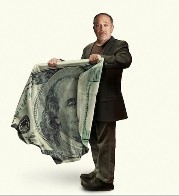
Inequality for All is the title of a documentary by Jacob Kornbluth, which examines the extraordinary disparity in wealth between the richest Americans and the rest of us. The man at the center of the film, who explains this issue in its many aspects, is Robert Reich, world-renowned economist, former Secretary of Labor under Clinton, currently a professor at Berkeley, and a fairly ubiquitous guest on cable news talk shows. Reich is good at putting economics into understandable terms for people like me, who don’t grasp the complexities of the subject. The film’s framing device is a lecture by Reich to his Berkeley students, but the picture bounces all over the place, mixing clips, historical and otherwise, charts and graphs, and interviews with various middle-class Americans who are struggling to get by in the current recession. The style reminds me a little bit of An Inconvenient Truth, in which facts and arguments are presented in as entertaining a fashion as possible, seasoned with some human interest and anecdotes concerning Reich himself. I think it works a little better here, because Reich is altogether a more interesting and engaging a person than Al Gore. We learn of his youth in Pennsylvania, and he became a Rhodes scholar and celebrated author, eventually serving under Ford, Carter, and Clinton. Less than five feet tall, Reich is fond of poking fun at his own diminutive stature. He is no firebrand, and in fact, as he points out, he was always considered a centrist until recently—as politics has continued to move to the right, he’s just stayed where he is. All this serves as flavoring to the real meat of the film, an analysis of what has gone wrong with the American economy. Reich outlines the movement away from the well-regulated prosperity of the middle class before the late 1970s, to globalization, outsourcing, and the transfer of wealth through tax breaks and financial deregulation. The result has been the stagnation and decline of middle-class wages, with a huge corresponding rise in the incomes of a very few people. About four hundred individuals make as much money a year as the combined income of half the entire population of the country—one of those facts that I find stupefying no matter how many times I hear it. This shift from an inclusive to an exclusive economy has resulted in a vicious cycle that has made things impossible for the middle class. There are three ways the middle class tried to cope—working more hours and more jobs, the mass entrance of women into the marketplace to support the home, and finally the reliance on credit to keep up—but all has failed ultimately in the face of the rising inequality. Another important aspect discussed is the bad effect this has on democracy—when a few people have so much money, they can take control of the political system in a way that disempowers ordinary citizens. Even for someone who thought he already knew all this, the film provides a lot more detail and insight than I can convey in a review. What I like most of all is Reich’s positive attitude about the future. He believes that Americans will force the needed changes in our system as they have before, and his confidence, I must admit, is infectious. Inequality for All is the kind of message we need—admirably sane and well-reasoned, a convincing picture of a problem, with some good ideas for a solution.

An episode of the Flicks with The Film Snob podcast, hosted by Chris Dashiell, titled "Inequality For All" was published on December 29, 2013.

December 29, 2013 · Flicks with The Film Snob

0:00 / 0:00

Inequality for All is the title of a documentary by Jacob Kornbluth, which examines the extraordinary disparity in wealth between the richest Americans and the rest of us. The man at the center of the film, who explains this issue in its many aspects, is Robert Reich, world-renowned economist, former Secretary of Labor under Clinton, currently a professor at Berkeley, and a fairly ubiquitous guest on cable news talk shows. Reich is good at putting economics into understandable terms for people like me, who don’t grasp the complexities of the subject. The film’s framing device is a lecture by Reich to his Berkeley students, but the picture bounces all over the place, mixing clips, historical and otherwise, charts and graphs, and interviews with various middle-class Americans who are struggling to get by in the current recession. The style reminds me a little bit of An Inconvenient Truth, in which facts and arguments are presented in as entertaining a fashion as possible, seasoned with some human interest and anecdotes concerning Reich himself. I think it works a little better here, because Reich is altogether a more interesting and engaging a person than Al Gore. We learn of his youth in Pennsylvania, and he became a Rhodes scholar and celebrated author, eventually serving under Ford, Carter, and Clinton. Less than five feet tall, Reich is fond of poking fun at his own diminutive stature. He is no firebrand, and in fact, as he points out, he was always considered a centrist until recently—as politics has continued to move to the right, he’s just stayed where he is. All this serves as flavoring to the real meat of the film, an analysis of what has gone wrong with the American economy. Reich outlines the movement away from the well-regulated prosperity of the middle class before the late 1970s, to globalization, outsourcing, and the transfer of wealth through tax breaks and financial deregulation. The result has been the stagnation and decline of middle-class wages, with a huge corresponding rise in the incomes of a very few people. About four hundred individuals make as much money a year as the combined income of half the entire population of the country—one of those facts that I find stupefying no matter how many times I hear it. This shift from an inclusive to an exclusive economy has resulted in a vicious cycle that has made things impossible for the middle class. There are three ways the middle class tried to cope—working more hours and more jobs, the mass entrance of women into the marketplace to support the home, and finally the reliance on credit to keep up—but all has failed ultimately in the face of the rising inequality. Another important aspect discussed is the bad effect this has on democracy—when a few people have so much money, they can take control of the political system in a way that disempowers ordinary citizens. Even for someone who thought he already knew all this, the film provides a lot more detail and insight than I can convey in a review. What I like most of all is Reich’s positive attitude about the future. He believes that Americans will force the needed changes in our system as they have before, and his confidence, I must admit, is infectious. Inequality for All is the kind of message we need—admirably sane and well-reasoned, a convincing picture of a problem, with some good ideas for a solution.

inequality Inequality for All is the title of a documentary by Jacob Kornbluth, which examines the extraordinary disparity in wealth between the richest Americans and the rest of us. The man at the center of the film, who explains this issue in its many aspects, is Robert Reich, world-renowned economist, former Secretary of Labor under Clinton, currently a professor at Berkeley, and a fairly ubiquitous guest on cable news talk shows.

Reich is good at putting economics into understandable terms for people like me, who don’t grasp the complexities of the subject. The film’s framing device is a lecture by Reich to his Berkeley students, but the picture bounces all over the place, mixing clips, historical and otherwise, charts and graphs, and interviews with various middle-class Americans who are struggling to get by in the current recession.

The style reminds me a little bit of An Inconvenient Truth, in which facts and arguments are presented in as entertaining a fashion as possible, seasoned with some human interest and anecdotes concerning Reich himself. I think it works a little better here, because Reich is altogether a more interesting and engaging a person than Al Gore. We learn of his youth in Pennsylvania, and he became a Rhodes scholar and celebrated author, eventually serving under Ford, Carter, and Clinton. Less than five feet tall, Reich is fond of poking fun at his own diminutive stature. He is no firebrand, and in fact, as he points out, he was always considered a centrist until recently—as politics has continued to move to the right, he’s just stayed where he is.

All this serves as flavoring to the real meat of the film, an analysis of what has gone wrong with the American economy. Reich outlines the movement away from the well-regulated prosperity of the middle class before the late 1970s, to globalization, outsourcing, and the transfer of wealth through tax breaks and financial deregulation. The result has been the stagnation and decline of middle-class wages, with a huge corresponding rise in the incomes of a very few people. About four hundred individuals make as much money a year as the combined income of half the entire population of the country—one of those facts that I find stupefying no matter how many times I hear it. This shift from an inclusive to an exclusive economy has resulted in a vicious cycle that has made things impossible for the middle class. There are three ways the middle class tried to cope—working more hours and more jobs, the mass entrance of women into the marketplace to support the home, and finally the reliance on credit to keep up—but all has failed ultimately in the face of the rising inequality. Another important aspect discussed is the bad effect this has on democracy—when a few people have so much money, they can take control of the political system in a way that disempowers ordinary citizens.

Even for someone who thought he already knew all this, the film provides a lot more detail and insight than I can convey in a review. What I like most of all is Reich’s positive attitude about the future. He believes that Americans will force the needed changes in our system as they have before, and his confidence, I must admit, is infectious. Inequality for All is the kind of message we need—admirably sane and well-reasoned, a convincing picture of a problem, with some good ideas for a solution.

Future Flicks with Billiam The SomewhatNerdy Podcast Network Future Flicks is a podcast about flicks that come out, wait for it, in the future! In this podcast your host Billiam from SomewhatNerdy.com will go over all the movies coming out during the week, tell you his pick, and throw in his thoughts and occasionally trivia and news. He’ll also throw in a movie review every podcast or two for a suggestion on what to watch during a night in. So check out Future Flicks because why use Google to tell you what movies are coming out when you can have an opinionated Nerd do it for you. Box Office Premiere Podcasts Box Office is a weekly film show on Virgin Media Two, which takes a look at the pick of the flicks in cinemas, along with a host of fun film features. Flick Switch Flickswitch Flick Switch is far more than a rigging rental company. We have built our business on delivering high quality solutions with years of experience in a wide variety of markets, including film, television, live events, international touring and theatre.With our years of experience in audio, lighting, screens, sets, (and the list goes on) we can go further than just the support rigging. We are also able to rig the equipment too. Planning and installing the power and data distribution, fixtures, fly systems and other equipment, fine tuning, focusing and operating.When you engage Flick Switch yo Mark Fricks - The Road Less Traveled Mark Fricks Federal Employees - The Retirement Road Less Traveled with Financial Adviser and Federal Employee Advocate Mark Fricks. Mark Shares the mission behind the 2nd edition of The Book "The Road Less Traveled." This is a Financial Roadmap for Federal Employees seeking a secure retirement.
URL copied to clipboard!